Contemporary Kitchen Design Ideas: 12 Real Examples (2026 Guide)
Sleek lines, uncluttered surfaces, and a mix of natural and man-made materials. We unpack the core principles of Contemporary design—from flat-panel cabinetry to integrated hardware—then show 12 photorealistic examples you can replicate.
- 12
- Real examples
- ~30s
- AI render time
- 4 free
- Credits, no card
What is Contemporary Kitchen Design?
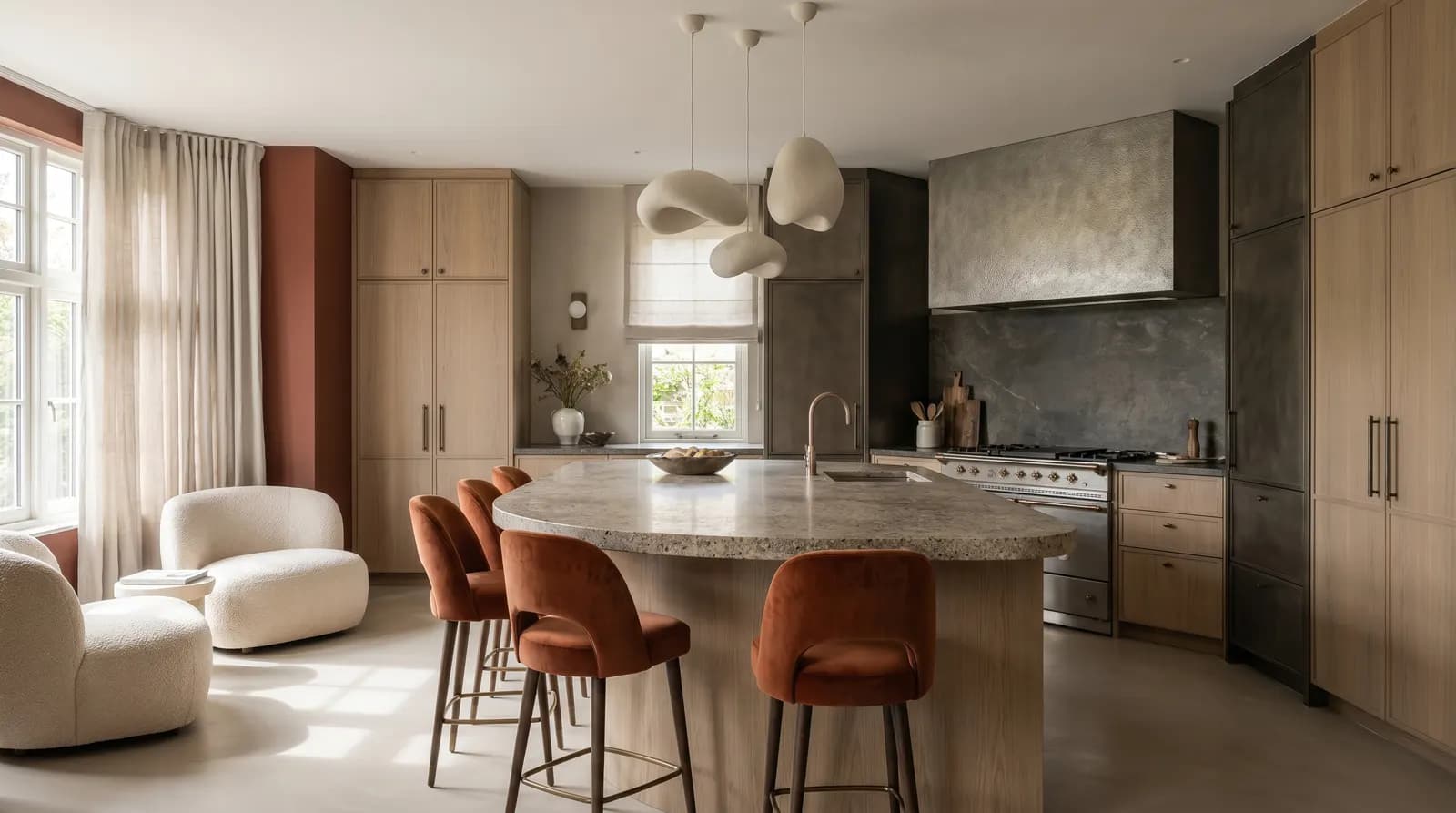
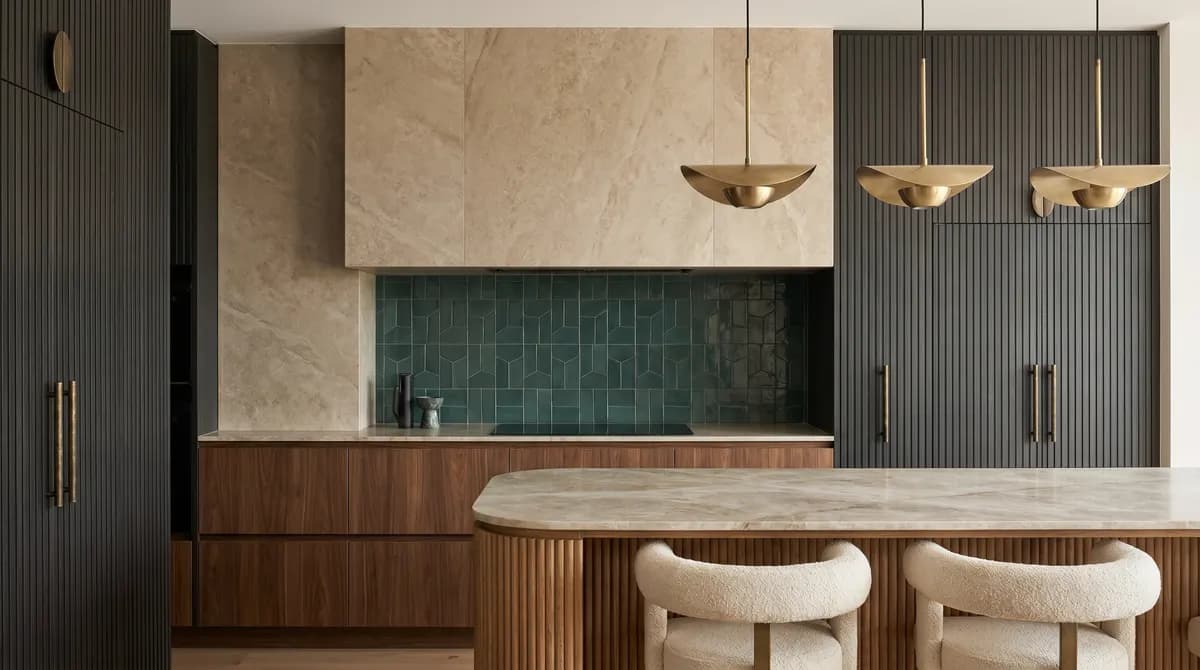
Contemporary kitchen design is a fluid style that reflects the trends of the here-and-now, distinct from Modern design which refers to a specific mid-20th century period. It's defined by simplicity of form: flat-panel cabinetry, minimal ornamentation, and strong horizontal lines. Materials are often mixed, pairing natural elements like stone and wood with industrial ones like concrete, glass, and stainless steel. The goal is a clean, uncluttered, and highly functional space.
Three principles guide a true Contemporary kitchen. First, form follows function: storage is maximized and integrated, often hidden behind seamless panels. Second, a focus on line and plane: horizontal lines dominate, seen in long cabinet pulls, stacked tiles, and wide islands. Third, a sophisticated and restrained material palette: rather than bold color, texture provides the interest—the vein in a marble slab, the grain of a wood veneer, the sheen of a lacquered cabinet.
In 2026, the style embraces "warm contemporary," moving away from the cold, sterile looks of the early 2000s. It incorporates warmer wood tones like walnut, textured surfaces, and layered lighting to create a space that is both sleek and inviting. It borrows elements from Industrial and Minimalist design, making it a versatile foundation for urban homes and modern new-builds alike.
12 Real Contemporary Kitchen Examples
Each example below is a complete look — not a mood board. Click any image to see it full-size, then hit the generate button to try the same combination on your own room photo.
 1Example
 2Example
 3Example
 4Example
 5Example
 6Example
 7Example
 8Example
 9Example
 10Example
 11Example
 12Example
Key Design Elements
Colors
- A core neutral palette of white, cream, beige, and grey.
- Deep, moody accents like charcoal, navy, or black for islands or lower cabinets.
- Natural wood tones, especially walnut and rift-cut white oak.
- Subtle metallic sheens from stainless steel, brushed nickel, or matte black fixtures.
- Monochromatic schemes where texture provides all the variation.
Materials
- Natural stone like marble, quartzite, or granite for countertops and splashbacks.
- Engineered surfaces such as quartz and polished concrete for durability.
- Wood veneers in walnut or rift-cut white oak for warmth and texture.
- Lacquered cabinets in either a high-gloss or super-matte finish.
- Metal accents in stainless steel, brushed nickel, or matte black.
Furniture
- Flat-panel or slab cabinet doors for a seamless, unadorned look.
- Integrated, handleless hardware like push-to-open mechanisms or channel pulls.
- Large, monolithic islands, often featuring a dramatic waterfall edge.
- Minimalist bar stools with slim metal or simple wood frames and leather or fabric seats.
- Simple, unadorned dining tables and chairs in an adjacent open-plan space.
Lighting
- Statement pendant lights over the island, often sculptural or geometric in form.
- Recessed ceiling lights (pot lights) for clean, unobtrusive general illumination.
- Integrated LED strip lighting under cabinets, shelves, and toe-kicks for ambient glow.
- Focused task lighting over primary prep areas.
- Dimmers installed on all light sources to allow for precise mood control.
Textiles
- Minimal use of textiles to maintain a clean aesthetic.
- Simple, high-quality linen or cotton tea towels in solid neutral colors.
- Leather or simple fabric upholstery on bar stools for comfort and texture.
- Sleek roller blinds for windows, or often, no window treatments at all.
- A low-pile, solid color or geometric-patterned wool runner to add softness.
Contemporary Kitchen Color Palette
Six pigments do most of the work — start here, then add one accent of your own.
A soft, clean gallery-white for walls and ceilings that allows materials like wood and stone to stand out.
A versatile mid-tone grey that works for floors, countertops, or even cabinetry, adding an industrial-luxe feel.
A moody, sophisticated near-black for creating contrast on an island, lower cabinets, or an accent wall.
The warm, natural tone of rift-sawn white oak or walnut veneer, used to prevent the space from feeling cold.
The cool, subtle metallic sheen for hardware, faucets, and appliance trim, offering a softer alternative to chrome.
A creamy off-white with subtle grey veining, representing the luxury of natural stone without the high gloss.
Must-Have Furniture & Fixtures
If you only invest in these seven, you will read as authentically Contemporary.
Flat-Panel Cabinetry
The cornerstone of the style. Slab doors in wood veneer, lacquer, or laminate create a clean, unbroken plane.
Waterfall Island Countertop
A slab of stone (quartzite, marble, or quartz) that flows vertically down the sides of the island, making it a sculptural centerpiece.
Integrated Hardware
Recessed channel pulls or push-to-open mechanisms that allow the cabinetry to appear as a seamless architectural element.
Full-Height Slab Splashback
A single, continuous piece of stone or engineered material that matches the countertop, eliminating grout lines for a clean look.
Undermount Sink with Gooseneck Faucet
A deep, single-basin stainless steel or composite sink with a high-arc, sculptural faucet in a matte black or brushed metal finish.
Panel-Ready Appliances
A refrigerator and dishwasher hidden behind custom cabinet panels, allowing them to blend in completely with the surrounding casework.
Sculptural Pendant Lighting
One or more geometric or artistic pendants suspended over the island, serving as functional art and a key focal point.
Common Mistakes to Avoid
Confusing with Modern — Modern is a specific mid-century style. Contemporary is of-the-moment, sleeker, and less retro. Avoid overtly '50s or '60s shapes and colours.
Too Cold & Sterile — An all-white, high-gloss kitchen can feel like a laboratory. Always warm it up with wood tones, textural stone, and layered lighting.
Ornate Details — Contemporary is about clean lines. Avoid crown molding, raised-panel cabinets, decorative hardware, and elaborate light fixtures. Simplicity is key.
Cluttered Surfaces — The style relies on clear countertops to emphasize its strong horizontal lines. Use appliance garages and smart storage to hide everyday items.
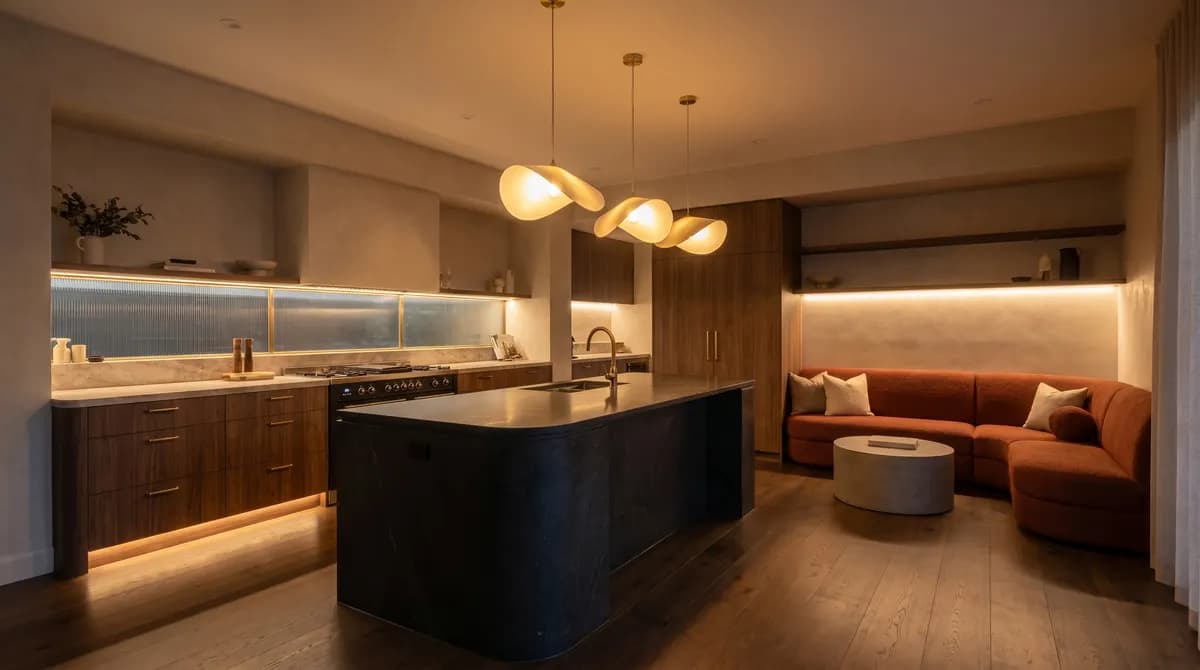
Ignoring Lighting Layers — A single overhead light is not enough. A good Contemporary kitchen has at least three layers: ambient (recessed), task (under-cabinet), and accent (pendants).
Try Contemporary Kitchen in Your Own Room
Upload a photo of your real kitchen. Get a photorealistic Contemporary redesign in about 30 seconds. 4 free credits, no card.
Generate Your Contemporary Kitchen FreeOther Contemporary Rooms
Apply the same palette and principles to the rest of the home.


Other Kitchen Styles
Same room, different aesthetic — explore the rest of the kitchen style library.


Contemporary Kitchen — Frequently Asked Questions
What is the difference between Contemporary and Modern kitchens?
What are the best colors for a Contemporary kitchen?
Are handleless cabinets a good idea?
What kind of countertops are used in Contemporary kitchens?
How can I make my Contemporary kitchen feel warmer?
Is Contemporary kitchen design expensive?
How to Design a Contemporary Kitchen
Five key decisions to achieve a clean, sophisticated look.
- 1
Establish Clean Lines with Flat-Panel Cabinets
This is the foundation. Choose slab doors with no ornamentation. Decide between wood veneer, high-gloss/matte lacquer, or a quality laminate. This single choice dictates the entire feel of the room.
- 2
Select a Monolithic Countertop and Splashback
Choose a single material, like quartz or quartzite, and use it for both the countertops and the full-height splashback. A waterfall edge on the island makes a strong, sculptural statement.
- 3
Integrate Everything
Plan for panel-ready appliances that disappear behind cabinetry. Use handleless hardware (push-to-open or channel pulls). Mount the sink undermount style. The goal is a seamless, uninterrupted surface.
- 4
Layer Your Lighting
Design a three-part lighting plan. Ambient light from recessed ceiling fixtures, task lighting from under-cabinet LED strips, and an accent layer from a sculptural pendant or two over the island.
- 5
Balance with Texture and Warmth
Prevent sterility by introducing texture. Contrast a glossy cabinet with a honed stone countertop. Pair cool concrete floors with warm walnut cabinetry. Keep surfaces uncluttered to let the quality of the materials speak.
Keep Exploring
Tools and guides that pair with this style.