Contemporary Dining Room Ideas: 12 Real Examples (2026 Guide)
Sleek lines, sculptural forms, and a quiet confidence. We define the core principles of Contemporary dining, then show 12 photorealistic examples you can replicate in your own home.
- 12
- Real examples
- ~30s
- AI render time
- 4 free
- Credits, no card
What is Contemporary Dining Room Design?
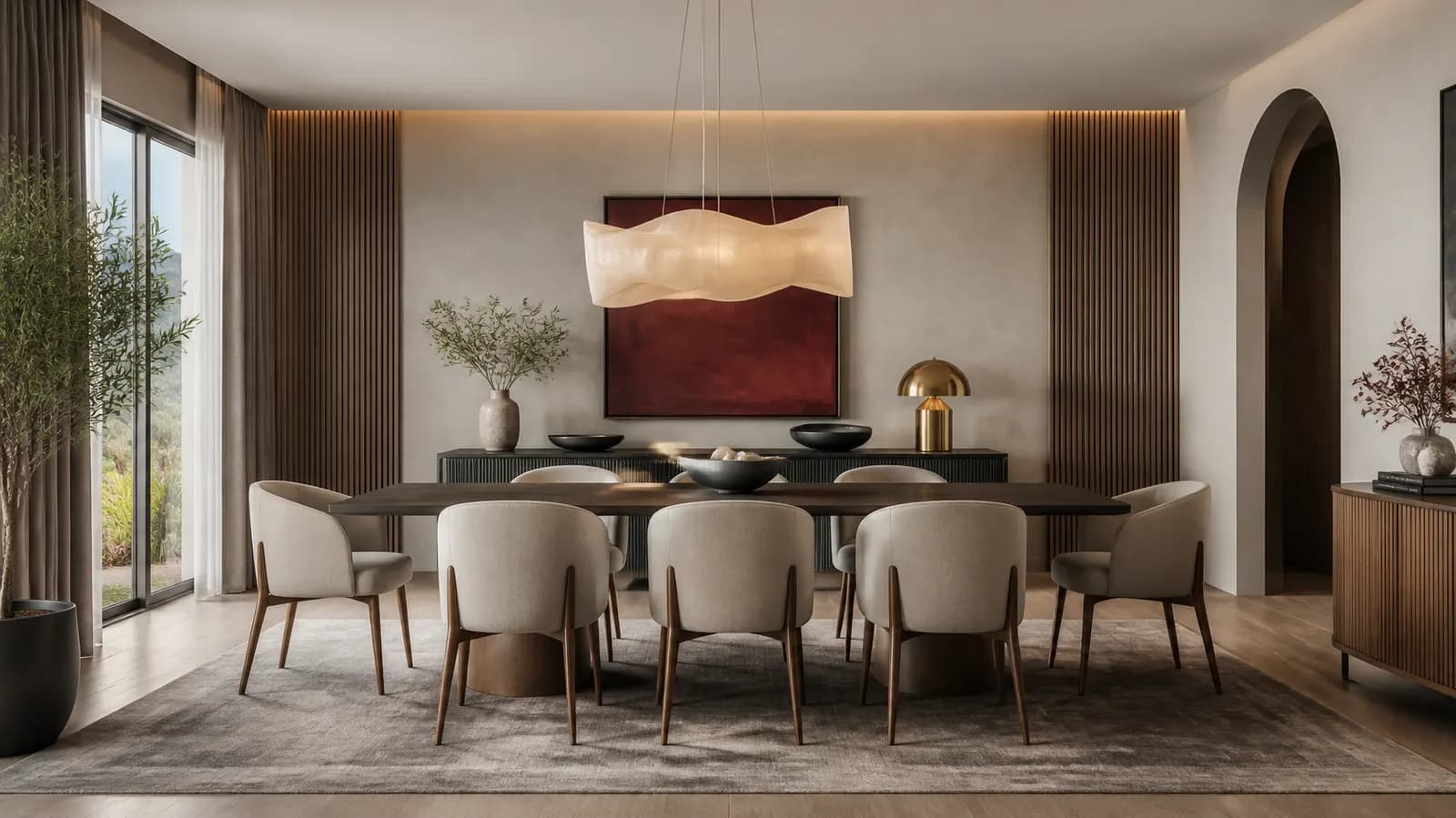
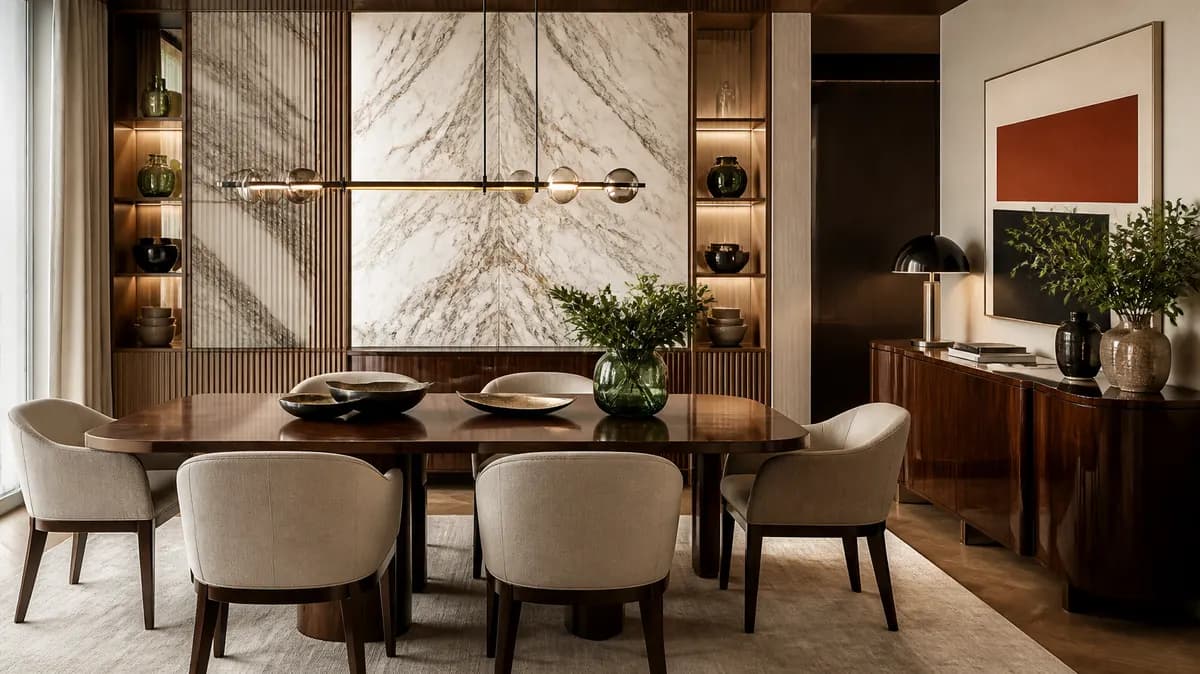
Contemporary design is, by definition, the design of the moment. Unlike Modernism, which is a fixed historical style, Contemporary is a fluid aesthetic that reflects the trends of today. In the dining room, this translates to clean lines, uncluttered surfaces, and a focus on form and material. It is a sophisticated style that prizes negative space, allowing key pieces — like a sculptural table or a statement light fixture — to stand out.
Three principles guide a successful Contemporary dining room. First, simplicity: forms are unadorned, lines are strong, and ornamentation is minimal. Second, textural contrast: a mix of materials like wood, metal, glass, and stone creates visual interest without resorting to pattern. Third, sculptural quality: furniture and lighting are chosen for their artistic form, often acting as the primary 'decoration' in the room.
In 2026, Contemporary design feels both timeless and forward-looking. It easily incorporates smart lighting, sustainable materials, and a blend of organic and geometric shapes. Its neutral palette and emphasis on quality pieces make it a popular choice for new-build homes and urban apartments, from New York to Singapore, offering a calm, curated backdrop for modern life.
12 Real Contemporary Dining Room Examples
Each example below is a complete look — not a mood board. Click any image to see it full-size, then hit the generate button to try the same combination on your own room photo.
 1Example
 2Example
 3Example
 4Example
 5Example
 6Example
 7Example
 8Example
 9Example
 10Example
Key Design Elements
Colors
- A neutral base of warm greys, beiges, and architectural whites.
- Deep, grounding tones like charcoal, black, and navy for contrast.
- Polished metallic accents: brushed brass, chrome, or blackened steel.
- Rich, natural wood tones, especially walnut and dark-stained oak.
- A single, saturated accent color, such as ochre or deep green, used sparingly.
Materials
- Natural woods like walnut and white oak, often with a clear matte finish.
- Stone surfaces, including marble, travertine, and polished concrete.
- Metals such as blackened steel, brushed brass, and polished chrome.
- Glass—clear, smoked, or fluted—for tabletops and lighting fixtures.
- Tactile fabrics like bouclé, velvet, linen, and supple leather.
Furniture
- A statement dining table with a strong silhouette (pedestal, trestle, or slab).
- Sculptural dining chairs chosen for their unique forms and lines.
- A long, low sideboard or credenza, often with handleless doors.
- Large-scale, minimalist art instead of a busy gallery wall.
- A large area rug with a subtle texture or geometric pattern to ground the space.
Lighting
- An oversized pendant or chandelier that acts as a sculptural centerpiece.
- Linear suspension lights for long, rectangular dining tables.
- Recessed, architectural downlighting on a dimmer for ambient control.
- A modern floor lamp in a corner to provide a soft, secondary light source.
- Minimalist wall sconces to add layered light and highlight architectural features.
Textiles
- Solid-color linen or high-quality cotton napkins and runners.
- Upholstery in rich, textured fabrics like bouclé, velvet, or woven wool.
- A low-pile wool, silk, or jute rug to add warmth and define the dining area.
- Sheer, unpatterned curtains that diffuse light without obstructing the view.
- Leather or vegan leather upholstery for a sleek, durable seating option.
Contemporary Dining Room Color Palette
Six pigments do most of the work — start here, then add one accent of your own.
A clean, gallery-like white for walls that makes art and furniture the focus. Neither too cool nor too warm.
A sophisticated blend of grey and beige, perfect for walls or upholstered chairs. Provides warmth without being yellow.
The essential grounding color for metal frames, light fixtures, and accent furniture. Used for contrast and definition.
A warm metallic accent for hardware, lighting, and table legs. Adds a touch of quiet luxury without being ostentatious.
The dominant wood tone. Deeper and more formal than oak, it adds depth and sophistication to tables and sideboards.
A single, saturated accent for a feature wall, velvet chairs, or a piece of art. Connects the space to nature.
Must-Have Furniture & Fixtures
If you only buy these seven, you will read as authentically Contemporary.
Statement Dining Table
The room's anchor. Choose a simple, strong form—a solid wood slab, a marble pedestal, or a glass top on a sculptural base.
Sculptural Chairs
Chairs selected for their silhouette as much as their comfort. They don't need to be a matching set with the table.
Large-Scale Pendant Light
A single, oversized fixture (or a curated cluster) that hangs low over the table and acts as the room's centerpiece.
Low-Profile Sideboard
A long, low credenza for storage. Look for clean lines, natural wood grain, and minimal hardware.
Oversized Artwork
A single, large abstract painting or a dramatic photograph. This has more impact than a collection of smaller pieces.
Textural Area Rug
A large, low-pile rug in a solid color or subtle geometric pattern. It should be big enough for all chair legs to sit on it.
Minimalist Window Treatments
Simple, floor-to-ceiling sheer curtains or unadorned roller blinds that don't distract from the architecture or view.
Common Mistakes to Avoid
Confusing Contemporary with Modern: Modern is a specific mid-century style. Contemporary is of the now, more fluid, and often warmer and more eclectic.
Making it too cold: A room with only hard surfaces like glass, metal, and concrete can feel sterile. Always add warmth with wood, textiles, and plants.
Over-decorating: Contemporary design relies on negative space. Avoid cluttering surfaces with small decor items. One large vase is better than five small ones.
Matching everything: A full, matching dining set (table, chairs, sideboard) can look dated and uninspired. Mix materials and forms for a more curated feel.
Ignoring scale: Contemporary design loves bold, confident moves. A small rug, a tiny light fixture, or undersized art will look timid and lost. Go big.
Try Contemporary Dining Room in Your Own Room
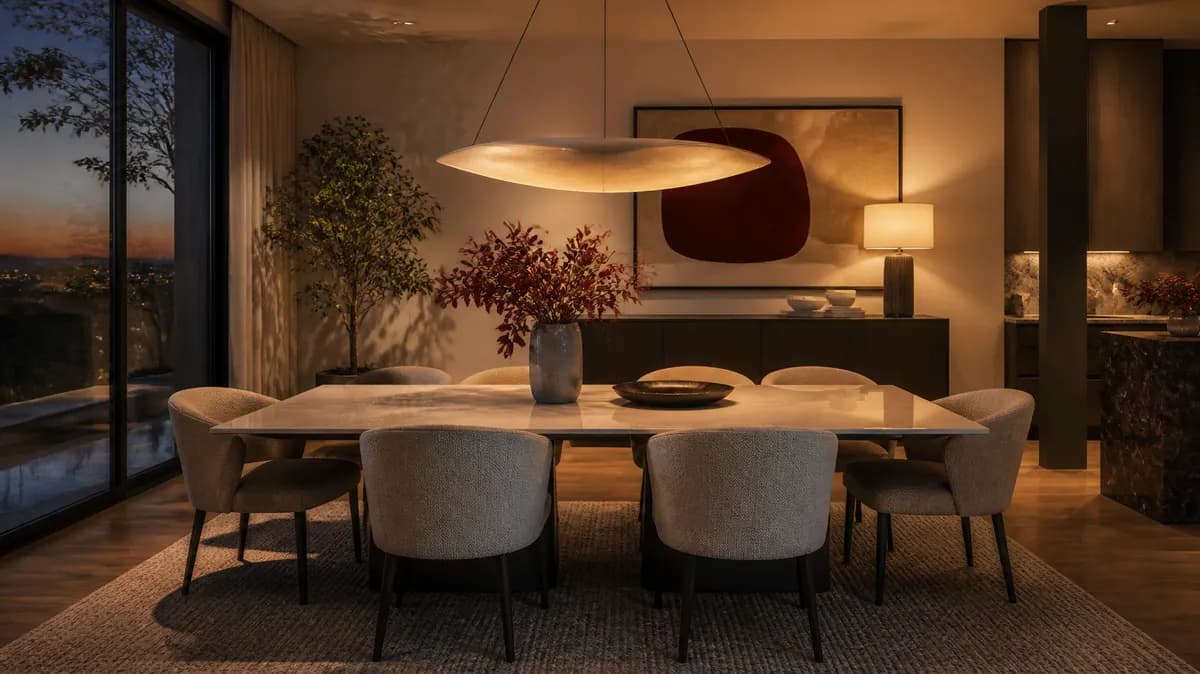
Upload a photo of your real dining room. Get a photorealistic Contemporary redesign in about 30 seconds. 4 free credits, no card.
Generate Your Contemporary Dining Room FreeOther Contemporary Rooms
Apply the same palette and principles to the rest of the home.


Other Dining Room Styles
Same room, different aesthetic — explore the rest of the dining room style library.


Contemporary Dining Room — Frequently Asked Questions
What is the difference between Modern and Contemporary design?
What lighting is best for a Contemporary dining room?
Can I mix different dining chair styles?
What is the best table shape for a Contemporary dining room?
How do I choose art for a Contemporary dining room?
Is Contemporary style good for a small dining space?
How to Design a Contemporary Dining Room
Five decisions, in this order. Skip any of them and the look will not land.
- 1
Anchor with the Table
Choose the dining table first. Its material and form (e.g., walnut pedestal, marble slab, glass trestle) will dictate all other choices in the room. Ensure it is scaled correctly for the space.
- 2
Select Sculptural Seating
Choose chairs that complement, but don't necessarily match, the table. Focus on their silhouette and comfort. This is a chance to add a contrasting material, like velvet chairs with a wood table.
- 3
Install a Statement Light
Hang an oversized pendant light or a dramatic chandelier directly over the center of the table. This fixture is the room's primary piece of jewelry and should be chosen with care.
- 4
Layer Texture and Neutrals
Build a palette of 3-4 neutrals (white, greige, charcoal). Then, add layers of texture through a low-pile wool rug, sheer linen curtains, and tactile upholstery on the chairs.
- 5
Curate with Intention
Finish the room with one large piece of art on the main wall and a single, sculptural centerpiece on the table. Edit out all other clutter. In Contemporary design, what you leave out is as important as what you put in.
Keep Exploring
Tools and guides that pair with this style.