Islamic Geometric Interior Design
Guide to creating an interior in Islamic Geometric style: history, features, materials, color solutions, and examples
Islamic geometric interior design draws from over 1,200 years of artisan tradition stretching from Andalusia to Samarkand. The style is rooted in the mathematical patterns that emerged after the 8th century, when artisans replaced figurative ornament with infinite tessellations built on circles, hexagons and 8-, 12- and 16-fold stars. In a modern home this translates into surfaces that reward close looking: zellige tile, carved plaster (gypsum stucco), turned-wood mashrabiya screens and brass lanterns that throw shadow patterns across plaster walls.
Materials and palette
The signature material is hand-cut zellige, a glazed terracotta tile that originated in Fez in the 10th century. Use it on a fireplace surround, kitchen backsplash or bathroom vanity wall. Pair with walnut or cedar joinery, hand-knotted wool rugs and brass or hammered-copper hardware. The palette mixes plaster whites and warm sand neutrals with jewel accents: lapis blue, emerald, saffron, pomegranate and aubergine. Limit the saturated colors to roughly 20-30% of the room so the geometry stays legible.
Room ideas
In a living room, anchor the seating with a low-profile sofa, a brass tray table and a single zellige feature wall behind floating walnut shelves. A pendant lantern with pierced metalwork is the centerpiece. In a bedroom, use a carved-plaster headboard niche, layered kilim rugs and arched mirrors. Bathrooms suit the style best of all: full zellige walls, a hammered-brass basin and an arched shower opening read as authentic without becoming theme-park.
Common mistakes
Avoid mixing too many pattern scales — pick one tile, one rug, one screen and let plaster do the rest. Don't overlight; the geometry needs warm 2700K lamps and shadow, not flat downlights. Skip mass-produced "Moroccan-style" decals, which look printed against real hand-glazed tile.
Budget tips
Real zellige runs $25-60 per sq ft installed. To save, tile only one accent surface and use lime-washed plaster elsewhere. Vintage brass lanterns from estate sales cost a fraction of new reproductions. Upload a photo of your room and our AI redraws it in Islamic geometric style in seconds — free to try.
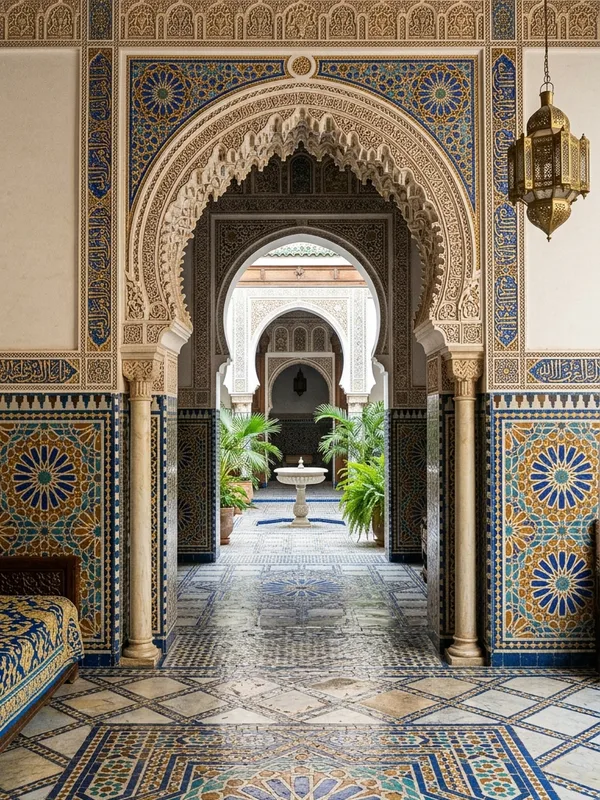
Zdjęcia wnętrz w stylu Islamic Geometric
Kluczowe elementy stylu Islamic Geometric
Zellige Tile Walls
Hand-cut glazed terracotta tile in geometric mosaics, used on feature walls, fireplaces and bathrooms.
Mashrabiya Screens
Turned-wood lattice panels that filter light into geometric shadows, used as room dividers or window covers.
Carved Plaster Detail
Hand-tooled gypsum stucco around niches, arches and ceilings — the signature ornament of the style.
Jewel-Tone Accents
Lapis blue, emerald, saffron and pomegranate layered through textiles and tile on a neutral plaster base.
Brass Lighting
Pierced-metal lanterns and pendant fixtures that cast star and rosette patterns across surfaces.
Hand-Knotted Rugs
Wool kilims and Berber rugs grounding the room with tactile texture and traditional motifs.
Spróbuj stworzyć własny projekt
Prześlij zdjęcie swojego pokoju i otrzymaj profesjonalny projekt w 30 sekund. Pierwsze 2 projekty są darmowe.
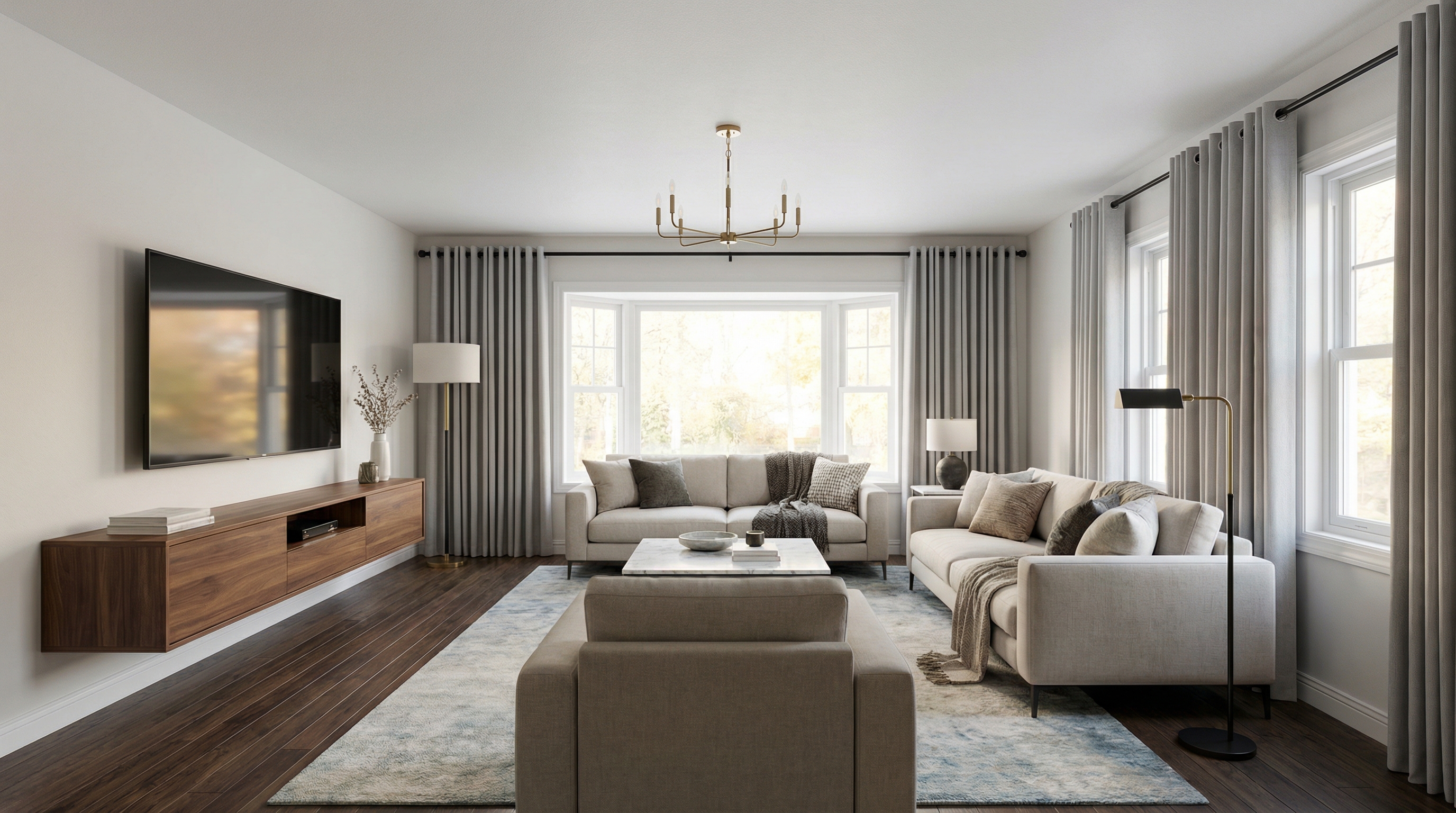
Islamic Geometric dla różnych pomieszczeń
Zobacz więcej przykładów w galerii stylu Islamic Geometric lub pełnej galerii projektów.
FAQ: wnętrze w stylu Islamic Geometric
- A decorative style built on mathematical tessellations of stars, polygons and interlaced lines, expressed through tile, carved plaster, wood screens and metalwork.
- Yes — hand-cut zellige typically costs $25-60 per square foot installed in the US. Machine-made alternatives are cheaper but lack the irregular glaze depth.
- A plaster-and-sand neutral base with jewel-tone accents (lapis, emerald, saffron). Keep saturated colors to about a quarter of the room.
- Yes. Low-slung contemporary sofas in linen pair well with traditional tile and screens, keeping the look fresh rather than themed.
- Warm 2700K pierced-brass lanterns. Avoid bright overhead downlights — the geometry needs shadow to read.
- It developed across the Islamic world from the 8th century onward, with key centers in Andalusia, Morocco, Cairo, Damascus, Isfahan and Samarkand.
- Tile one accent wall, use lime-washed plaster elsewhere, source vintage brass lanterns and add a single hand-knotted rug.