Arabian Courtyard Design
Guide to landscape design in Arabian Courtyard style: features, plants, materials, and examples
The Arabian courtyard, called a sahn in Arabic or a riad in Morocco, is one of the oldest continuous landscape traditions in the world — central inward-facing gardens have organized Middle Eastern and North African houses since at least the 7th century BCE. The form responds to climate (cool air collects in shaded courtyards), to privacy (walls hide family life from the street) and to a philosophical idea of paradise (the Persian word "paradise" originally meant a walled garden).
Materials and plants
The hardscape is dominant: lime-plaster walls, terracotta tile floors, glazed ceramic borders (zellige in Morocco, qashani in Iran), carved cedar or walnut doors, and a central fountain or rill (narrow water channel). Walls are typically 2-3 meters tall to provide privacy and shade. Plants are deliberately limited: citrus trees (orange, lemon, kumquat) as the dominant tree, jasmine and bougainvillea climbing walls, pomegranate and fig trees for shade, herbs (mint, rosemary) in glazed clay pots.
Design elements
Look for a strict geometric layout, often a 4-part chahar bagh division around a central fountain. The fountain is the focal point and serves three roles: visual centerpiece, audible white noise to mask street sounds, and evaporative cooling. Paths and seating areas are tiled or paved in geometric patterns. Walls carry mashrabiya screens at upper windows, allowing breeze through while maintaining privacy. Lighting is provided by pierced-brass lanterns.
Climate notes
The style is designed for hot dry climates (zones 9-11 are ideal). In cooler or wetter climates, citrus trees may need to be containerized for winter protection and bougainvillea may not survive frost. The 2-3 meter walls work best on lots large enough to feel enclosed without claustrophobic.
Common mistakes
Don't add lawn — Arabian courtyards have no grass. Don't over-plant; the geometry should read clearly. Don't omit the central water feature; it is structurally and acoustically essential.
Budget tips
A small fountain in cast stone or copper runs $1,500-5,000. Zellige tile borders cost $25-60 per sq ft installed. Lime-plaster walls are $25-50 per sq ft. A 30-50 sq m courtyard typically costs $25,000-60,000 fully built. Upload a photo of your yard and our AI redraws it in Arabian courtyard style in seconds — free to try.
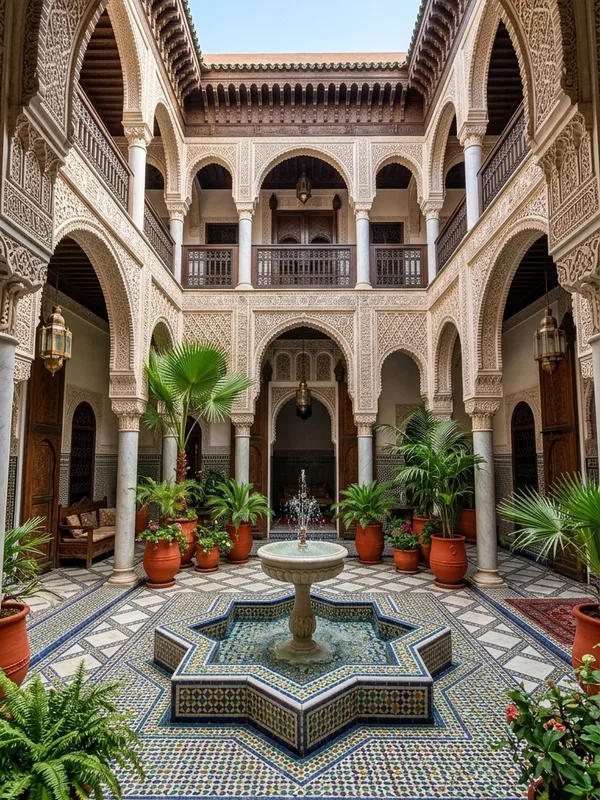
Kernelementen van de Arabian Courtyard-stijl
Central Fountain
A geometric fountain at the heart of the courtyard, providing visual focus, audible white noise and evaporative cooling.
Chahar Bagh Layout
A 4-part geometric division of the courtyard around the central fountain — a Persian tradition adopted across the Islamic world.
High Plaster Walls
Lime-plaster walls 2-3 meters tall providing privacy from the street and shade through the day.
Citrus Trees
Orange, lemon, kumquat and pomegranate trees as the dominant planting — fragrant, productive and visually structural.
Zellige Tile Detail
Hand-cut glazed ceramic tile borders on paths, around fountains and at seating areas, in geometric or floral patterns.
Brass Lanterns
Pierced-brass lanterns at multiple heights providing warm low light for evening use, casting geometric shadows on plaster walls.
Probeer zelf een ontwerp te maken
Upload een foto van je tuin en ontvang in 30 seconden een professioneel tuinontwerp. De eerste 2 ontwerpen zijn gratis.
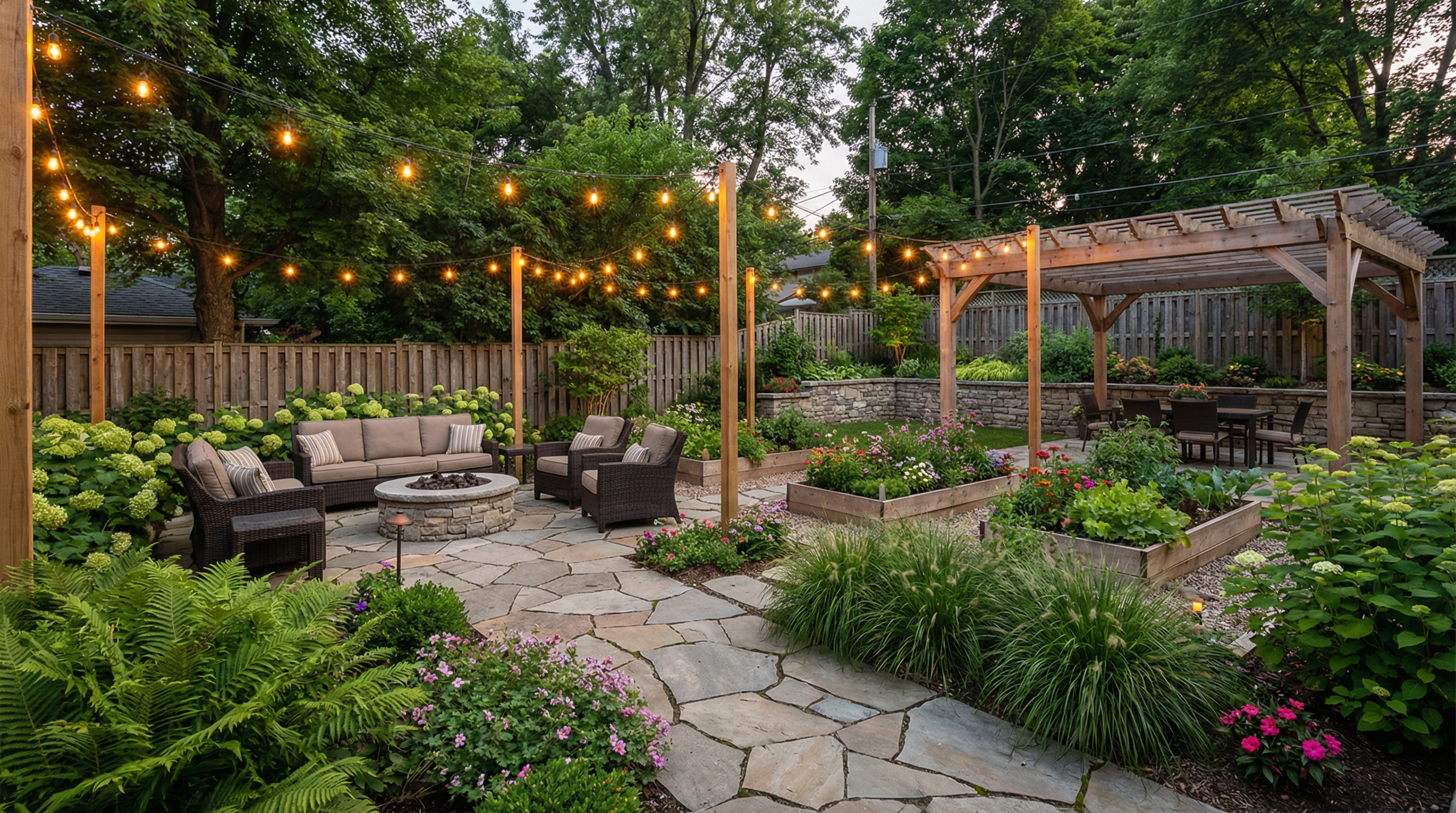
Arabian Courtyard: tuinontwerp
Bekijk meer voorbeelden in de Arabian Courtyard-stijlgalerij of de volledige ontwerpgalerij.
FAQ: tuinontwerp in Arabian Courtyard-stijl
- An inward-facing walled garden at the center of a traditional Middle Eastern or North African house, with high walls, a central fountain, geometric tile paving and citrus trees.
- A Persian 4-part garden layout, with two crossing water channels dividing the garden into four equal quadrants around a central fountain. The design dates to ancient Persia and spread across the Islamic world.
- A walled garden adjacent to the house works almost as well. The key is enclosure — 2-3 meter walls or dense hedging — and the inward orientation.
- Hot dry climates (USDA zones 9-11 are ideal) suit citrus and bougainvillea. In cooler climates, container citrus and frost-tolerant alternatives work.
- Yes — historically and aesthetically. It provides cooling, masks street noise and is the visual focus of the geometric layout.
- No — traditionally there is no grass. Hardscape (tile or stone paving) and planters dominate, with maybe small herb beds.
- A 30-50 sq m authentic courtyard runs $25,000-60,000 fully built, with the central fountain and zellige tile being the major costs.