Tuscan Interior Design
Guide to creating an interior in Tuscan style: history, features, materials, color solutions, and examples
Tuscan interior design draws from the casale (Italian farmhouse) of the Tuscan countryside, where stone houses have been continuously inhabited since the Renaissance. The look is rooted in 500 years of rural building tradition: thick limestone walls, exposed chestnut beams, terracotta floor tiles fired in nearby Impruneta, and a palette pulled from the Tuscan landscape itself — wheat yellows, olive greens, terracotta oranges and the deep red of Chianti.
Materials and palette
The base palette is warm: cream lime-washed walls, with accents in wheat yellow, ochre, terracotta, sage and Chianti red. Floors are hand-made terracotta tiles called "cotto," typically 30-40 cm square. Ceilings have exposed chestnut or oak beams stained dark. Walls are textured plaster, often with a fresco look or stenciled border. Furniture is heavy and rustic — walnut credenzas, refectory tables, ladder-back chairs with rush seats.
Room ideas
A Tuscan kitchen is the heart of the home: a 3-meter walnut farm table, copper pots hanging above a tiled cooking range, open shelves of ceramic dishes, terracotta floor tiles. The living room centers on a stone fireplace, with leather sofas, an antique credenza and a large landscape oil painting. Bedrooms have wrought-iron beds, white linen sheets and a single shuttered window facing rolling hills.
Common mistakes
Avoid the 1990s "Tuscan villa" trap — sponge-painted gold walls, plastic grape decor and faux-painted vines. Real Tuscan is rustic, not decorative. Stick to lime-plaster textures, not painted finishes; choose two or three accent colors, not all of them.
Budget tips
Real cotto tile is $8-15 per sq ft, with new reproductions cheaper than antique. Exposed beams can be faux: boxed pine beams stained dark mimic real chestnut at $50-80 per linear foot. Source antique credenzas from Italian dealers shipping to the US (often cheaper than new reproductions). Upload a photo of your room and our AI redraws it in Tuscan style in seconds — free to try.
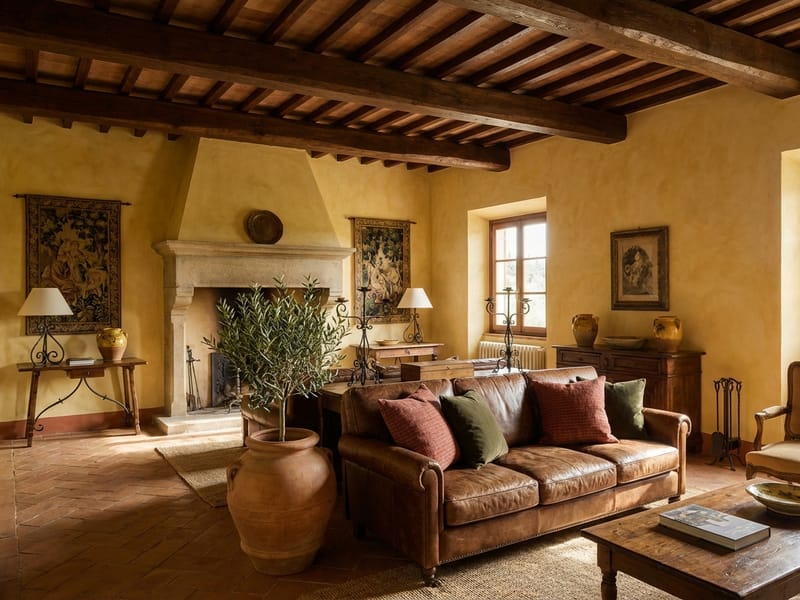
Tuscan стиліндегі интерьер фотолары
Tuscan стилінің негізгі элементтері
Terracotta Cotto Floors
Hand-made terracotta floor tiles from Impruneta, typically 30-40 cm square, with naturally varied warm tones.
Exposed Chestnut Beams
Dark-stained chestnut or oak ceiling beams, structural in old casali and decorative in new construction.
Lime-Plaster Walls
Textured cream-and-ochre plaster walls with subtle fresco-like variation across the surface.
Rustic Walnut Furniture
Heavy walnut refectory tables, credenzas and ladder-back rush-seat chairs with patina from generations of use.
Stone Fireplace
A large stone-or-brick hearth as the focal point of the main living space, often with a thick chestnut mantel beam.
Copper and Ceramic
Copper pots, hand-painted ceramic dishes from Deruta or Montelupo, and ironwork displayed in open shelving and on walls.
Өз дизайныңызды жасап көріңіз
Бөлме фотосын жүктеңіз де, 30 секундта кәсіби дизайн алыңыз. Алғашқы 2 дизайн — тегін.
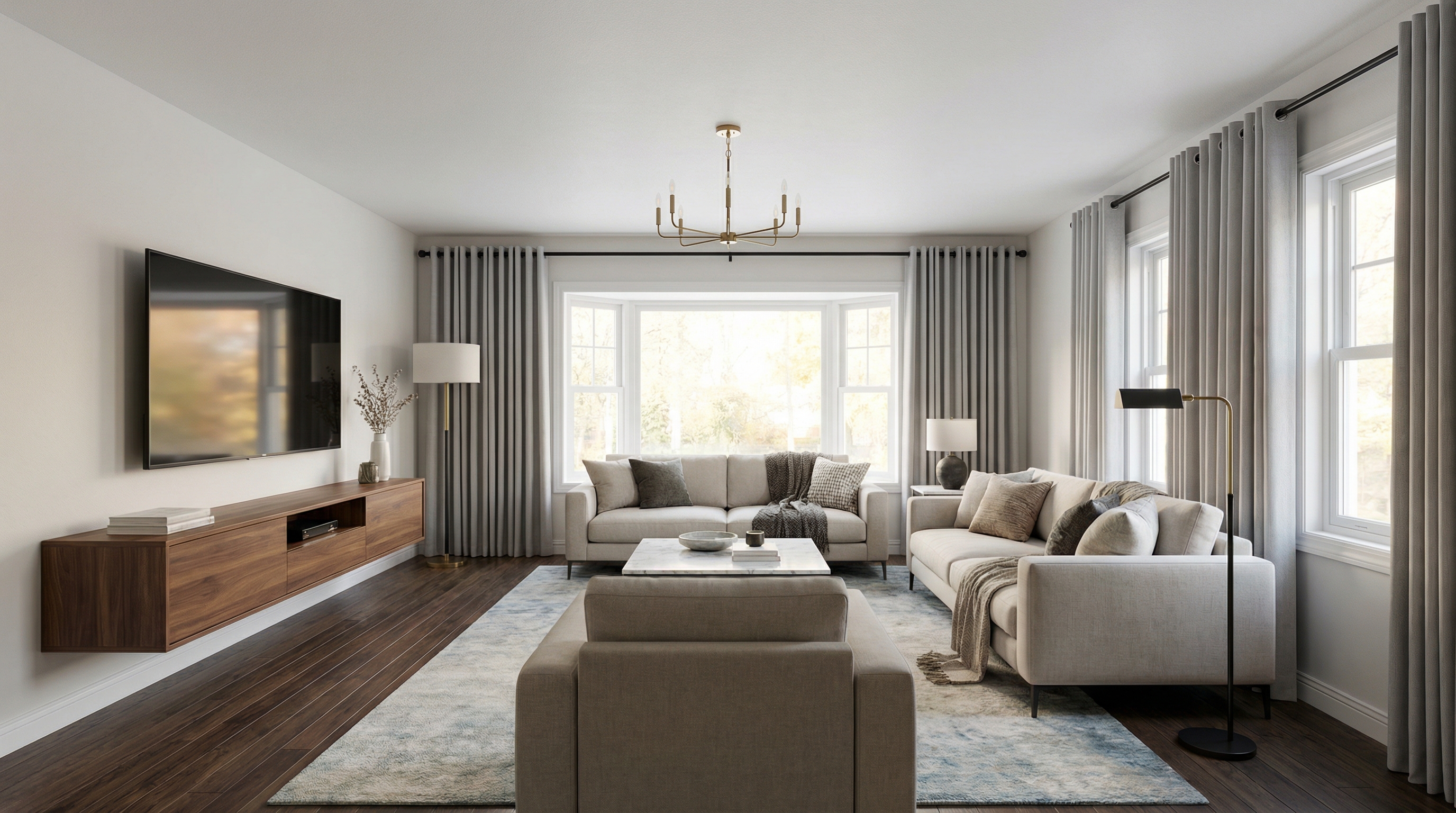
Әртүрлі бөлмелерге арналған Tuscan
Көбірек мысалды мына жерден көріңіз: Tuscan стилі галереясы немесе толық дизайн галереясы.
FAQ: Tuscan стиліндегі интерьер
- The style of the Italian Tuscan farmhouse — stone walls, terracotta floors, exposed beams, warm Mediterranean palette and rustic walnut furniture.
- Tuscan is rural and rustic (the casale, or farmhouse); Italian villa style is grander and more classical (the Palladian or Renaissance country house).
- The 1990s-2000s American "Tuscan villa" trend (sponge-painted gold walls, grape decor) was a kitschy distortion. Real Tuscan is rustic and restrained.
- A cream base with wheat yellow, ochre, terracotta, sage green and Chianti red — colors that match the actual Tuscan landscape.
- Faux boxed pine beams stained dark are convincing and cost about $50-80 per linear foot installed, compared with $200+ for solid antique.
- Wide-plank distressed oak in warm tones is a credible substitute. Avoid pale or orange-toned floors.
- Yes — focus on the materials (real terracotta, lime plaster, exposed beam look) and one rustic statement piece. Avoid trying to fake patina.