Mediterranean Interior Design
Guide to creating an interior in Mediterranean style: history, features, materials, color solutions, and examples
Mediterranean interior design draws from the architectural traditions of Spain, Italy, Greece, southern France, and coastal North Africa — regions sharing climate, materials, and 2,000+ years of cross-pollinated design. The American "Mediterranean Revival" emerged in 1920s Florida and Southern California (Addison Mizner's Palm Beach, George Washington Smith's Santa Barbara) and remains a defining residential style in those regions. The 2020s reinvention is lighter and cleaner — same materials, contemporary proportions.
What makes Mediterranean distinctive
The signature elements are textured stucco or plaster walls, terracotta tile floors, arched doorways and windows, wrought iron accents, and a warm earth-toned palette. Rooms feel hand-crafted, slightly imperfect, and connected to centuries of regional craft tradition. Modern Mediterranean is bright and airy; traditional is moodier and darker.
Materials and color palette
- Walls: lime wash, Venetian plaster, textured stucco, white or warm cream
- Floors: terracotta tile (handmade Saltillo), limestone, travertine, encaustic tile
- Woods: dark walnut, weathered oak, olive wood, antique pine, distressed elm
- Metals: hand-forged wrought iron, antique brass, copper
- Accents: terracotta, ochre, deep blue, olive green, oxblood, sun-bleached cream
Room-by-room ideas
Living room: lime-washed cream walls, arched doorway to the next room, exposed dark-stained ceiling beams, a linen sofa, a hand-knotted Persian rug, wrought-iron candle chandelier, an olive tree in a terracotta pot. Kitchen: white plastered walls, handmade terracotta tile floor, deep blue hand-painted Talavera tile backsplash, copper pots on a wrought-iron rack, butcher-block island. Bedroom: a wrought-iron four-poster bed, white linen bedding, terracotta floor, arched window with shutters. Bathroom: microcement walls, hand-painted encaustic tile floor, antique brass fixtures.
Common mistakes
- Confusing Mediterranean with Tuscan kitsch — heavy fake-aged faux finishes, gold-painted iron, grape motifs. Real Mediterranean is restrained and material-honest.
- Wrong tile. Use handmade Saltillo terracotta or genuine encaustic, not glossy ceramic look-alikes. The patina is the point.
- Cool grey walls. The palette is warm — cream, oat, sun-bleached white. Cool greys break the Mediterranean light.
- Forgetting the arch. At least one arched doorway, window, or niche is required for authentic feel.
Mediterranean on a budget
Lime-wash paint (Bauwerk, Portola) on existing walls transforms a room for $80. Add one Persian-style rug (Ruggable or vintage from Etsy), wrought-iron candle sconces from World Market, a hand-painted Talavera tile backsplash strip in the kitchen, and one olive tree in a terracotta pot. Total transformation under $600.
Upload a photo of your room and our AI redraws it in Mediterranean style in seconds — free to try.
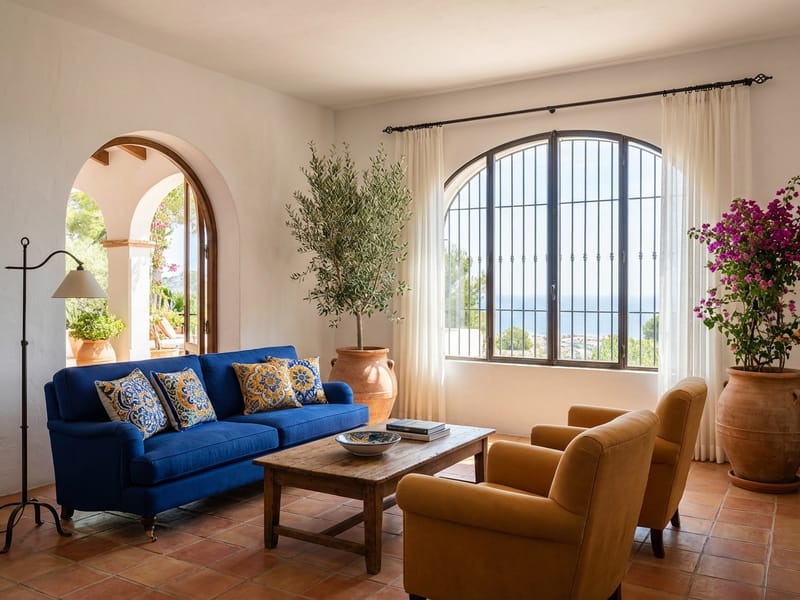
Mediterranean стиліндегі интерьер фотолары
Mediterranean стилінің негізгі элементтері
Textured Plaster Walls
Lime-washed and Venetian-plastered walls in warm cream provide the hand-finished texture central to Mediterranean architecture.
Terracotta Floors
Handmade Saltillo terracotta tiles in warm orange-brown anchor every authentic Mediterranean room with centuries-old craft.
Arched Doorways
Rounded arch openings replace square doorways, referencing Roman, Moorish, and Romanesque architectural traditions.
Wrought Iron Details
Hand-forged candle chandeliers, four-poster beds, balcony railings, and curtain rods bring blacksmith craft into every room.
Earth-Tone Palette
Terracotta, ochre, deep blue, olive green, and oxblood reference the regional landscape and centuries of pigment tradition.
Hand-Painted Tile
Talavera, Moroccan zellige, and Portuguese azulejo tiles provide pattern bursts on backsplashes, risers, and accent walls.
Өз дизайныңызды жасап көріңіз
Бөлме фотосын жүктеңіз де, 30 секундта кәсіби дизайн алыңыз. Алғашқы 2 дизайн — тегін.
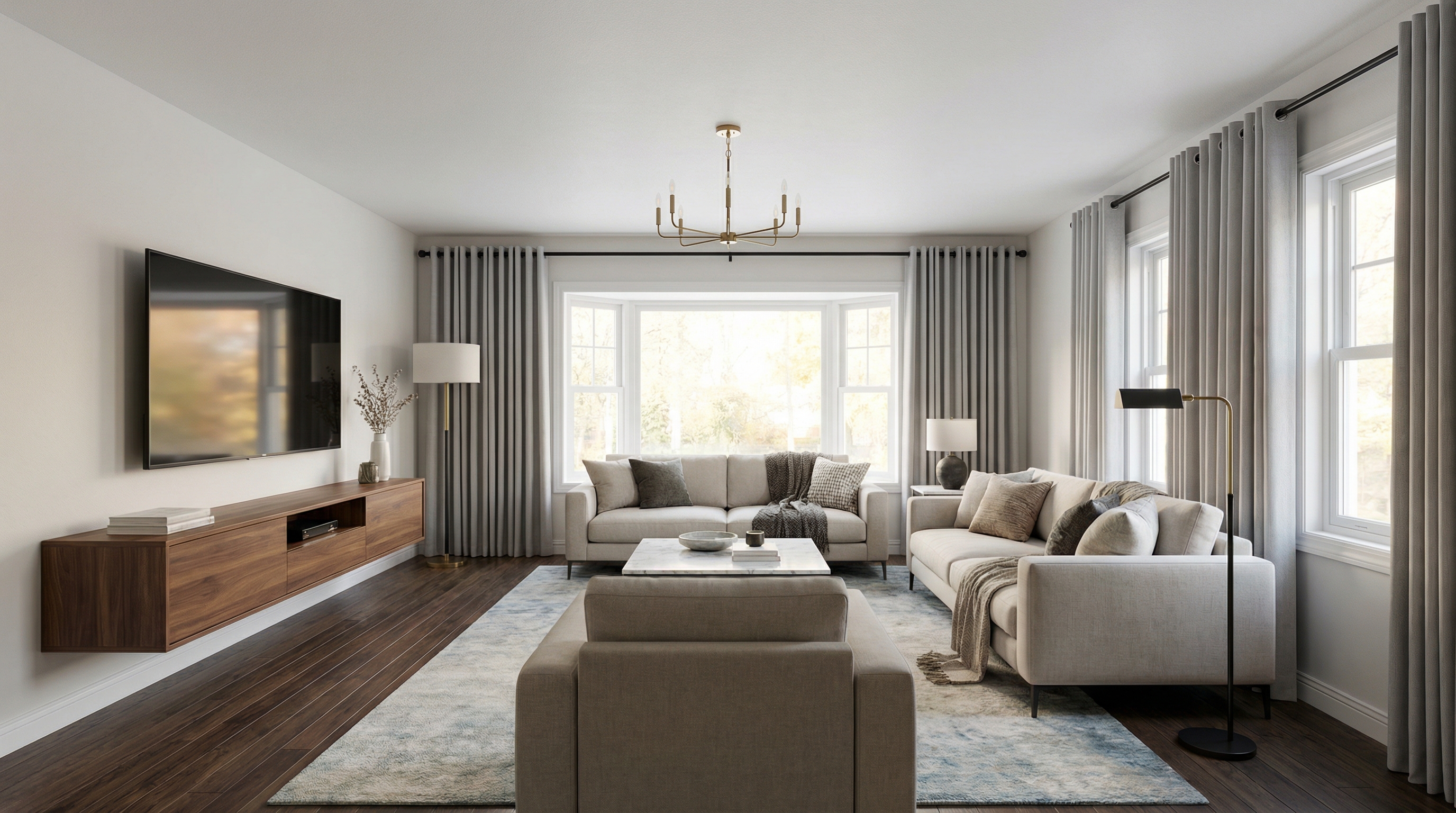
Әртүрлі бөлмелерге арналған Mediterranean
Көбірек мысалды мына жерден көріңіз: Mediterranean стилі галереясы немесе толық дизайн галереясы.
FAQ: Mediterranean стиліндегі интерьер
- Mediterranean style draws from Spanish, Italian, Greek, and southern French architectural traditions. It features textured plaster walls, terracotta floors, arched doorways, wrought iron, and a warm earth-toned palette. The American revival began in 1920s Florida and California.
- Tuscan is a subset of Mediterranean specific to central Italy, often executed in American homes as a heavier, more rustic version with darker woods and faux-aged finishes. Modern Mediterranean is brighter, cleaner, and more material-honest.
- Warm cream and oat for walls, layered with terracotta, ochre, deep blue, olive green, and oxblood accents. Avoid cool greys, pure whites, and primary colors — they break the warm Mediterranean light.
- Yes — the warm palette and textured materials actively counteract cold-climate gloom. Mediterranean revival is popular in cities with poor weather precisely because the style brings perceived warmth and sunshine indoors year-round.
- Handmade Saltillo terracotta tile (the gold standard), limestone, travertine, hand-painted encaustic tile, or wide-plank distressed oak. Avoid glossy ceramic, cool grey porcelain, and high-gloss laminate — they break the hand-crafted feel.
- Three changes: lime-wash one accent wall in warm cream, install a Persian-style rug, and add wrought-iron candle sconces or a chandelier. Add a terracotta planter with an olive tree and one piece of hand-painted Talavera tile decor.
- Modern Mediterranean strips away heavy traditional elements and pairs the core materials (plaster, terracotta, wrought iron) with cleaner contemporary furniture, larger windows, and a lighter palette. Think Hotel Esencia or Cap Rocat — refined rather than rustic.