Eco-Natural Yard Design
Guide to landscape design in Eco Natural Garden style: features, plants, materials, and examples
Eco-natural yard design — also called native plant landscaping, ecological gardening or naturalistic planting — has emerged in the last 25 years as the most environmentally responsible approach to residential landscape. The movement, shaped by Dutch designer Piet Oudolf, American horticulturist Doug Tallamy and the Wild Garden tradition, replaces lawn and ornamental exotics with dense plantings of regional native species. The result supports local pollinators, requires far less water and maintenance, and reads as a living, dynamic landscape rather than a static decoration.
Materials and plants
The plant palette is regionally specific — eco-natural in Texas looks different from eco-natural in Massachusetts — but the principles are universal. Use native perennials, grasses and shrubs adapted to local climate and soil. In the US Northeast: native asters, goldenrod, switchgrass, little bluestem, serviceberry, blueberry. In the Southwest: penstemon, agave, desert marigold, hesperaloe. Hardscape is minimal and natural: weathered stone or gravel paths, fallen-log seating, rain gardens. No lawn, or only small native sedge meadow lawn.
Design elements
Look for layered planting (groundcover, mid-story perennials, structural shrubs, occasional small trees), drifts rather than rows (plants in groups of 5-15 of the same species), seasonal succession (so that something is in bloom from March to October), and provision for wildlife — bird baths, brush piles, dead snags retained for cavity-nesting birds. Rain gardens collect roof runoff. Vegetable beds or fruit trees can integrate productively into the system.
Climate notes
Eco-natural works in every climate but the plant list changes completely. Consult your regional native plant society (almost every US state has one). In coastal areas, use salt-tolerant natives; in drought-prone zones, lean on prairie or desert species; in cold climates, choose hardy zone-appropriate natives.
Common mistakes
Don't confuse "native" with "anything that grows easily" — buckthorn, multiflora rose and burning bush are invasive in many regions. Don't go too messy; even wild planting needs structure (paths, edges, a clear gathering area). Don't expect instant gratification; native plantings take 3 years to mature.
Budget tips
Native plants from local nurseries cost $8-30 per plant. A 100 sq m converted-from-lawn native bed runs $1,500-5,000 fully planted. Lawn removal is the biggest variable: solarization (covering with black plastic for a season) is free; sheet mulching is $1-2 per sq ft; sod cutting and hauling is $4-6 per sq ft. Upload a photo of your yard and our AI redraws it in eco-natural style in seconds — free to try.
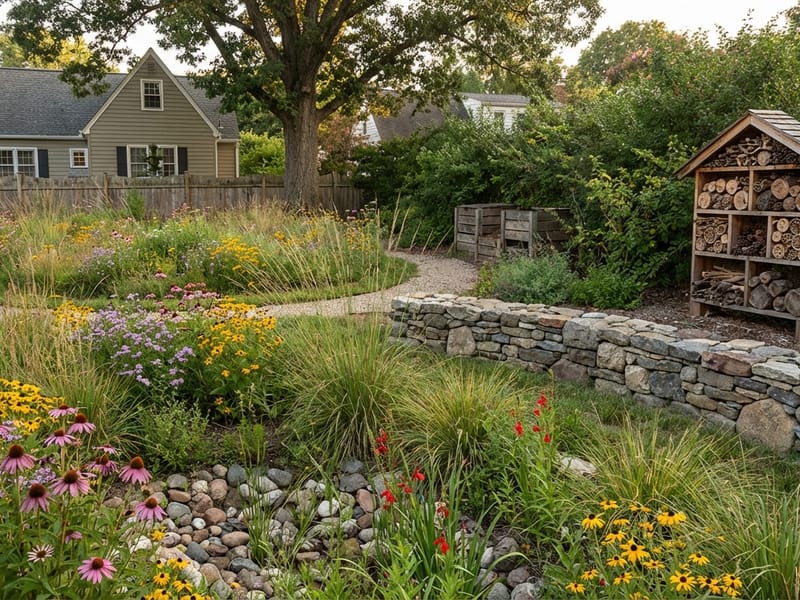
Eco Natural Garden стилінің негізгі элементтері
Regional Native Plants
A planting palette of species native to your specific ecoregion — chosen for local pollinator support and adapted to local soil and climate.
No-Lawn Design
Replacement of conventional turf with native sedge meadow, dense perennial beds and gravel paths — saving water and supporting wildlife.
Layered Planting
Multi-story plant layers — groundcover, mid-story perennials, structural shrubs and small trees — mimicking natural ecosystems.
Pollinator Support
Continuous bloom from early spring through late fall, providing nectar and pollen for native bees, butterflies and other pollinators.
Rain Gardens
Shallow depressions planted with moisture-tolerant natives that collect roof and driveway runoff, recharging groundwater and reducing flooding.
Wildlife Habitat
Brush piles, dead snags, bird baths and nesting boxes integrated into the design to support birds, beneficial insects and small mammals.
Өз дизайныңызды жасап көріңіз
Аула фотосын жүктеңіз де, 30 секундта кәсіби ландшафт дизайнын алыңыз. Алғашқы 2 дизайн — тегін.
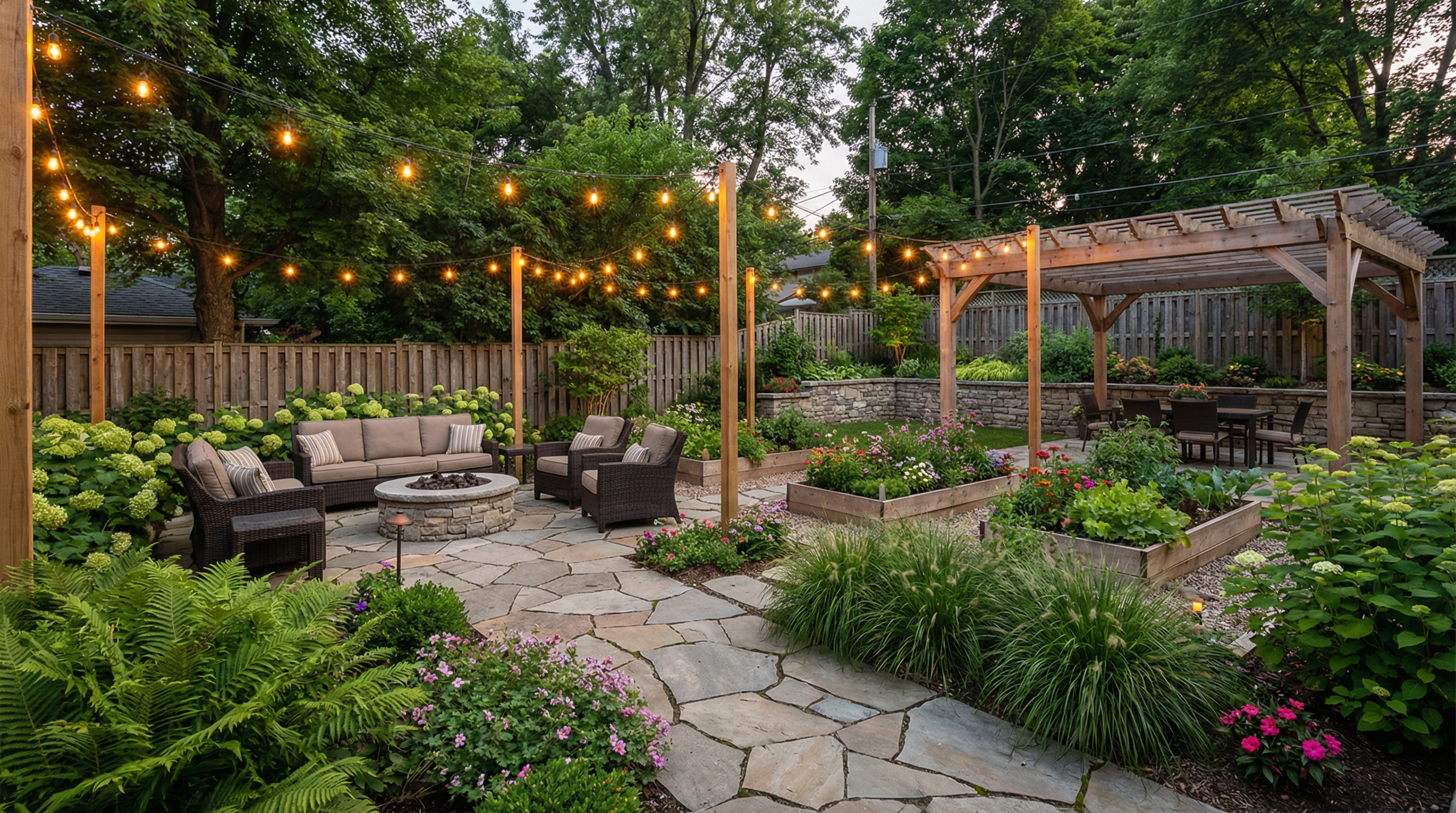
Eco Natural Garden: ландшафт дизайны
Көбірек мысалды мына жерден көріңіз: Eco Natural Garden стилі галереясы немесе толық дизайн галереясы.
FAQ: Eco Natural Garden стиліндегі ландшафт дизайны
- A landscape approach that replaces lawn and exotic ornamentals with dense plantings of regional native species, supporting local pollinators and reducing water and maintenance.
- Natives support local pollinators and wildlife (90% of caterpillars need native host plants), tolerate local climate without irrigation, and don't escape into wild areas as invasives.
- Almost every US state has a native plant society with plant lists. The Audubon and Xerces websites also have searchable databases by ZIP code.
- Not if designed well. Strong edges (paths, mowed borders, mulch lines) signal intentionality. Naturalistic doesn't mean unkempt.
- About 3 years — native perennials famously "sleep, creep, then leap" through their first three growing seasons, with full maturity in year 3.
- Yes — many designers keep a small lawn for play or pathway use, reducing the total turf area by 60-80%. Even partial conversion makes a big ecological difference.
- About $15-50 per sq m fully designed and planted, with lawn removal extra. It pays back through eliminated irrigation, fertilizer and mowing costs within 5-7 years.