Office in Bauhaus style
Complete guide to office interior in Bauhaus style: features, materials, color solutions, and examples
Bauhaus style is an excellent choice for your office. This style creates a harmonious and functional space, combining aesthetics and comfort.
Features of a office in Bauhaus style
Bauhaus style office design features thoughtful details and characteristic elements that create a unique atmosphere. The right combination of materials, colors, and textures unlocks the full potential of the room.
Color palette
A office in Bauhaus style is characterized by harmonious color combinations that emphasize stylistic features and create the right mood.
With GenRoom you can visualize your office in Bauhaus style in seconds. Simply upload a photo of your room, choose the "Bauhaus" style, and our AI will create a professional design!
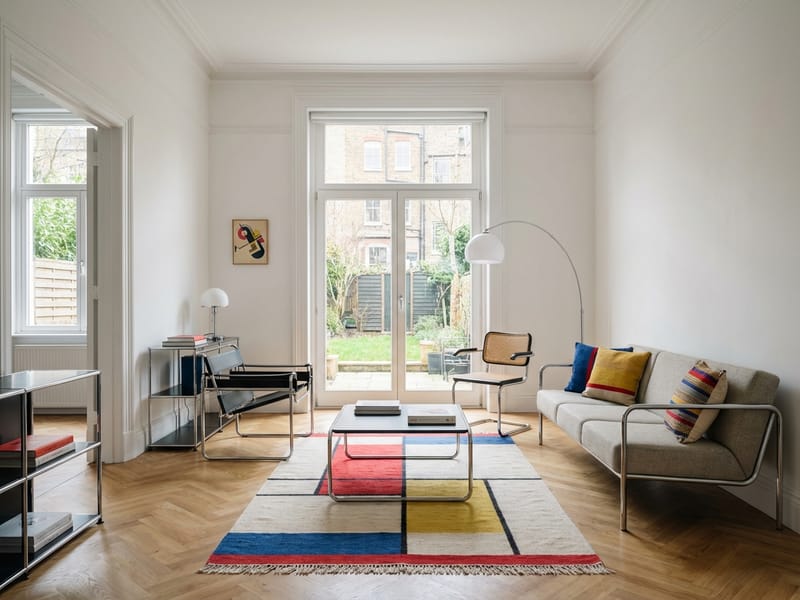
Office examples in Bauhaus style
Spróbuj stworzyć własny projekt
Prześlij zdjęcie swojego pokoju i otrzymaj profesjonalny projekt w 30 sekund. Pierwsze 2 projekty są darmowe.
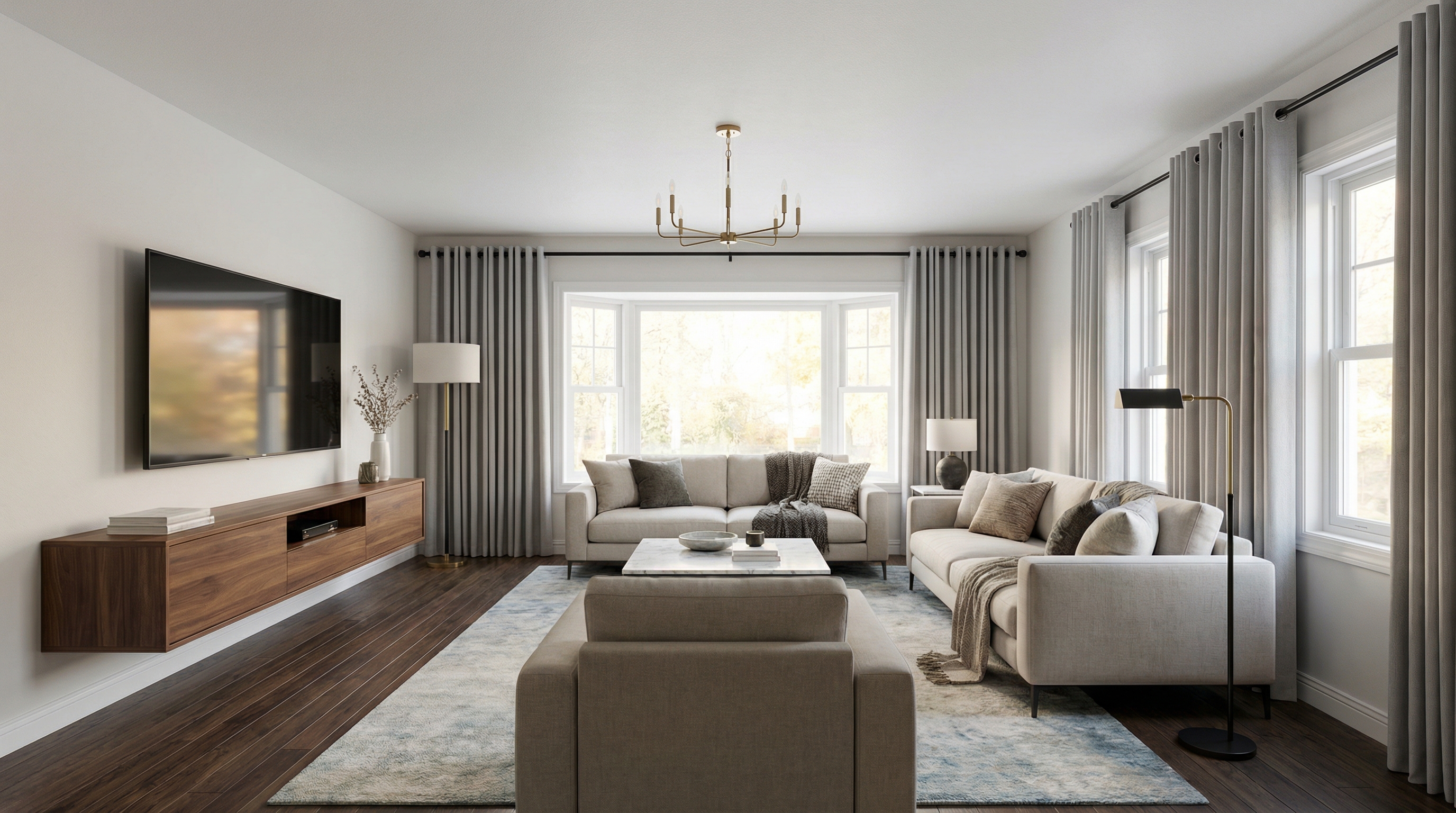
Kluczowe elementy stylu Bauhaus
Primary Color Blocks
Red, yellow and blue used as structural elements — a single wall, a door, a chair — never as decoration.
Tubular Steel Furniture
Chromed tubular-steel chairs like the Wassily and Cesca, designed by Marcel Breuer in 1925-28.
Industrial Materials
Plate glass, polished concrete, leather, plywood and steel — used honestly with no veneer or imitation.
Pure Geometry
Squares, circles and rectangles as the only allowed forms — visible in furniture, art and architecture.
White Plaster Walls
Flat white walls as a neutral backdrop, with no moldings, picture rails or trim breaking the surface.
Functional Storage
Built-in flush cabinetry without handles or ornament — storage as architecture, not furniture.
Najczęściej zadawane pytania
- A modernist design language developed at the Bauhaus school in Germany between 1919 and 1933, defined by geometric form, primary colors and industrial materials.
- Walter Gropius (founder), Marcel Breuer, Mies van der Rohe, Marianne Brandt, Wassily Kandinsky, Paul Klee and Josef Albers, among others.
- No — Bauhaus predates mid-century modern by 20-30 years and is more austere. Mid-century inherited Bauhaus principles but softened them.
- Pure primary red, yellow and blue, with black, white and gray. Pastels and earth tones are not Bauhaus.
- Knoll and Thonet hold rights to many original designs and produce authorized versions. Vintage pieces from the 1920s-30s are museum-grade and expensive.
- It can feel austere, but a single Bauhaus icon (a Wassily chair, a Bauhaus poster) layered into a softer modern interior reads well.
- Geometric abstraction — Kandinsky, Mondrian, Albers, El Lissitzky — and Bauhaus exhibition posters from the 1920s.
Spróbuj stworzyć własny projekt
Prześlij zdjęcie swojego pokoju i otrzymaj profesjonalny projekt w 30 sekund. Pierwsze 2 projekty są darmowe.