Hallway in Arabian / Moroccan style
Complete guide to hallway interior in Arabian / Moroccan style: features, materials, color solutions, and examples
Arabian / Moroccan style is an excellent choice for your hallway. This style creates a harmonious and functional space, combining aesthetics and comfort.
Features of a hallway in Arabian / Moroccan style
Arabian / Moroccan style hallway design features thoughtful details and characteristic elements that create a unique atmosphere. The right combination of materials, colors, and textures unlocks the full potential of the room.
Color palette
A hallway in Arabian / Moroccan style is characterized by harmonious color combinations that emphasize stylistic features and create the right mood.
With GenRoom you can visualize your hallway in Arabian / Moroccan style in seconds. Simply upload a photo of your room, choose the "Arabian / Moroccan" style, and our AI will create a professional design!
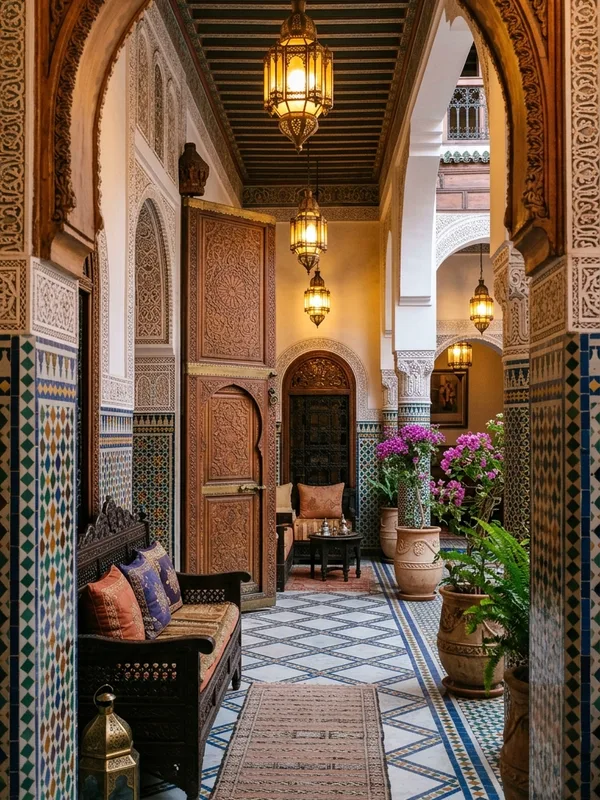
Hallway examples in Arabian / Moroccan style
Try creating your own design
Upload a photo of your room and get a professional design in 30 seconds. First 2 designs are free.
Key elements of Arabian / Moroccan style
Layered Textiles
Stacked kilim rugs, embroidered cushions and hand-loomed throws build dense, tactile floors and seating.
Tadelakt Plaster
Polished lime-plaster walls in warm cream or terracotta, smooth and slightly luminous to the touch.
Pierced Brass Lanterns
Floor and ceiling lanterns with cut-metal patterns that throw geometric shadows across walls.
Carved Cedar Doors
Hand-carved cedar or walnut doors and screens, often studded with brass nailheads.
Low Banquette Seating
Built-in floor cushions and low sofas arranged in U or L shapes for sociable salon-style rooms.
Saturated Sunset Palette
Terracotta, saffron, pomegranate, teal and indigo layered over warm plaster neutrals.
Frequently asked questions
- Moroccan is one regional expression of broader Arabian/Islamic design, with its own Berber-influenced colors, zellige tile and tadelakt plaster traditions.
- A polished lime plaster from Marrakech, used since the 12th century. It is naturally waterproof and works in bathrooms and showers.
- In a true riad-style room, two to four overlapping rugs is normal — combine a flat-weave kilim base with a thicker Beni Ourain on top.
- Pierced-metal lanterns at low and mid-heights, warm 2200-2700K bulbs and almost no overhead downlights.
- No — Moroccan riad design has been continuous for 800+ years. The risk is over-theming, not the style itself.
- Direct importers, marketplaces like Etsy from Marrakech sellers, and antique dealers specializing in North African textiles.
- Yes. A single banquette, one big lantern, layered rugs and a tadelakt accent wall can transform a 12 sq m room.
Try creating your own design
Upload a photo of your room and get a professional design in 30 seconds. First 2 designs are free.