Arabian Moroccan Interior Design
Guide to creating an interior in Arabian / Moroccan style: history, features, materials, color solutions, and examples
Arabian Moroccan interiors borrow the bones of the Marrakech riad — a courtyard house turned inward, with cool tiled floors, plaster walls and rooms layered in textile. The style took shape between the 11th and 17th centuries under successive Berber and Arab dynasties, and modern Moroccan design still rests on three pillars: hand-glazed zellige tile, carved cedar woodwork and dense textile layering.
Materials and palette
Build the base in tadelakt plaster (a polished lime finish used in Marrakech since the 12th century) and terracotta tile. Layer in carved cedar doors, brass-studded chests, leather poufs, kilim rugs and dense embroidered cushions. The palette is sunset-toned: terracotta, saffron, deep teal, brick red, pomegranate and indigo, anchored by warm plaster cream. Accents in hammered brass and antique silver finish the look.
Room ideas
A living room reads as a salon: a low banquette wrapping two walls, a brass tray table at the center, lanterns clustered low and at least three layered rugs on the floor. The bedroom uses a four-poster or canopied bed, hand-printed cotton bedding and lanterns instead of bedside lamps. Bathrooms suit a tadelakt-walled walk-in shower with a brass spout and zellige floor.
Common mistakes
Don't treat the look as a one-store theme — Pier 1 Moroccan lanterns and printed pillows alone won't carry it. Authenticity comes from layering real textiles and tactile finishes. Also avoid cool LED lighting; the style needs warm, low, point-source light.
Budget tips
Skip new poufs in favor of vintage Berber leather; spend on one big lantern rather than five small ones; use textured plaster paint to mimic tadelakt at about $4-6 per sq ft. Upload a photo of your room and our AI redraws it in Arabian Moroccan style in seconds — free to try.
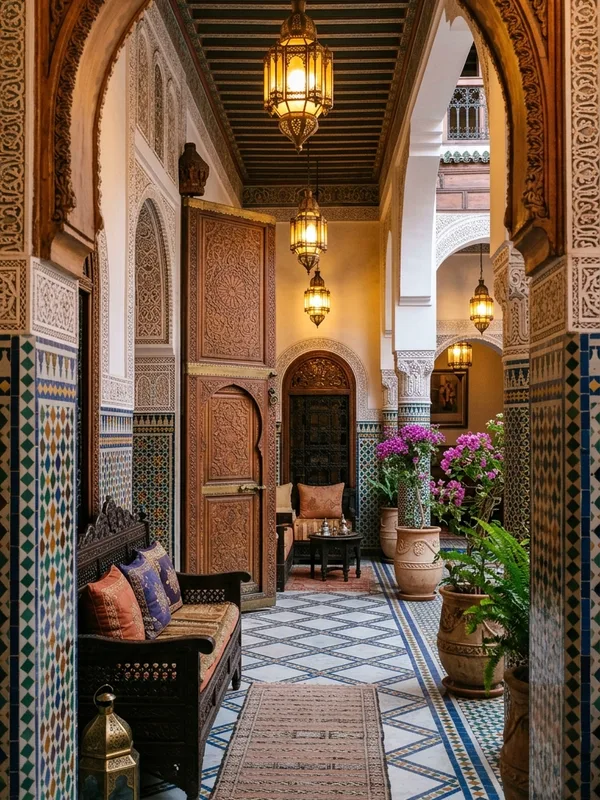
Interior foto di Arabian / Moroccan gaya
Key elements dari Arabian / Moroccan gaya
Layered Textiles
Stacked kilim rugs, embroidered cushions and hand-loomed throws build dense, tactile floors and seating.
Tadelakt Plaster
Polished lime-plaster walls in warm cream or terracotta, smooth and slightly luminous to the touch.
Pierced Brass Lanterns
Floor and ceiling lanterns with cut-metal patterns that throw geometric shadows across walls.
Carved Cedar Doors
Hand-carved cedar or walnut doors and screens, often studded with brass nailheads.
Low Banquette Seating
Built-in floor cushions and low sofas arranged in U or L shapes for sociable salon-style rooms.
Saturated Sunset Palette
Terracotta, saffron, pomegranate, teal and indigo layered over warm plaster neutrals.
Coba creating own desain
Unggah foto ruangan Anda dan dapatkan desain profesional dalam 30 detik. 2 desain pertama gratis.
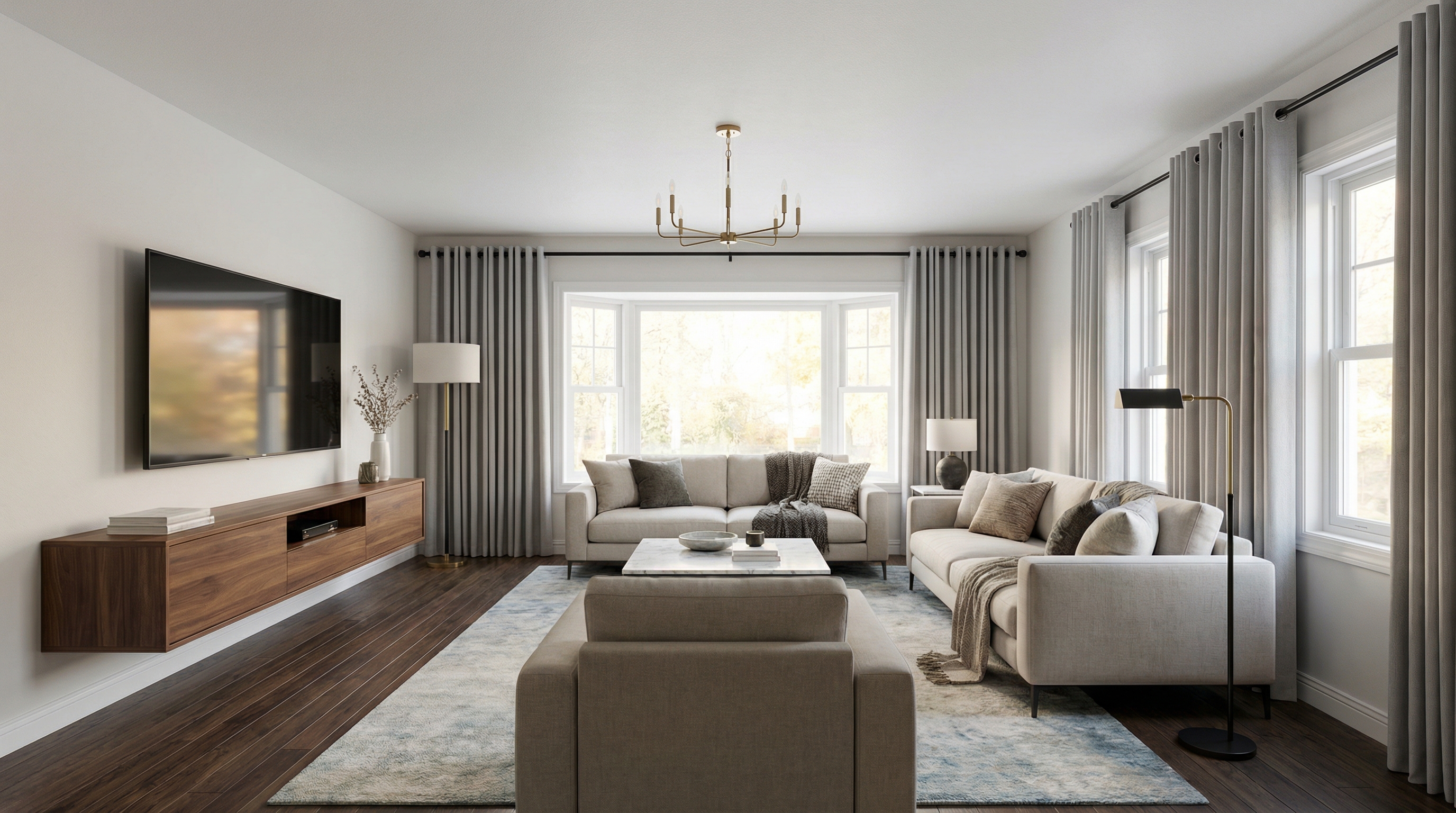
Arabian / Moroccan untuk different rooms
Lihat lebih examples di the Arabian / Moroccan gaya galeri atau the full desain galeri.
FAQ: Arabian / Moroccan gaya interior
- Moroccan is one regional expression of broader Arabian/Islamic design, with its own Berber-influenced colors, zellige tile and tadelakt plaster traditions.
- A polished lime plaster from Marrakech, used since the 12th century. It is naturally waterproof and works in bathrooms and showers.
- In a true riad-style room, two to four overlapping rugs is normal — combine a flat-weave kilim base with a thicker Beni Ourain on top.
- Pierced-metal lanterns at low and mid-heights, warm 2200-2700K bulbs and almost no overhead downlights.
- No — Moroccan riad design has been continuous for 800+ years. The risk is over-theming, not the style itself.
- Direct importers, marketplaces like Etsy from Marrakech sellers, and antique dealers specializing in North African textiles.
- Yes. A single banquette, one big lantern, layered rugs and a tadelakt accent wall can transform a 12 sq m room.