Contemporary Bathroom Design Ideas: 12 Real Examples (2026 Guide)
Clean lines, natural materials, and uncluttered space — the look that defines modern luxury. We unpack the elements of contemporary bathroom design, then show 12 photorealistic examples you can replicate.
- 12
- Real examples
- ~30s
- AI render time
- 4 free
- Credits, no card
What is Contemporary Bathroom Design?
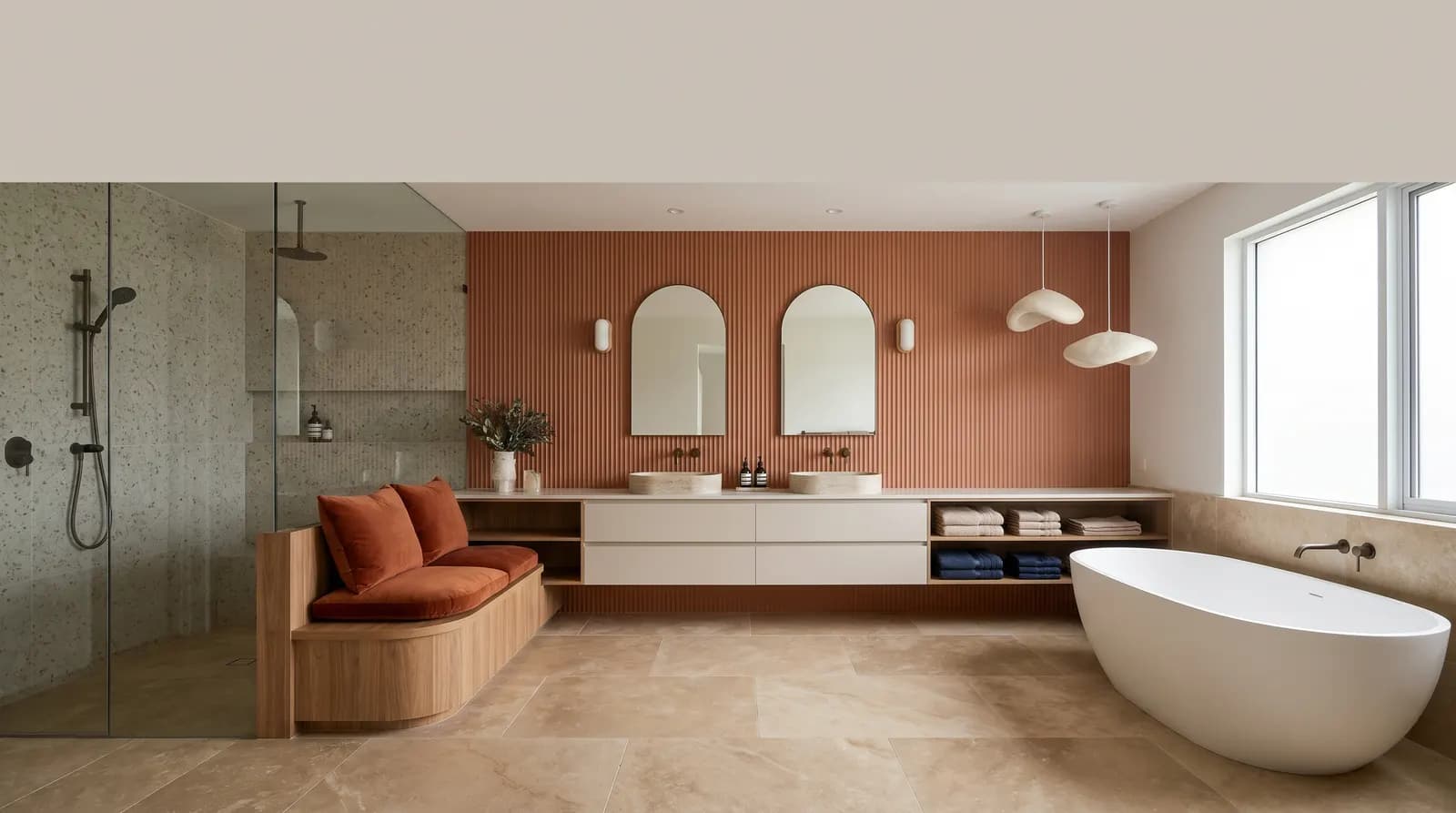
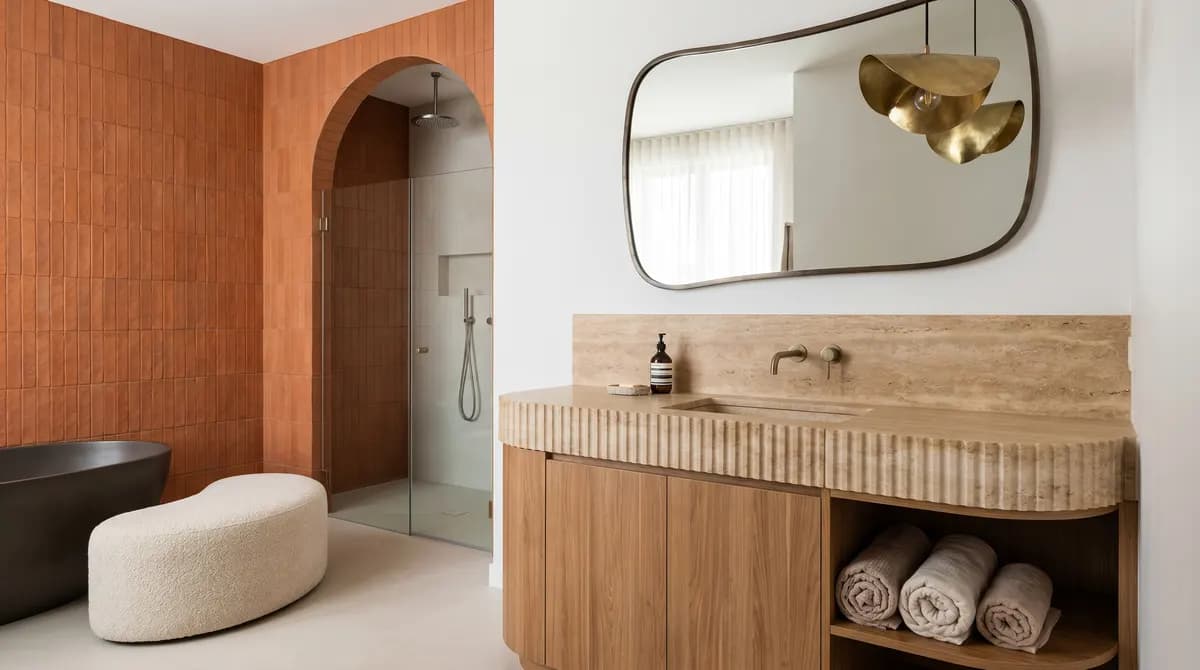
Contemporary bathroom design is a style rooted in the now, constantly evolving since the late 20th century. It emphasizes simplicity, subtle sophistication, and the deliberate use of texture and clean lines. It is defined by what it omits: fussy ornamentation, heavy patterns, and jarring colors. What remains is a serene, spa-like environment built from a curated palette of natural materials, neutral tones, and state-of-the-art fixtures.
Three principles guide authentic contemporary bathroom design. First, form and function are intertwined: floating vanities create a sense of space while offering storage, and frameless glass showers are both visually light and practical. Second, materiality is key: large-format porcelain or stone tiles, warm woods, and matte-finish metals are chosen for their tactile and visual appeal. Third, light is sculpted: layered lighting schemes combine ambient, task, and accent lights to create mood and highlight architectural details.
In 2026, the style is less about stark minimalism and more about 'soft contemporary'—a warmer, more livable interpretation. It borrows from organic modernism and Japandi, incorporating curved forms, fluted textures, and a deeper connection to nature. This makes it a versatile choice for master en-suites, compact powder rooms, and everything in between, offering a timeless aesthetic that feels both luxurious and personal.
12 Real Contemporary Bathroom Examples
Each example below is a complete look — not a mood board. Click any image to see it full-size, then hit the generate button to try the same combination on your own room photo.
 1Example
 2Example
 3Example
 4Example
 5Example
 6Example
 7Example
 8Example
 9Example
 10Example
 11Example
 12Example
Key Design Elements
Colors
- Warm greys and sophisticated taupes
- Crisp white for ceilings and sanitary ware
- Deep charcoal or black for accents
- Earthy tones like olive green or terracotta as a feature
- Natural wood tones (walnut, white oak)
Materials
- Large-format porcelain or natural stone tiles (marble, travertine)
- Fluted or reeded wood for vanity fronts and wall panels
- Solid surface countertops (Corian, quartz) with integrated sinks
- Matte black, brushed nickel, or brushed brass fixtures
- Frameless or slim-profile glass for shower screens
Furniture
- Floating vanities to create visual space
- Freestanding sculptural bathtubs
- Minimalist wall-mounted storage cabinets
- A simple wooden stool or bench for texture
- Sleek, handleless cabinetry with push-to-open mechanisms
Lighting
- Backlit mirrors or vertical sconces flanking the mirror
- Recessed, dimmable LED downlights for ambient light
- Hidden LED strips in niches or under vanities for accent lighting
- A single, sculptural pendant light if ceiling height allows
- Task lighting focused on the vanity and shower areas
Textiles & Accessories
- High-quality, solid-color towels in cotton or linen (waffle texture)
- A simple, unpatterned bath mat in a neutral tone
- Minimalist accessories: sleek soap dispensers, trays
- A single piece of greenery, like an orchid or eucalyptus branch
- Absence of clutter; only essential items are visible
Contemporary Bathroom Color Palette
Six pigments form the foundation—build your serene space from this curated selection.
The perfect crisp white for sanitary ware, ceilings, and trim. It reflects light beautifully and provides a clean backdrop for other materials.
A sophisticated blend of grey and beige, ideal for large-format wall and floor tiles. It offers warmth without being overtly brown.
A light, textural grey that mimics the look of honed concrete. Use it for floors or a feature wall to add an industrial-luxe touch.
The essential dark accent for tapware, window frames, and hardware. Provides a graphic counterpoint to the lighter tones.
A rich, warm wood tone for a floating vanity or storage unit. It introduces a natural, organic element and prevents the space from feeling cold.
A subtle, earthy green for a painted feature wall or accent tiles. It connects the space to nature and adds a layer of quiet personality.
Must-Have Furniture & Fixtures
Focus on these seven pieces to achieve an authentic contemporary look.
Floating Vanity
A wall-mounted vanity creates an illusion of more floor space. Opt for a simple design in natural wood or a solid color with an integrated sink.
Frameless Glass Shower Screen
A single, fixed panel of glass creates an open, airy feel. It's minimalist, functional, and easy to clean.
Freestanding Tub
If space allows, a sculptural freestanding tub acts as the room's centerpiece. Choose a simple, organic shape in a solid surface material.
Wall-Mounted Faucet
Extending from the wall behind the sink, these faucets free up counter space and contribute to a clean, uncluttered aesthetic. Matte black is a classic choice.
Backlit Mirror
An integrated LED backlight provides soft, flattering task lighting and adds a high-tech, hotel-like feel. A simple circular or rectangular shape works best.
Linear Shower Drain
A long, narrow drain, often placed against the shower wall, allows for the use of large-format floor tiles without complex cuts, creating a seamless look.
Wall-Hung Toilet
With the cistern concealed in the wall, a wall-hung toilet looks sleek and makes cleaning the floor underneath effortless.
Common Mistakes to Avoid
Too cold and sterile — a common pitfall of minimalism. Always incorporate natural materials like wood and textured textiles to add warmth and soul.
Poor lighting — relying on a single overhead light. A contemporary bathroom needs a layered lighting scheme: ambient, task (at the mirror), and accent (in a niche).
Ignoring storage — the clean look depends on having a place for everything. Plan for integrated storage like a vanity with deep drawers or a recessed medicine cabinet.
Mixing too many finishes — stick to one or two metal finishes for fixtures (e.g., matte black and brushed brass). Too many competing metals look chaotic.
Forgetting scale — a tiny freestanding tub in a huge room or a massive vanity in a small one will look awkward. Ensure all elements are proportioned to the space.
Try Contemporary in Your Own Bathroom
Upload a photo of your real bathroom. Get a photorealistic contemporary redesign in about 30 seconds. 4 free credits, no card.
Generate Your Contemporary Bathroom FreeOther Contemporary Rooms
Apply the same principles of clean lines and natural materials throughout your home.


Other Bathroom Styles
Same room, different aesthetic — explore the rest of the bathroom style library.


Contemporary Bathroom — Frequently Asked Questions
What is the difference between modern and contemporary bathroom design?
What are the best tiles for a contemporary bathroom?
How can I make a small contemporary bathroom feel bigger?
What kind of lighting is best for a contemporary bathroom?
Are freestanding tubs practical for most bathrooms?
What color should my fixtures and hardware be?
How to Design a Contemporary Bathroom
Follow these five steps in order for a cohesive, sophisticated result.
- 1
Establish a Neutral Base Palette
Start with large-format tiles in a neutral tone like greige, soft grey, or off-white. Use the same tile on the floor and at least one main wall to create a seamless, expansive backdrop. Paint other walls and the ceiling in a crisp white.
- 2
Select a Floating Vanity and Statement Tub
Choose a wall-mounted vanity in a warm wood (walnut, oak) or a solid matte finish. If space permits, add a freestanding tub with a simple, sculptural form. These two pieces will anchor the room's design.
- 3
Commit to One Metal Finish
Pick one finish for all your metalware—faucets, shower controls, towel rails. Matte black is a safe and stylish bet. Brushed nickel or brass can add warmth. Sticking to one finish creates a deliberate, high-end look.
- 4
Layer Your Lighting
Plan for three types of light: ambient (ceiling downlights), task (a backlit mirror or sconces), and accent (LED strips in niches or under the vanity). Put everything on dimmers to control the mood, from bright and functional to spa-like and relaxing.
- 5
Add Texture and Life
This is the final layer that prevents sterility. Introduce a fluted wood panel, a waffle-weave towel, a simple wooden stool, and a single live plant like an orchid or a snake plant. Keep accessories to a minimum; every object should be beautiful and functional.
Keep Exploring
Tools and guides that pair with this style.