Wabi-Sabi Kitchen Design Ideas: 12 Real Examples (2026 Guide)
Lime-plaster walls, soapstone counters, hand-thrown ceramics — the wabi-sabi kitchen is the quiet, deeply tactile alternative to the chrome-and-glass renovation. We unpack the rules, then show 12 photorealistic examples.
- 12
- Real examples
- ~30s
- AI render time
- 4 free
- Credits, no card
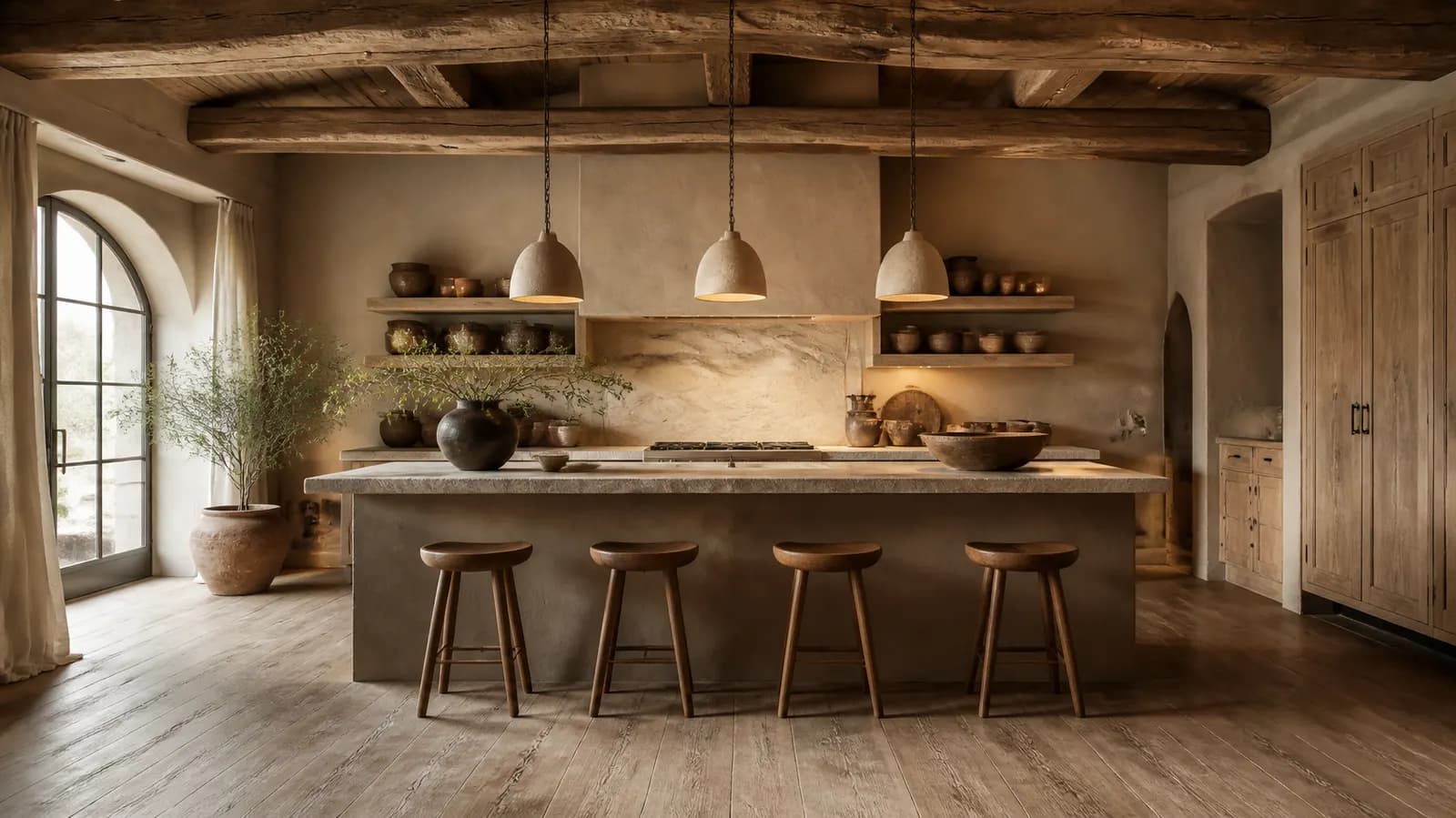
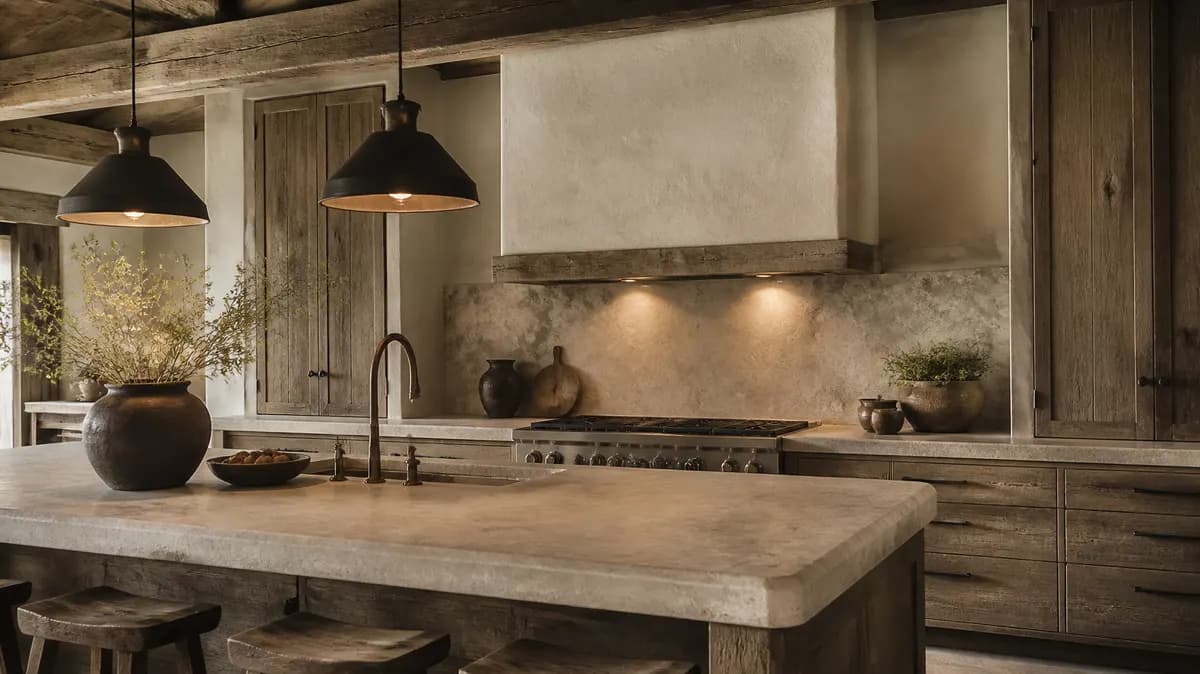
What is Wabi-Sabi Kitchen Design?
The wabi-sabi kitchen is the slowest, quietest take on the kitchen problem of the past century. Where modern kitchens chase the mirror-finish lacquer and the seamless quartz, the wabi-sabi kitchen embraces the hand-trowelled lime wall, the soapstone counter that will scratch and patina, the unlacquered brass tap that develops a soft tarnish, the open shelf of hand-thrown stoneware mugs no two of which are exactly identical. It is the kitchen of someone who cooks slowly, eats slowly and would rather buy fewer things, but better ones.
Three principles guide an authentic wabi-sabi kitchen. First, honest materials that show their age — soapstone, raw clay, weathered wood, lime plaster, hand-forged iron, unlacquered brass. Second, the discipline of subtraction — fewer cabinets, fewer gadgets, fewer items on the counter, almost nothing on the splashback. Third, asymmetric balance — the open shelf hangs slightly off-centre over the sink, the pendant lights are placed irregularly above the island, the pots in the rack are not the same size and were not bought together.
In 2026 the wabi-sabi kitchen has become a global aspirational style, especially in Japan, Australia and northern Europe. It pairs naturally with Japandi (which adds Scandinavian craft), Mediterranean (which adds warmer terracotta and olive) and modern architecture (against which the textured plaster reads as deliberate counterpoint). The throughline is always plaster walls instead of tile, open shelving instead of upper cabinets, soapstone instead of quartz and unlacquered brass instead of chrome.
12 Real Wabi-Sabi Kitchen Examples
Each example below is a complete look — not a mood board. Click any image to see it full-size, then hit the generate button to try the same combination on your own room photo.
 1Example
 2Example
 3Example
 4Example
 5Example
 6Example
 7Example
 8Example
 9Example
 10Example
 11Example
 12Example
Key Design Elements
Colors
- Bone white and warm off-white plaster walls
- Soapstone grey-black on counters
- Weathered walnut and aged oak cabinetry
- Raw clay and warm sand splashback
- Unlacquered brass and aged iron hardware
Materials
- Hand-trowelled lime plaster or tadelakt walls
- Soapstone or honed limestone counters
- Weathered solid oak or walnut cabinet fronts
- Hand-thrown stoneware and raku ceramics
- Unlacquered brass and aged iron for hardware and lighting
Furniture
- Solid-wood slab cabinets, no shaker detail
- Floating weathered-oak shelves over the sink
- Low solid-walnut island, often hand-finished
- Two or three low wood stools, never matching
- Integrated pantry behind slab cabinet panels
Lighting
- Paper or linen pendant lights over the island
- Hand-thrown ceramic sconce by the sink
- Under-shelf warm LED strips for ambient
- Single beeswax candle for tea time
- Layered warm-white sources at 2700 K
Textiles
- Raw linen tea towels in oatmeal and sand
- Woven jute or wool runner on the floor
- Stonewashed linen apron on a hook
- Hand-loomed linen seat pads on the stools
- Hand-thrown stoneware as tactile counterpoint
Wabi-Sabi Kitchen Color Palette
Six pigments do most of the work — start here, then add one accent of your own.
The base white for plaster walls — warm and slightly grey rather than bright. Looks alive against soapstone and weathered walnut.
The signature accent — a tadelakt splashback, a single accent wall or a hand-thrown vessel on the counter. Adds depth without sweetness.
The counter colour — deep grey-black with white veining. The largest single colour in the room after the walls, anchoring the palette.
The hero wood for cabinet fronts and shelving. Medium-dark brown with grain visible — finished with hardwax oil, never lacquer.
The ceramics colour — unglazed terracotta or stoneware pieces on the open shelves. Used in small to medium doses but consistently.
The strict metal accent — unlacquered tap, drawer pulls, pendant arms. Develops a deeper patina with use; never polished bright.
Must-Have Furniture & Fixtures
If you only buy these seven, you will read as authentically wabi-sabi.
Soapstone counter
Honed soapstone slab in deep grey-black. Will scratch and develop a soft sheen with use — that patina is the point, not a flaw to be polished out.
Weathered-oak slab cabinets
Flat-front, single-grain weathered oak or walnut, no shaker, no panel detail. Wood pulls or recessed finger pulls — no chrome handles.
Hand-trowelled plaster walls
Lime plaster or tadelakt on all walls, including the splashback. Hand-applied to leave visible movement. The single biggest surface decision in the room.
Floating wood shelves
One or two thick slabs of solid weathered oak mounted asymmetrically on the splashback wall. Holding mismatched stoneware and one or two clay vessels.
Unlacquered brass tap
Single high-arc brass tap mounted into the wall behind the sink, never lacquered. Develops a soft patina over years.
Paper or linen pendants
Two or three low-hung paper-shade or linen-drum pendants over the island, on a dimmer at 2700 K. Sculptural even when off.
Hand-thrown ceramics
A small collection of mismatched stoneware mugs, two raku tea bowls, one large clay pitcher and one small salt cellar. The room's tactile vocabulary.
Common Mistakes to Avoid
Specifying glossy white quartz counters — gloss kills the wabi-sabi read instantly. Soapstone, honed limestone or aged wood only; quartz only in honed finish if budget demands.
Subway tile splashback — too crisp and modern for wabi-sabi. Use tadelakt, lime plaster or zellige tile with deliberate irregular sizing.
Chrome fittings — chrome belongs to contemporary kitchens. For wabi-sabi always unlacquered brass, aged bronze or hand-forged matte iron.
Cluttered countertops — the discipline is empty surface. One ceramic salt cellar, one wooden spoon, one olive-oil pourer is enough on the counter at any time.
Symmetrical matching pendants and matching stools — buy three different stoneware mugs from three different makers; place pendants slightly off-grid. Symmetry kills the asymmetric soul of wabi-sabi.
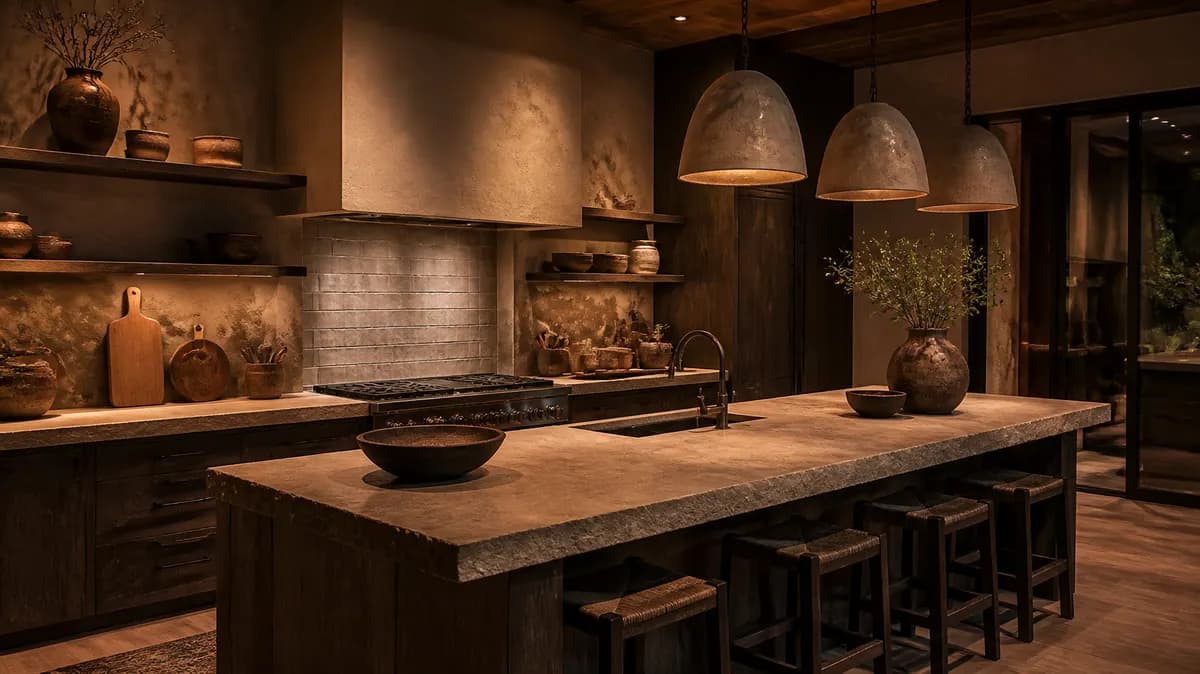
Try Wabi-Sabi Kitchen in Your Own Room
Upload a photo of your real kitchen. Get a photorealistic wabi-sabi redesign in about 30 seconds. 4 free credits, no card.
Generate Your Wabi-Sabi Kitchen FreeOther Wabi-Sabi Rooms
Apply the same palette and principles to the rest of the home.


Other Kitchen Styles
Same room, different aesthetic — explore the rest of the kitchen style library.


Wabi-Sabi Kitchen — Frequently Asked Questions
What colors define wabi-sabi kitchen design?
Is soapstone practical in a kitchen?
How do I keep a wabi-sabi kitchen clean without breaking the aesthetic?
What flooring works best for a wabi-sabi kitchen?
How is wabi-sabi different from Japandi in a kitchen?
Is wabi-sabi kitchen design good for a small or galley kitchen?
How to Design a Wabi-Sabi Kitchen
Five decisions, in this order. Skip any of them and the look will not land.
- 1
Plaster the walls and the splashback
Hand-trowelled lime plaster or tadelakt on every wall including the splashback. This is the single biggest surface decision. Tile splashbacks will pull the room toward modern or rustic; plaster keeps it wabi-sabi. Seal the splashback area with a food-safe topcoat.
- 2
Choose the counter — soapstone, honed limestone, aged wood
Soapstone is the canonical choice. Honed limestone or honed Calacatta is acceptable for a slightly brighter palette. End-grain butcher block in walnut works for the island. Never quartz in gloss finish; never granite.
- 3
Specify weathered-oak slab cabinets
Flat-front cabinet doors in weathered oak or walnut, with wood or recessed finger pulls. No shaker, no inset panels, no chrome handles. Skip upper cabinets entirely on one wall and replace with one or two floating wood shelves.
- 4
Hang one or two paper or linen pendants
Single low-hung paper-shade pendant over the sink, or two slightly-offset linen drum pendants over the island, on a dimmer. Add a ceramic sconce by the prep zone. Every bulb at 2700 K. Skip overhead recessed pots entirely.
- 5
Style the open shelves with mismatched ceramics
Buy three different stoneware mugs from three different makers, two raku tea bowls, one large clay pitcher, one small salt cellar. Place them on the open shelves with deliberate gaps. On the counter: one ceramic salt cellar, one wooden cutting board, one fig branch in a small clay vessel. Empty space is part of the design.
Keep Exploring
Tools and guides that pair with this style.