Mid-Century Modern Interior Design
Guide to creating an interior in Mid-Century Modern style: history, features, materials, color solutions, and examples
Mid-century modern (MCM) refers to design produced between approximately 1945 and 1975, with the creative peak from 1947 to 1957. The term was coined by Cara Greenberg in her 1984 book of the same name, but the movement itself was driven by post-WWII optimism, new manufacturing technologies (molded plywood, fiberglass), and a generation of designers — Charles and Ray Eames, Eero Saarinen, Hans Wegner, Arne Jacobsen, George Nelson — who believed good design should be affordable and democratic.
What makes mid-century modern distinctive
MCM is recognizable by organic curves balanced with geometric forms, tapered legs, warm wood (teak, walnut, rosewood), and a confident use of saturated color — mustard, avocado, burnt orange, teal — set against neutral backgrounds.
Materials and color palette
- Woods: teak (the signature), walnut, rosewood, oak — always warm, never pale
- Walls: warm white, soft beige, or one wood-paneled accent wall
- Accents: mustard yellow, burnt orange, avocado green, teal, rust
- Metals: brushed brass, hairpin steel legs, polished chrome
- Textiles: wool, leather, geometric prints (think Saarinen, Knoll)
Room-by-room ideas
Living room: an Eames Lounge Chair (or Article's Sven), a low teak credenza, a Nelson Bubble Lamp, a sunburst clock, a geometric area rug. Dining: a Saarinen Tulip Table with molded plywood chairs, a Sputnik chandelier. Bedroom: a low platform bed in walnut, hairpin-leg nightstands, a starburst mirror. Kitchen: flat-front walnut cabinetry, white quartz counters, brass pulls, atomic-pattern backsplash.
Common mistakes
- Confusing MCM with general "modern." MCM is era-specific (1945–1975). Modern is contemporary.
- Overdoing the kitsch. One sunburst clock yes; sunburst clock plus boomerang table plus atomic wallpaper is a theme park.
- Using cool grey walls. MCM palettes are warm — beige, cream, soft taupe.
- Buying all reproductions. One authentic vintage piece anchors a room better than five repros.
Mid-century modern on a budget
Article, West Elm, and IKEA's STOCKHOLM line offer MCM-inspired pieces under $1,000. For vintage authenticity, check Chairish, 1stDibs, or local estate sales — a real teak credenza from 1965 often costs less than a new West Elm one and appreciates in value.
Upload a photo of your room and our AI redraws it in mid-century modern style in seconds — free to try.
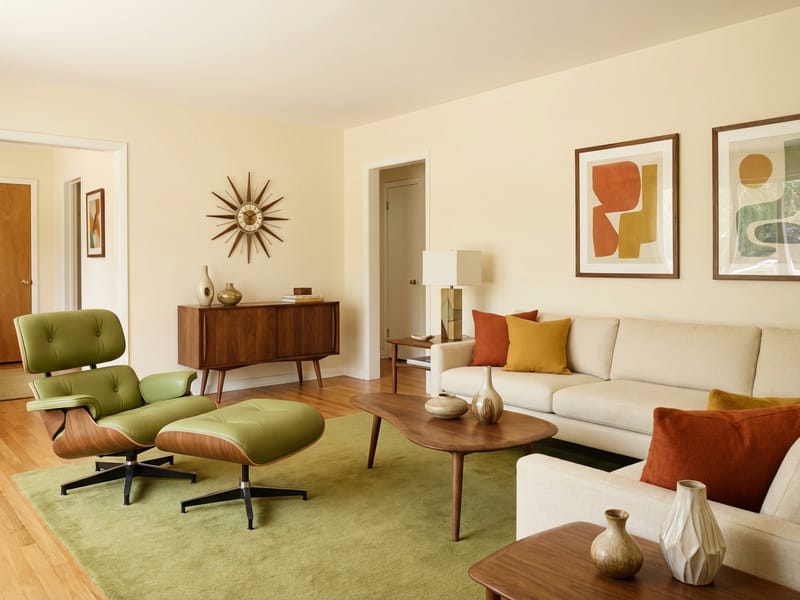
ภาพภายในในสไตล์ Mid-Century Modern
องค์ประกอบหลักของสไตล์ Mid-Century Modern
Tapered Wooden Legs
Furniture sits on slim, angled legs — the signature MCM silhouette, lifting visual weight off the floor.
Teak and Walnut
Warm-toned hardwoods, often Danish teak from the 1950s and 60s, dominate case goods, dining tables, and credenzas.
Organic Curves
Saarinen womb chairs, kidney-shaped coffee tables, and Eames molded plywood combine geometry with biomorphic form.
Saturated Accent Color
Mustard, avocado, burnt orange, and teal punctuate neutral rooms — one or two accent colors per space, used boldly.
Iconic Lighting
Nelson Bubble lamps, Sputnik chandeliers, and arched floor lamps from Arteluce define the era's lighting language.
Geometric Patterns
Atomic motifs, Saarinen-Knoll textiles, and starburst forms appear on rugs, throw pillows, and accent walls.
ลองสร้างงานออกแบบของคุณเอง
อัปโหลดรูปห้องของคุณและรับงานออกแบบระดับมืออาชีพใน 30 วินาที งานสร้าง 2 ชิ้นแรกฟรี
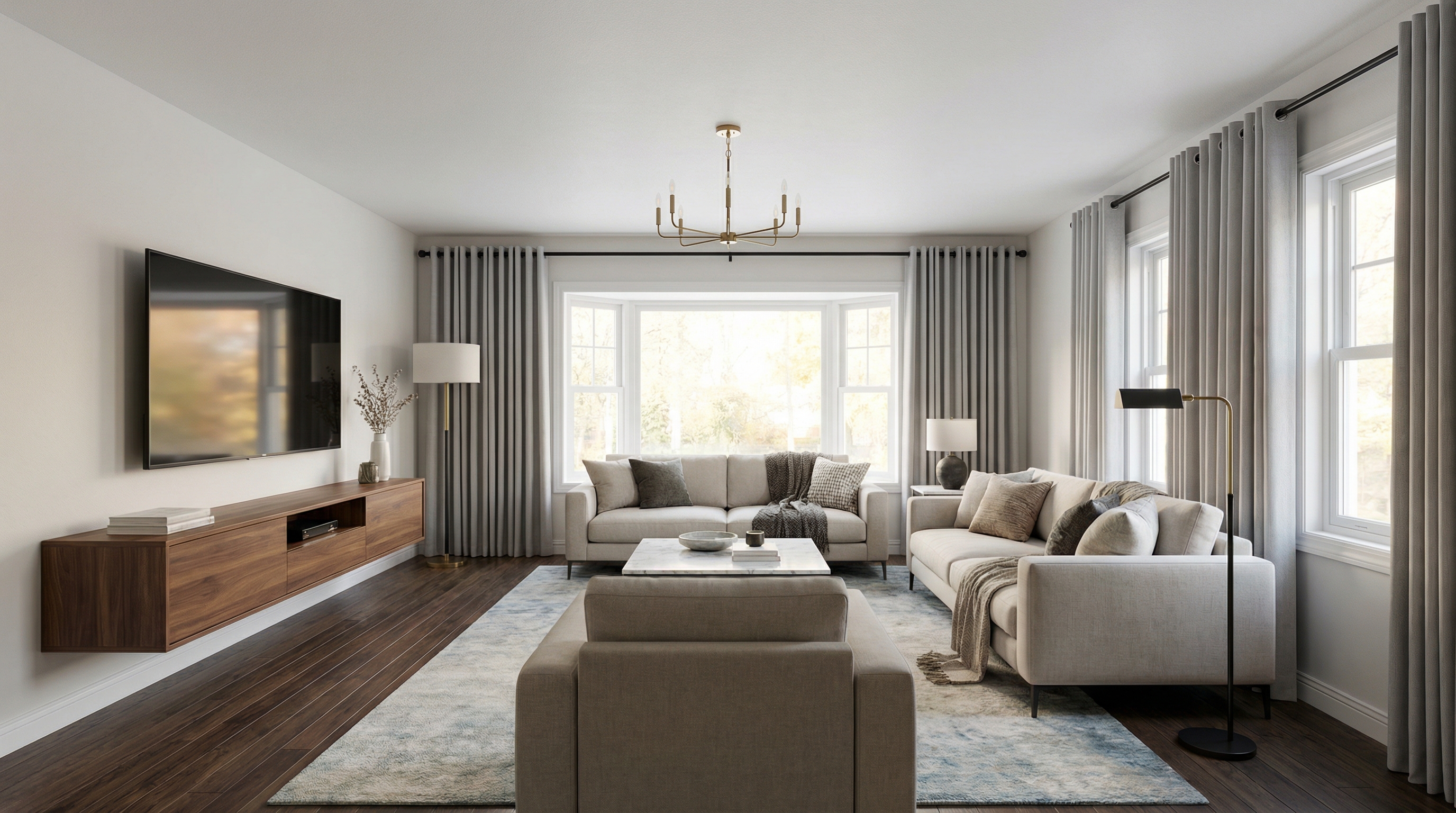
Mid-Century Modern สำหรับห้องต่างๆ
ดูตัวอย่างเพิ่มเติมที่ แกลเลอรีสไตล์ Mid-Century Modern หรือ แกลเลอรีงานออกแบบทั้งหมด.
FAQ: ภายในสไตล์ Mid-Century Modern
- Officially 1945 to 1975, with peak production from 1947 to 1957. The term was coined by Cara Greenberg in her 1984 book "Mid-Century Modern: Furniture of the 1950s."
- MCM is a specific historical movement with era-defined characteristics — teak, tapered legs, organic curves, saturated accents. Contemporary modern is current and broader, often using cooler palettes and flat-front cabinetry.
- The Eames Lounge Chair (1956), Saarinen Tulip Table (1957), Wegner Wishbone Chair (1949), Nelson Bubble Lamp (1947), and Noguchi Coffee Table (1944). All remain in production.
- Warm neutral walls (cream, beige, soft taupe) with one or two saturated accents: mustard yellow, avocado green, burnt orange, teal, or rust. Avoid cool greys and pastels.
- Yes — MCM pairs beautifully with Scandinavian (shared design philosophy), Japandi (overlapping with Wegner-era Danish), and modern. Avoid mixing with farmhouse, rustic, or maximalist; the visual languages clash.
- It has remained popular for 25+ years and shows no decline. Mad Men (2007), the rise of Eames reissues, and the vintage furniture market all sustain ongoing demand. Quality vintage pieces appreciate.
- Chairish, 1stDibs, eBay, local estate sales, and vintage dealers in your city. Authentic Danish teak credenzas, Eames chairs, and Saarinen tables routinely appear at 30–60% below new reproduction prices.