Mediterranean Interior Design
Guide to creating an interior in Mediterranean style: history, features, materials, color solutions, and examples
Mediterranean interior design draws from the architectural traditions of Spain, Italy, Greece, southern France, and coastal North Africa — regions sharing climate, materials, and 2,000+ years of cross-pollinated design. The American "Mediterranean Revival" emerged in 1920s Florida and Southern California (Addison Mizner's Palm Beach, George Washington Smith's Santa Barbara) and remains a defining residential style in those regions. The 2020s reinvention is lighter and cleaner — same materials, contemporary proportions.
What makes Mediterranean distinctive
The signature elements are textured stucco or plaster walls, terracotta tile floors, arched doorways and windows, wrought iron accents, and a warm earth-toned palette. Rooms feel hand-crafted, slightly imperfect, and connected to centuries of regional craft tradition. Modern Mediterranean is bright and airy; traditional is moodier and darker.
Materials and color palette
- Walls: lime wash, Venetian plaster, textured stucco, white or warm cream
- Floors: terracotta tile (handmade Saltillo), limestone, travertine, encaustic tile
- Woods: dark walnut, weathered oak, olive wood, antique pine, distressed elm
- Metals: hand-forged wrought iron, antique brass, copper
- Accents: terracotta, ochre, deep blue, olive green, oxblood, sun-bleached cream
Room-by-room ideas
Living room: lime-washed cream walls, arched doorway to the next room, exposed dark-stained ceiling beams, a linen sofa, a hand-knotted Persian rug, wrought-iron candle chandelier, an olive tree in a terracotta pot. Kitchen: white plastered walls, handmade terracotta tile floor, deep blue hand-painted Talavera tile backsplash, copper pots on a wrought-iron rack, butcher-block island. Bedroom: a wrought-iron four-poster bed, white linen bedding, terracotta floor, arched window with shutters. Bathroom: microcement walls, hand-painted encaustic tile floor, antique brass fixtures.
Common mistakes
- Confusing Mediterranean with Tuscan kitsch — heavy fake-aged faux finishes, gold-painted iron, grape motifs. Real Mediterranean is restrained and material-honest.
- Wrong tile. Use handmade Saltillo terracotta or genuine encaustic, not glossy ceramic look-alikes. The patina is the point.
- Cool grey walls. The palette is warm — cream, oat, sun-bleached white. Cool greys break the Mediterranean light.
- Forgetting the arch. At least one arched doorway, window, or niche is required for authentic feel.
Mediterranean on a budget
Lime-wash paint (Bauwerk, Portola) on existing walls transforms a room for $80. Add one Persian-style rug (Ruggable or vintage from Etsy), wrought-iron candle sconces from World Market, a hand-painted Talavera tile backsplash strip in the kitchen, and one olive tree in a terracotta pot. Total transformation under $600.
Upload a photo of your room and our AI redraws it in Mediterranean style in seconds — free to try.
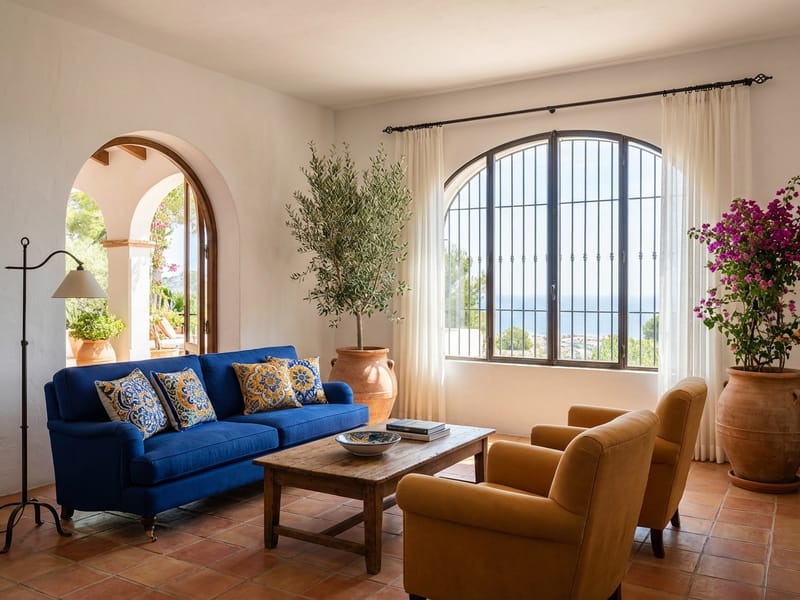
ภาพภายในในสไตล์ Mediterranean
องค์ประกอบหลักของสไตล์ Mediterranean
Textured Plaster Walls
Lime-washed and Venetian-plastered walls in warm cream provide the hand-finished texture central to Mediterranean architecture.
Terracotta Floors
Handmade Saltillo terracotta tiles in warm orange-brown anchor every authentic Mediterranean room with centuries-old craft.
Arched Doorways
Rounded arch openings replace square doorways, referencing Roman, Moorish, and Romanesque architectural traditions.
Wrought Iron Details
Hand-forged candle chandeliers, four-poster beds, balcony railings, and curtain rods bring blacksmith craft into every room.
Earth-Tone Palette
Terracotta, ochre, deep blue, olive green, and oxblood reference the regional landscape and centuries of pigment tradition.
Hand-Painted Tile
Talavera, Moroccan zellige, and Portuguese azulejo tiles provide pattern bursts on backsplashes, risers, and accent walls.
ลองสร้างงานออกแบบของคุณเอง
อัปโหลดรูปห้องของคุณและรับงานออกแบบระดับมืออาชีพใน 30 วินาที งานสร้าง 2 ชิ้นแรกฟรี
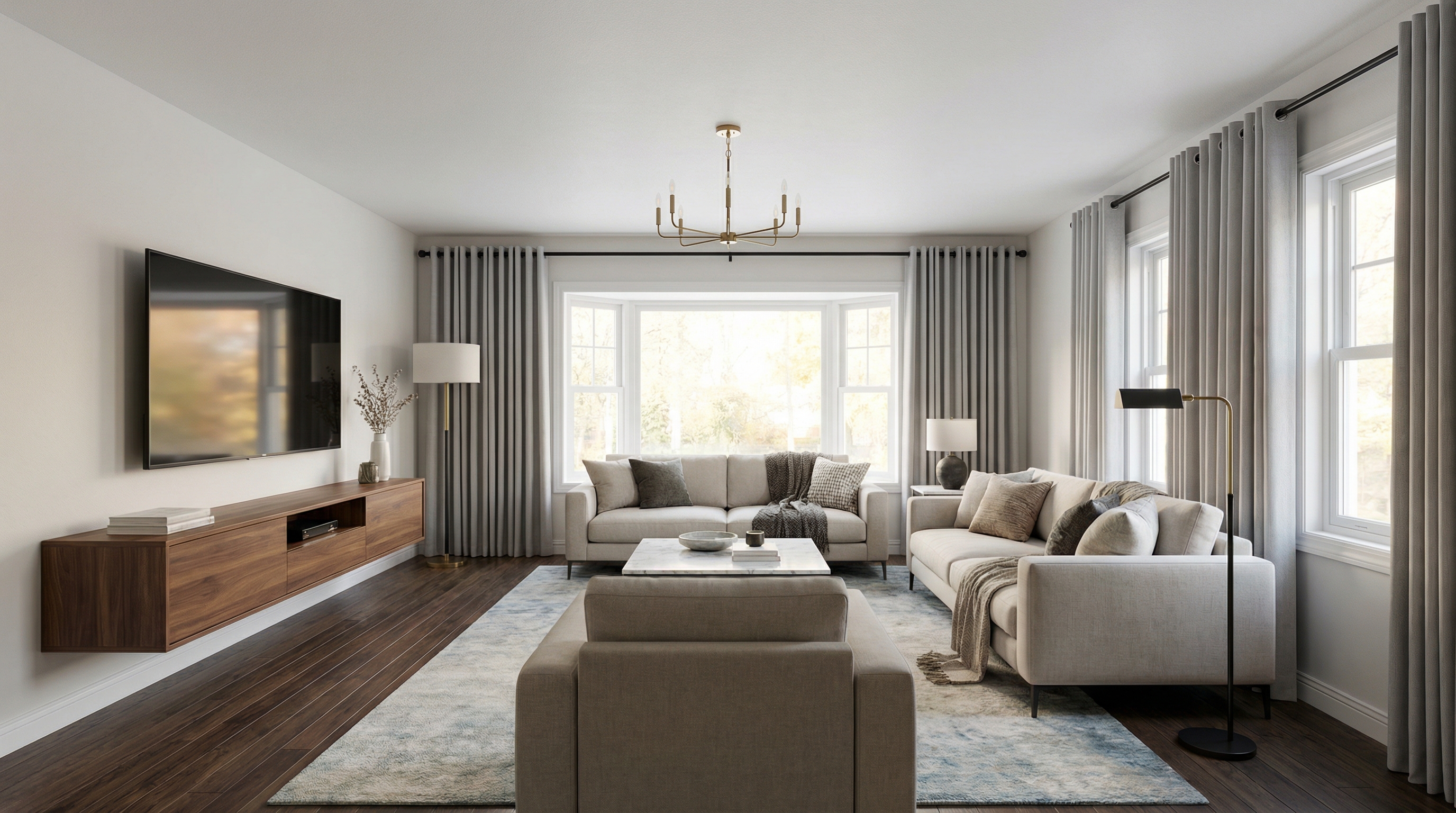
Mediterranean สำหรับห้องต่างๆ
ดูตัวอย่างเพิ่มเติมที่ แกลเลอรีสไตล์ Mediterranean หรือ แกลเลอรีงานออกแบบทั้งหมด.
FAQ: ภายในสไตล์ Mediterranean
- Mediterranean style draws from Spanish, Italian, Greek, and southern French architectural traditions. It features textured plaster walls, terracotta floors, arched doorways, wrought iron, and a warm earth-toned palette. The American revival began in 1920s Florida and California.
- Tuscan is a subset of Mediterranean specific to central Italy, often executed in American homes as a heavier, more rustic version with darker woods and faux-aged finishes. Modern Mediterranean is brighter, cleaner, and more material-honest.
- Warm cream and oat for walls, layered with terracotta, ochre, deep blue, olive green, and oxblood accents. Avoid cool greys, pure whites, and primary colors — they break the warm Mediterranean light.
- Yes — the warm palette and textured materials actively counteract cold-climate gloom. Mediterranean revival is popular in cities with poor weather precisely because the style brings perceived warmth and sunshine indoors year-round.
- Handmade Saltillo terracotta tile (the gold standard), limestone, travertine, hand-painted encaustic tile, or wide-plank distressed oak. Avoid glossy ceramic, cool grey porcelain, and high-gloss laminate — they break the hand-crafted feel.
- Three changes: lime-wash one accent wall in warm cream, install a Persian-style rug, and add wrought-iron candle sconces or a chandelier. Add a terracotta planter with an olive tree and one piece of hand-painted Talavera tile decor.
- Modern Mediterranean strips away heavy traditional elements and pairs the core materials (plaster, terracotta, wrought iron) with cleaner contemporary furniture, larger windows, and a lighter palette. Think Hotel Esencia or Cap Rocat — refined rather than rustic.