Mediterranean Kids Room Design Ideas: 12 Real Examples (2026 Guide)
Hand-troweled plaster, a low rattan bed, terracotta floor and a single arched window — a kids room that feels like a coastal Moroccan farmhouse. We unpack what makes it land, then show 12 photorealistic examples you can copy.
- 12
- Real examples
- ~30s
- AI render time
- 4 free
- Credits, no card
What is Mediterranean Kids Room Design?
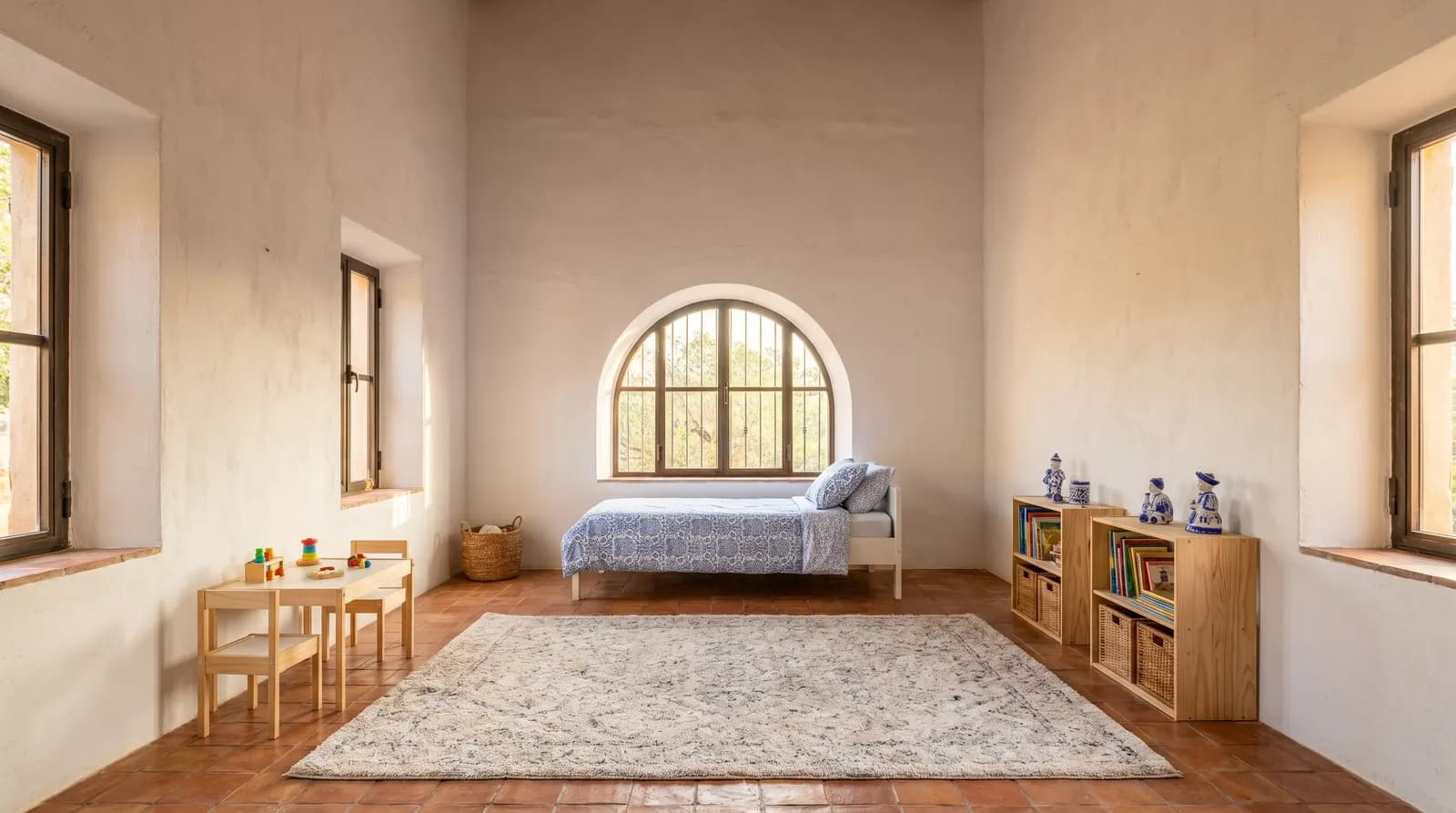
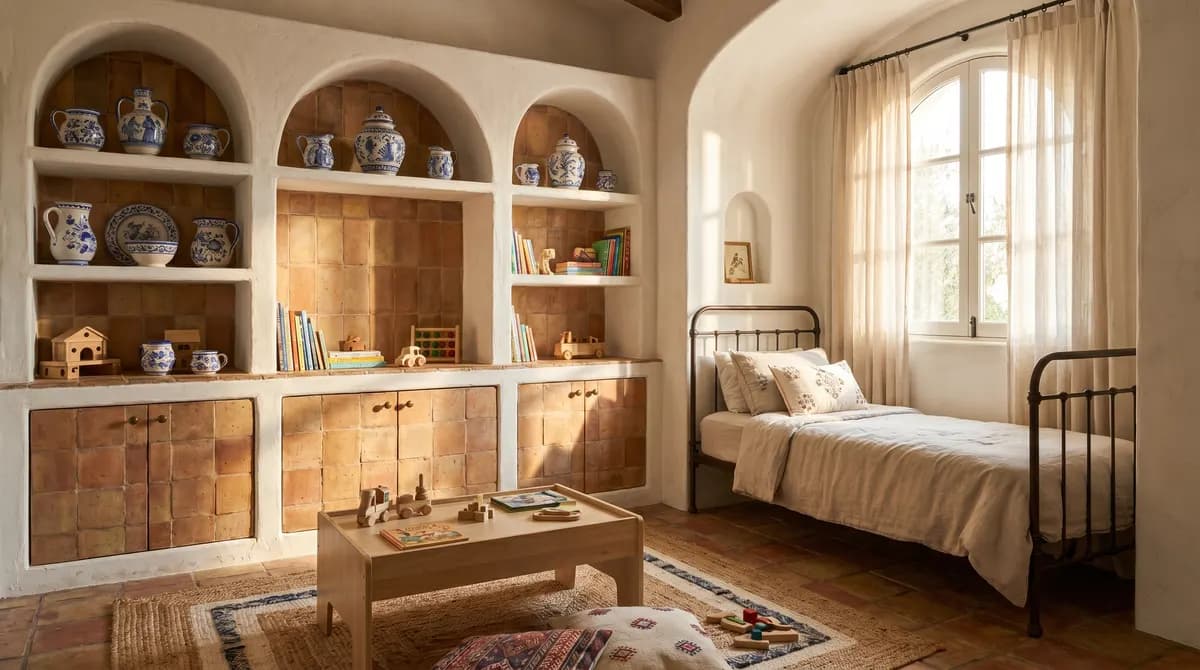
Mediterranean kids room design is what happens when you give the language of a Mallorcan farmhouse or a Moroccan riad to a child's bedroom. It is the deliberate antidote to the cartoon-coloured plastic that defines most modern kids rooms. The walls are warm hand-troweled plaster, the bed is a low rattan or carved-wood frame, the floor is terracotta or honey oak, and the toys live in woven baskets and chestnut chests rather than open plastic bins.
Three principles run through every authentic Mediterranean kids room. First, the palette is earth-warm rather than primary: clay pink, oat, terracotta, sage and olive, never bright blue, red and yellow. Second, the surfaces are natural and tactile: rattan, linen, sheepskin, cotton, stoneware. Third, the room is calm — there is a deliberate emptiness around the bed, an arched niche for books, and one craft object such as a hand-painted tile inset or a Berber wall hanging rather than a parade of branded merchandise.
In 2026 the look has become the dominant alternative to the IKEA-Tripp-Trapp-and-rainbow scheme. Designers in Lisbon, Barcelona, Tel Aviv and Brooklyn specify rattan canopy beds and tadelakt accent walls for nurseries that grow into kids rooms without redecoration. The look pairs naturally with Bohemian or Coastal sibling rooms, and the warm palette photographs beautifully on grandparents' phones at the same time.
12 Real Mediterranean Kids Room Examples
Each example below is a complete look — not a mood board. Click any image to see it full-size, then hit the generate button to try the same combination on your own kids room photo.
 1Example
 2Example
 3Example
 4Example
 5Example
 6Example
 7Example
 8Example
 9Example
 10Example
 11Example
 12Example
Key Design Elements
Colors
- Sun-bleached chalk white
- Warm clay pink and dusty peach
- Terracotta and sand beige
- Sage green and olive accents
- Honey rattan and reclaimed chestnut
Materials
- Hand-troweled lime plaster or limewash
- Rattan and caned wood for beds and chairs
- Reclaimed pine or olive for shelving
- Terracotta floor tile or honey oak boards
- Soft cotton, linen and wool textiles
Furniture
- Low rattan or caned canopy bed
- Chestnut chest of drawers with brass pulls
- Small olive-wood study desk and caned chair
- Open chestnut bookshelf with arched openings
- Woven seagrass toy basket on the floor
Lighting
- Brass swing-arm wall sconce beside the bed
- Stoneware bedside lamp with linen shade
- Pierced ceramic pendant for diffused ceiling glow
- Warm 2700 K LED, never cool downlights
- Soft amber plug-in nightlight for safety
Textiles
- Linen waffle quilt in oat or clay pink
- Striped Berber wool rug beside the bed
- Sheepskin draped over the reading chair
- Cotton canopy fabric on the rattan frame
- Stoneware mug and ceramic toothbrush cup
Mediterranean Kids Room Color Palette
Six pigments do most of the work — start here, then add one accent of your own.
The chalky off-white for plaster ceilings and trim. Warmer than pure white, it reads as old plaster rather than crisp new paint.
The hero accent wall behind the bed. A dusty, gender-neutral terracotta-pink that flatters every skin tone and grows with the child.
Used on linen curtains, walls and bedding. The neutral that lets the clay pink breathe without going pastel.
A muted herbal green for cushions, a small upholstered stool or a single ceramic pot. The calming note in the palette.
The hero material — bed, chair, baskets. Choose one tone of natural rattan and repeat it; bleached white rattan reads as different aesthetic.
Sconces, drawer pulls and the bed-frame finials. Always unlacquered so it patinas softly over years of sticky fingers.
Must-Have Furniture & Fixtures
If you only buy these seven, the room will read as authentically Mediterranean.
Low rattan canopy bed
A honey-rattan or caned canopy bed, mattress sitting low to the floor for an under-three child or at standard height for school age. Skip white-painted MDF and skip car-shaped beds — the rattan frame is the entire visual anchor of the room.
Chestnut chest of drawers
Solid reclaimed pine or chestnut chest with five drawers and unlacquered brass pulls. Doubles as a changing table for nursery use, then becomes a regular dresser without redecoration.
Open chestnut bookshelf
Floor-to-ceiling open shelving with arched openings cut into a low partition, or freestanding chestnut shelves on chunky brackets. Holds picture books, woven baskets and a single ceramic.
Woven seagrass toy basket
Two or three large seagrass baskets in graduated sizes, used in place of plastic toy bins. Easy for a child to drag, beautiful to photograph, and they age into useful adult storage.
Brass swing-arm sconce
An unlacquered brass swing-arm reading lamp mounted on the wall beside the bed. Replaces a clip-on lamp and frees the bedside table for a single ceramic and a book.
Striped Berber rug
A handwoven wool rug in oat with clay-pink or sage stripes, sized to anchor the bed or the play zone. Skip synthetic shag and skip cartoon-print rugs.
Pierced ceramic pendant
A small hand-pierced ceramic ceiling pendant in clay or oat. Throws a moving shadow pattern at bedtime and replaces a generic flush ceiling fixture.
Common Mistakes to Avoid
Primary-colour palette — bright red, blue and yellow toys and bedding instantly read as IKEA, not Mediterranean. Soften the palette to clay pink, terracotta, sage and oat; the toys will still be loved.
Plastic furniture — Tripp-Trapp clones, plastic toy bins and IKEA toddler beds break the spell instantly. Replace one piece at a time with rattan, seagrass and chestnut equivalents.
Cool LED ceiling lights — 4000 K downlights make every plaster wall look grey and every wood look orange. Specify 2700 K everywhere, dimmable, with a single sconce as the main task light.
Cartoon murals and branded character bedding — they cap the room at one stage of childhood and one franchise. Use a hand-painted plaster motif or a Berber wall hanging instead; both age beautifully.
Open toy storage everywhere — a Mediterranean kids room is calm, not chaotic. Two or three closed baskets and one open shelf for books is plenty. The rest hides in chests and drawers.
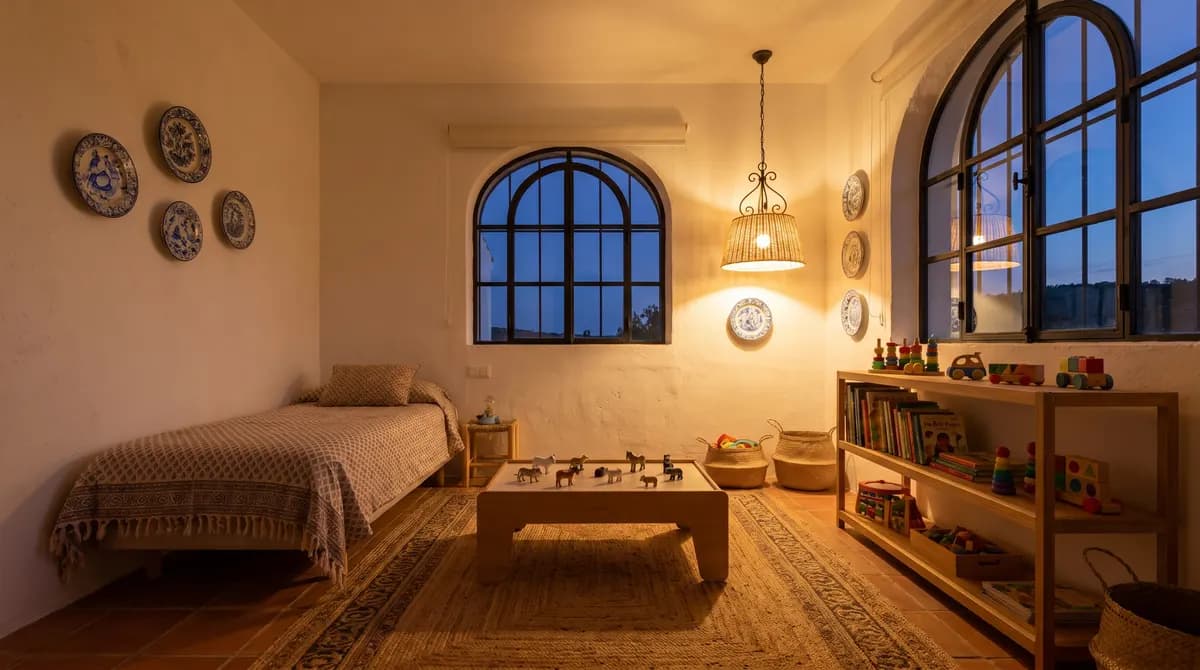
Try Mediterranean Kids Room in Your Own Room
Upload a photo of your real kids room. Get a photorealistic Mediterranean redesign in about 30 seconds. 4 free credits, no card.
Generate Your Mediterranean Kids Room FreeOther Mediterranean Rooms
Apply the same palette and principles to the rest of the home.


Other Kids Room Styles
Same room, different aesthetic — explore the rest of the kids room style library.


Mediterranean Kids Room — Frequently Asked Questions
Is rattan furniture safe and durable for kids?
How do I keep the room calm without banning toys?
Will a Mediterranean room grow with my child?
What flooring works in a Mediterranean kids room?
How is Mediterranean different from Scandinavian for a kids room?
Does Mediterranean style work in a shared kids room?
How to Design a Mediterranean Kids Room
Five decisions, in this order. Skip any of them and the look will not land.
- 1
Choose your wall finish and feature colour
Pick one of three: full limewash in oat, a clay-pink accent wall behind the bed, or hand-troweled tadelakt in sand. Whichever you choose, commit to it; mixing two plaster finishes on adjacent walls looks like indecision. The clay-pink behind-the-bed wall is the highest-impact, lowest-cost option for an existing room and lands the entire look on its own.
- 2
Buy the hero rattan bed
This is the single most consequential purchase. Solid honey rattan, low to the floor for ages zero to five, standard height after that, with an optional canopy frame. The bed is the room's anchor — it will photograph in every grandparent text for the next decade and outlast every other piece of furniture in the house.
- 3
Pick a single wood tone for storage
Chestnut, reclaimed pine or olive — choose one and repeat it across the chest of drawers, the bookshelf, the study desk and any wall shelving. Two competing wood tones is the fastest way to look amateur. The rattan stands apart as its own honey tone; the storage wood is the second supporting note.
- 4
Layer warm light and textiles
Plan three light sources at three heights — a pierced ceramic pendant on the ceiling, a brass swing-arm sconce above the bed, and a stoneware nightlight at floor level. All 2700 K, all dimmable. Layer textiles in the same palette: linen waffle quilt, wool Berber rug, sheepskin on the reading chair, one striped cotton cushion.
- 5
Hide the plastic, curate the open set
Mediterranean is calm, not toy-free. Allow five to seven curated toys on one open shelf and rotate them every two weeks. Everything else — bright plastic, branded merchandise, half-finished craft kits — lives in two or three large seagrass baskets that close. The eye should land on rattan, plaster and brass, not on a Paw Patrol logo.
Keep Exploring
Tools and guides that pair with this style.