Transitional Interior Design
Guide to creating an interior in Transitional style: history, features, materials, color solutions, and examples
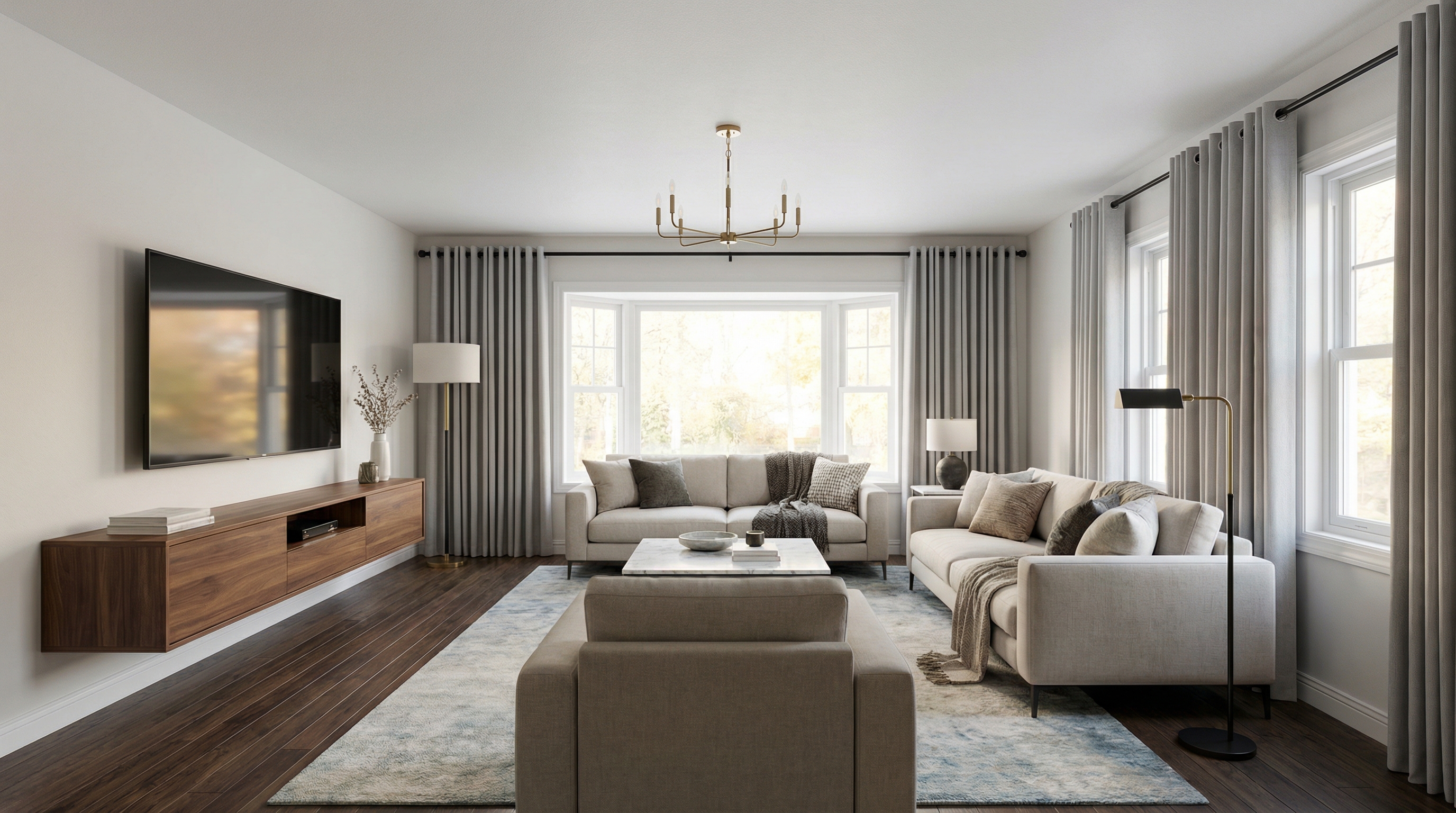
Transitional interior design is the most popular American interior style of the 2010s and 2020s — and for good reason. It blends the comfort and proportion of traditional design with the clean lines and restraint of contemporary, producing rooms that feel timeless rather than trend-bound. The style emerged in US shelter magazines through the late 1990s and has been the dominant builder-grade aesthetic since around 2015.
Materials and palette
The palette is deliberately neutral: warm whites, greige, taupe, soft black and natural wood, with one or two accent colors (often navy, sage or terracotta) used sparingly. Floors are wide-plank white oak or engineered hardwood. Cabinetry is Shaker-style in white or off-white. Textiles are linen and wool — no chintz, no velvet overload. Hardware is brushed brass, satin nickel or matte black.
Room ideas
A transitional living room pairs a classic English roll-arm sofa in linen with a glass-and-brass coffee table and a streamlined sectional in greige. Walls carry simplified picture-frame moldings or none at all. The kitchen has Shaker cabinets, a quartz waterfall island, brass pendant lights and subway tile. Bedrooms feature an upholstered headboard with clean lines, matching nightstands and 2-inch-thick linen drapes.
Common mistakes
The pitfall is blandness — when transitional becomes pure beige with no character. Always include at least one textured element (boucle, raw linen, woven wood) and one piece of art with real presence. Also: don't mix brushed nickel and warm brass; pick one metal finish.
Budget tips
Transitional is the most budget-friendly style because mid-market retailers (West Elm, Crate & Barrel, CB2) are tuned to it. Spend on one quality sofa and one rug; everything else can be value-tier. Upload a photo of your room and our AI redraws it in transitional style in seconds — free to try.

Interior foto di Transitional gaya
Key elements dari Transitional gaya
Neutral Palette
Warm whites, greige, taupe and soft black with one or two restrained accent colors layered through textiles.
Simplified Silhouettes
Furniture with traditional comfort but stripped of fuss — roll-arm sofas, Shaker cabinets, clean-lined upholstered beds.
White Oak Floors
Wide-plank white oak or engineered hardwood as the dominant floor surface — warm, light and forgiving.
Mixed Textiles
Linen, wool, bouclé and woven natural fibers layered for tactile depth on a neutral base.
Brass or Black Hardware
Brushed brass, satin nickel or matte black hardware used consistently across cabinetry, lighting and plumbing.
Statement Lighting
One sculptural pendant or chandelier per room as the focal point against an otherwise restrained backdrop.
Coba creating own desain
Unggah foto ruangan Anda dan dapatkan desain profesional dalam 30 detik. 2 desain pertama gratis.
Transitional untuk different rooms
Lihat lebih examples di the Transitional gaya galeri atau the full desain galeri.
FAQ: Transitional gaya interior
- A blend of traditional and contemporary — comfortable, proportionally classic furniture in a clean, restrained, neutral palette.
- Modern is sharper and more minimal. Transitional keeps traditional comfort (sofas with arms, upholstered headboards, drapes) but strips ornament.
- No — it has been the dominant US style for over a decade and remains the default for builders, which makes it safe for resale.
- A neutral base of warm white, greige and taupe with one or two accents like navy, sage or terracotta in textiles and art.
- Pick one dominant finish (often brass or matte black) and use it consistently. A second metal in small doses is fine.
- An English roll-arm, a track-arm Lawson or a low-profile sectional in linen or performance fabric. Avoid heavily tufted or ornate frames.
- Add at least one textured material (bouclé, woven wood, raw linen), one piece of art with presence and one warm wood tone.