Scandinavian Interior Design
Guide to creating an interior in Scandinavian style: history, features, materials, color solutions, and examples
Scandinavian interior design emerged in 1950s Denmark, Sweden, Norway and Finland as a response to long, dark winters and a cultural commitment to democratic, functional design. The 1954 Lunning Prize and the 1960 "Design in Scandinavia" touring exhibition cemented the look worldwide: light-filled rooms, honest materials, and furniture you could actually afford.
What makes Scandinavian design distinctive
Three principles run through every authentic Scandi interior: maximum natural light, functional minimalism, and hygge (the Danish concept of cozy contentment). Rooms feel airy but never sterile, because warm wood and textiles soften the white palette.
Materials and color palette
- Woods: pale oak, birch, ash, beech — never dark walnut or mahogany
- Walls: warm white, off-white, soft greige (avoid pure cool white)
- Accents: dusty blue, sage green, terracotta, black for contrast
- Textiles: linen, wool, sheepskin, cotton — layered for hygge
- Metals: matte black, brushed brass, never chrome
Room-by-room ideas
Living room: a low oak coffee table, a pale grey sofa with a chunky knit throw, a single statement pendant (think Louis Poulsen PH5 or a paper lantern). Bedroom: white linen bedding, a low wooden bed frame, one wall of soft sage. Kitchen: handleless white cabinetry, oak open shelving, black tapware. Bathroom: microcement walls, oak vanity, terrazzo floor.
Common mistakes
- Going too cold — Scandi is not all-white IKEA. Add wood, textiles, and one warm accent color.
- Overcrowding shelves. Edit ruthlessly; negative space is part of the design.
- Using cool LED bulbs. Always 2700K or warmer — Scandinavians obsess over lighting temperature.
- Skipping plants. A monstera, fiddle leaf fig, or olive tree is non-negotiable.
Scandinavian on a budget
IKEA's IVAR, KALLAX, and POÄNG remain genuinely Scandinavian — they're Swedish. Pair them with a HAY or Muuto accent piece if budget allows, and you have the look for under $1,500.
Upload a photo of your room and our AI redraws it in Scandinavian style in seconds — free to try.
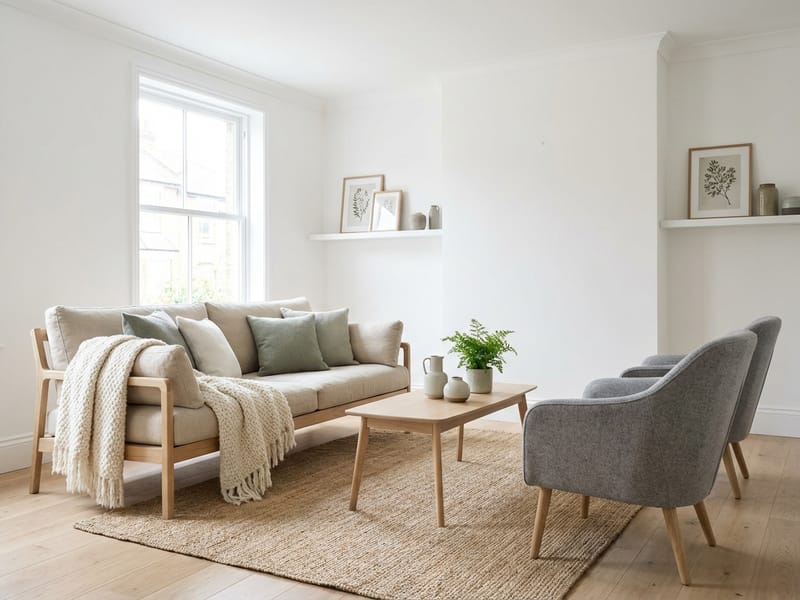
Interior foto di Scandinavian gaya
Key elements dari Scandinavian gaya
Pale Wood Tones
Oak, birch, and ash dominate every surface — flooring, furniture, and ceiling beams in warm, light hues.
White Walls
Warm whites (never cool blue-white) maximize the limited Nordic daylight and reflect it across the room.
Hygge Textiles
Layered wool throws, sheepskin rugs, and linen cushions create the cozy contentment Scandinavians call hygge.
Functional Furniture
Every piece serves a purpose. Hans Wegner chairs, Arne Jacobsen lamps, modular storage that earns its space.
Statement Lighting
Pendant lights are jewelry. PH5, Caravaggio, or paper Noguchi-style lanterns anchor rooms after sunset.
Indoor Greenery
A single large plant — monstera, fiddle leaf, or olive tree — connects the interior to nature year-round.
Coba creating own desain
Unggah foto ruangan Anda dan dapatkan desain profesional dalam 30 detik. 2 desain pertama gratis.
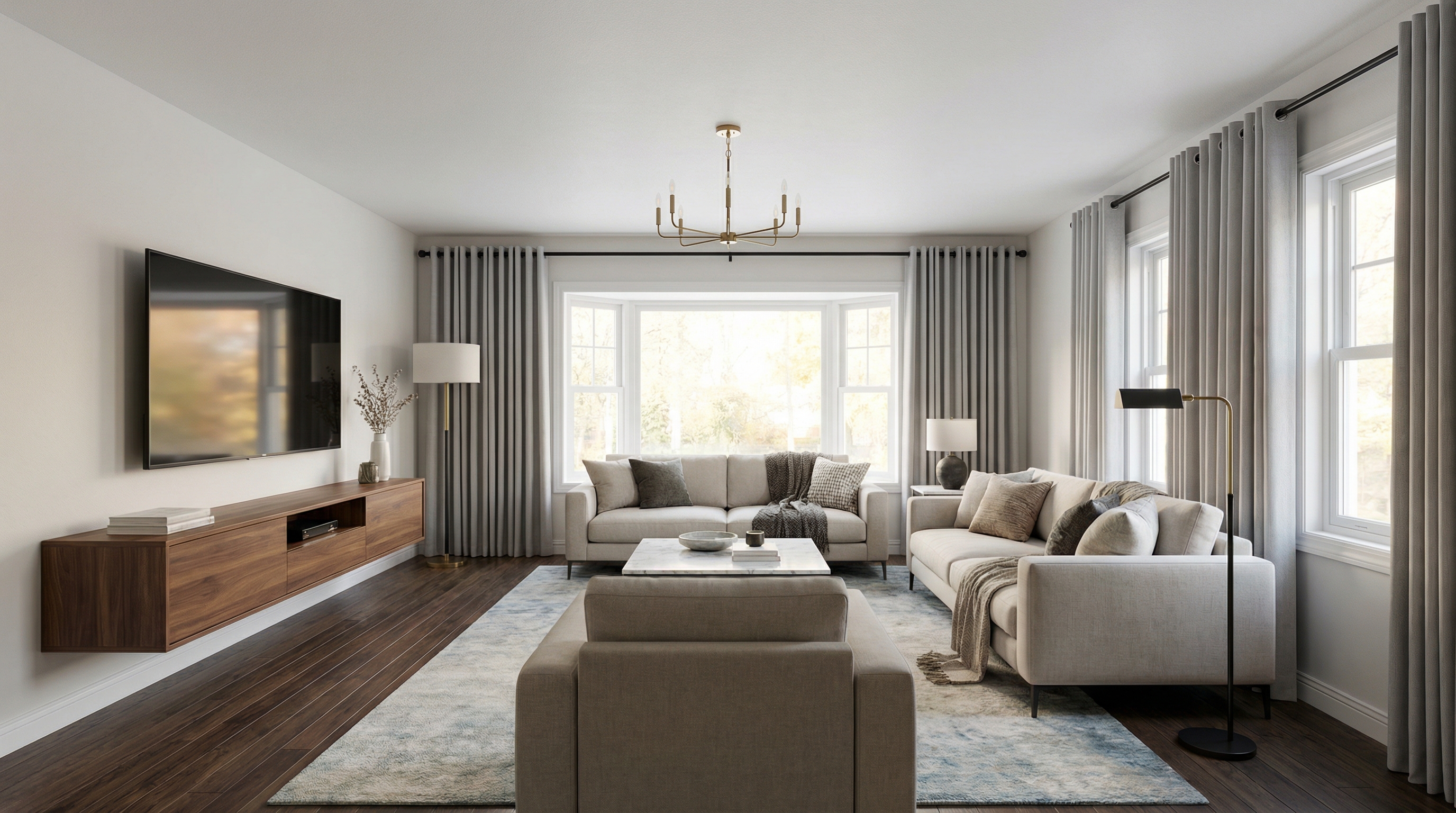
Scandinavian untuk different rooms
Lihat lebih examples di the Scandinavian gaya galeri atau the full desain galeri.
FAQ: Scandinavian gaya interior
- A base of warm white or soft greige paired with pale wood. Accents in dusty blue, sage green, terracotta, or matte black. Avoid bright primaries and cool blue-whites.
- Start with three changes: paint walls warm white, swap dark furniture for pale oak or IKEA birch, and layer one wool throw plus one sheepskin on your sofa. Add a single tall plant and a warm-temperature pendant lamp.
- Scandinavian leans cozy with pale woods and layered textiles. Japandi blends Scandi minimalism with Japanese wabi-sabi — lower furniture, darker woods like walnut, more muted earth tones, and even less visual clutter.
- No. IKEA was founded in Sweden in 1943 and offers genuinely Scandinavian design at budget prices. A full living room under $1,500 is realistic. Designer pieces from HAY, Muuto, or &Tradition are optional upgrades.
- Wide-plank pale oak or whitewashed wood is ideal. Light laminate works on a budget. Avoid dark walnut, red oak, or high-gloss finishes — they break the airy effect.
- It is arguably the best style for small spaces. The light palette visually expands rooms, multi-functional furniture saves square footage, and the editing-down philosophy prevents clutter.
- Hygge (HOO-gah) is the Danish feeling of cozy contentment. Add it through soft lighting (candles, dimmers, 2700K bulbs), layered textiles, warm wood, and intimate seating arrangements that invite conversation.