Ottoman Interior Design
Guide to creating an interior in Ottoman style: history, features, materials, color solutions, and examples
Ottoman interior design draws from the imperial palaces of Istanbul (Topkapı, Dolmabahçe) and the layered domestic interiors of 16th–19th-century Anatolia. It balances heavy textile wealth with airy proportions and intricate craft — every surface tells a story of trade between Europe, Persia and the Arab world.
Defining elements of Ottoman style
- Kilim and Anatolian carpets — flat-woven wool in rust, indigo, saffron, and ivory; geometric or stylized floral motifs
- Low divans (sedir) built along the walls, layered with heavy embroidered cushions in pomegranate red, deep teal, and gold
- Carved walnut woodwork — mashrabiya-inspired screens, tulip carvings, geometric inlay; finishes range from honey-oak to deep walnut
- Copper and brass trays, ewers, mangals (braziers) and lanterns — engraved by hand, often blackened with use
- Iznik tiles with cobalt blue, turquoise, and tomato red on a white ground — used as feature panels rather than full walls
- Domed ceilings or muqarnas-style stucco in high-ceiling rooms
Color palette
The signature Ottoman palette is jewel-toned and warm: pomegranate red, deep emerald, sapphire blue, saffron yellow, and gold accents over an ivory or honey base. Black functions as punctuation (lacquered furniture, iron lanterns) rather than as a primary.
Room-by-room application
Living room (oda)
Low sedir along two walls with an Iznik-tiled fireplace as the focal point. Floor covered edge-to-edge in a Hereke or Bergama rug. One large kilim cushion at floor level for the host's seat. Copper braziers, hand-painted ceramic plates on shelves.
Dining
Low octagonal walnut table inlaid with mother-of-pearl, seating on floor cushions or low stools. Tray-style serving on engraved copper. A pendant brass lantern with cut-out star pattern over the center.
Bedroom
Low platform bed with heavy embroidered bedspread (suzani-style), carved walnut headboard. Niche shelving for ceramic and copper objects. A single Iznik-tile panel behind the bed.
Modern Ottoman fusion (2026 trend)
Contemporary Ottoman strips back the maximalism: one Hereke rug, one carved screen, one Iznik feature wall — paired with neutral upholstery and modern lighting. The effect is rich but breathable.
Common mistakes
- Going too theme-park. Avoid Aladdin-style genie-lamp clichés — Ottoman is restrained imperial elegance, not cartoon orientalism.
- Wrong tile. Iznik tile (cobalt + turquoise + tomato red on white) is specific. Generic blue Moroccan tile is the wrong tradition.
- Mass-produced "Turkish" rugs. Look for handwoven kilim from Konya, Hereke, Bergama, or Anatolian villages — not synthetic copies.
Upload a photo of your room and our AI redraws it in Ottoman style in seconds — free to try.
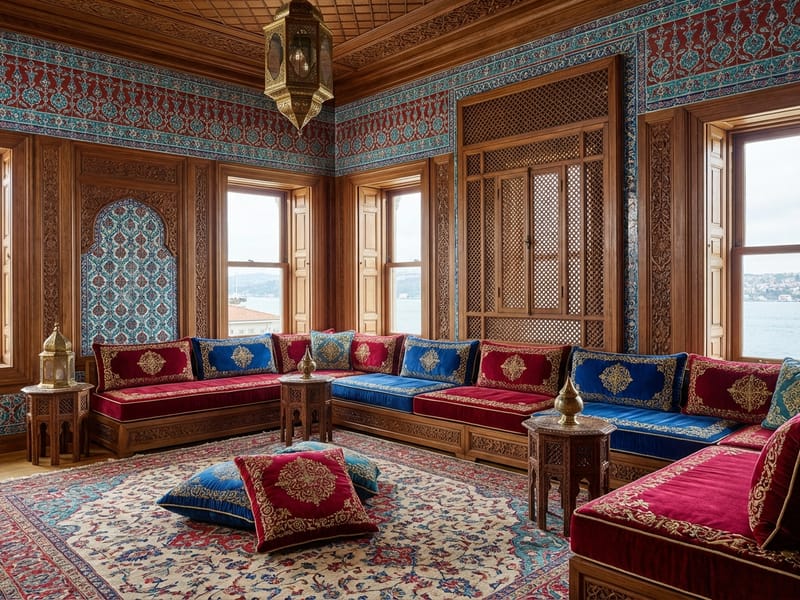
Interior foto di Ottoman gaya
Key elements dari Ottoman gaya
Anatolian Kilim Rugs
Flat-woven wool in rust, indigo and saffron with geometric or stylized floral motifs — anchors every Ottoman room.
Low Sedir Seating
Built-in divans along walls layered with embroidered cushions in pomegranate, teal and gold.
Carved Walnut Woodwork
Tulip carvings, mother-of-pearl inlay, mashrabiya-style screens — finishes from honey-oak to deep walnut.
Iznik Tile Accents
Cobalt blue, turquoise and tomato red on white — used as feature panels, not full walls.
Copper and Brass Objects
Engraved trays, ewers, mangals and star-cut lanterns. Patina is part of the beauty.
Domed or Stucco Ceilings
Muqarnas-style relief or low domes in high-ceiling rooms add architectural depth.
Coba creating own desain
Unggah foto ruangan Anda dan dapatkan desain profesional dalam 30 detik. 2 desain pertama gratis.
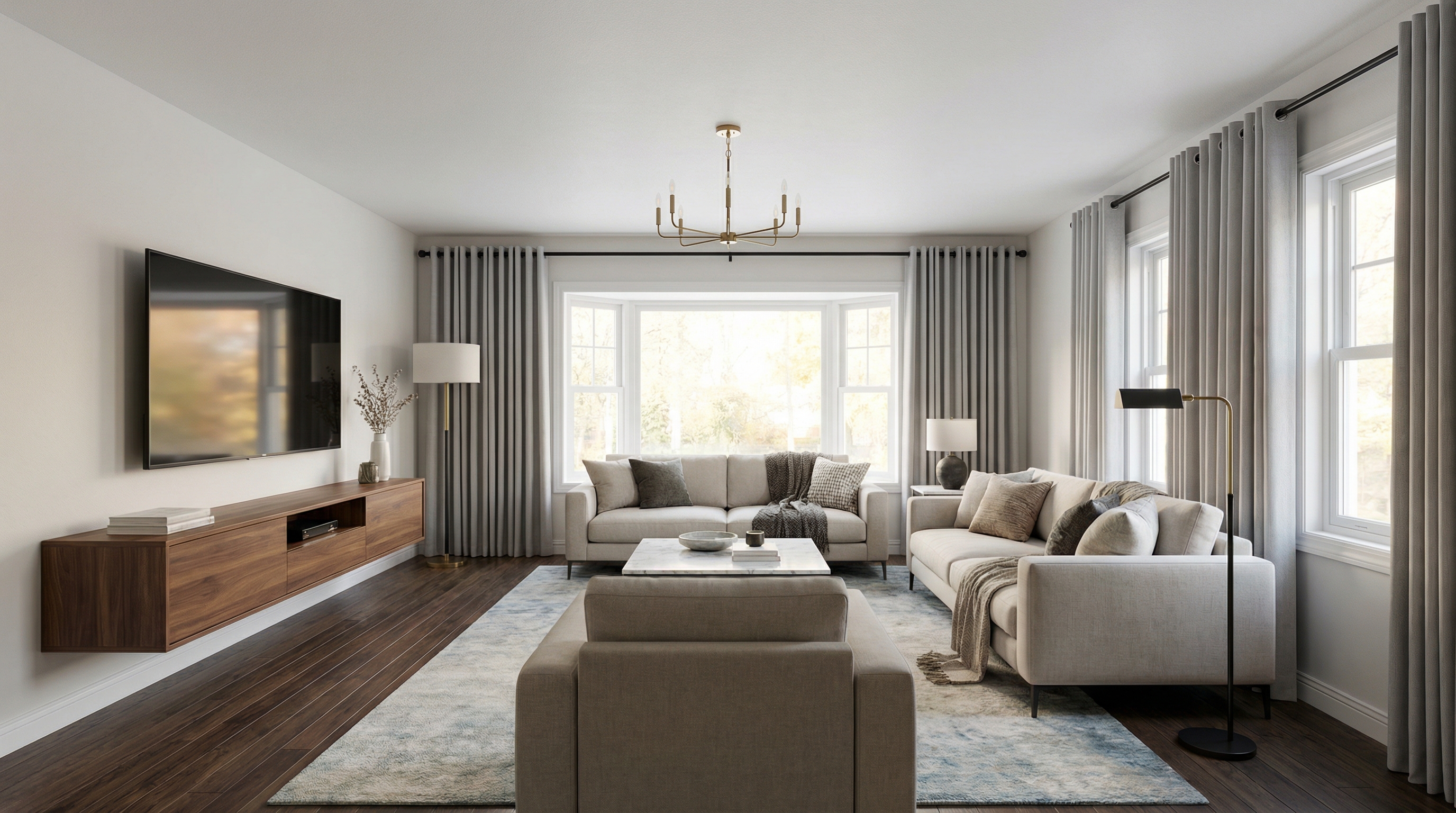
Ottoman untuk different rooms
Lihat lebih examples di the Ottoman gaya galeri atau the full desain galeri.
FAQ: Ottoman gaya interior
- A style rooted in the imperial palaces of 16th–19th-century Istanbul and Anatolian domestic interiors. Defined by kilim rugs, low sedir divans, carved walnut, Iznik tile, and copper/brass objects in a jewel-toned palette.
- Ottoman uses Iznik tile (specific cobalt-turquoise-red-on-white palette) and Anatolian kilim. Moroccan uses zellige mosaic tile and Berber pile rugs. Arabian leans on mashrabiya screens and lower seating in palm and date palm motifs. All three share inward-facing courtyards but the materials, motifs, and colors differ.
- Pomegranate red, deep emerald, sapphire blue, saffron yellow, and gold over an ivory or honey base. Black is punctuation only. Avoid pastels and cool tones.
- Yes, with a stripped-back modern Ottoman approach: one Hereke rug, one carved screen as a room divider, one Iznik tile feature, neutral upholstery. The trick is one or two statement pieces per room, not maximalism.
- Handwoven kilim from Konya, Hereke, or Bergama markets and Etsy sellers based in Turkey. Iznik-style tile from Iznik Foundation or specialty Turkish ceramicists. Copper from the Grand Bazaar (Istanbul) or specialty importers. Avoid mass-produced synthetic rugs.
- A 2020s interpretation that pairs one or two authentic Ottoman elements (a Hereke rug, an Iznik feature wall, a carved screen) with contemporary neutral upholstery and modern lighting. Rich but breathable, never theme-park.