Minimalist Garden Design
Guide to landscape design in Minimalist Yard style: features, plants, materials, and examples
Minimalist garden design applies the "less is more" principle (codified by Mies van der Rohe in 1947) to landscape architecture. It draws from 20th-century modernist garden pioneers (Mexican Luis Barragán's color-washed walls and water rills, Japanese kare-sansui dry gardens dating to the 1500s, and the disciplined modernism of Mexican-Belgian Mariscal-Garcia projects). The contemporary minimalist garden uses radical material restraint, sparse planting, and the void as a primary design element.
What makes a minimalist garden distinctive
Five principles: radical material restraint (typically 2-3 materials throughout), large unbroken paving planes, sparse planting using one or two species in mass, strong geometric form, and negative space as a design element. Every choice is deliberate; nothing is decorative-only.
Plant palette
- Mass planting: single species used in monoculture drifts — typically ornamental grasses (Stipa tenuissima, Carex), groundcovers (creeping thyme, Mondo grass), or sedum mats
- Architectural specimens: 1-3 multistem trees, single olive, single Trachycarpus, single Yucca
- Hedging: single tightly clipped boxwood or yew hedge as architectural element
- Forbidden: mixed perennial borders, flowering bedding annuals, multiple shrub species, lawns with edging beds
Hardscape elements
Paving: single-material large-format paving across the entire garden — board-formed concrete poured in-situ, oversized stone slabs, or large porcelain pavers. Walls: single-material, single-color — typically board-formed concrete, polished plaster in warm white, or one-tone stucco. Often painted bold solid color (Barragán-style pink, ochre, terracotta). Water: still-water reflecting rectangle, narrow rill, or single sheet-flow water wall. Furniture: 1-3 architectural pieces — concrete bench, single sculptural chair, low platform.
Common mistakes
- Confusing empty with minimalist. An empty yard is not minimalist — minimalism requires intentional materiality, geometry, and sparse but deliberate planting.
- Adding "just one" decorative object, then another. Set a strict rule: one specimen per zone, never more.
- Mixing materials. More than 3 hardscape materials breaks the discipline. Pick concrete-and-stone-and-steel maximum, not 5 different surfaces.
- Using too many plants. Minimalist gardens use one or two plant species, not ten varieties of "low maintenance" plants.
Budget approach
The style is well-suited to budget projects because material count is restricted. Concrete patio + single mass-planted ornamental grass + one specimen tree + one Corten steel planter + one bench can deliver authentic minimalism for a 40-square-meter courtyard at $2,000-4,000 total. Editing is free.
Upload a photo of your yard and our AI redraws it as a minimalist garden in seconds — free to try.
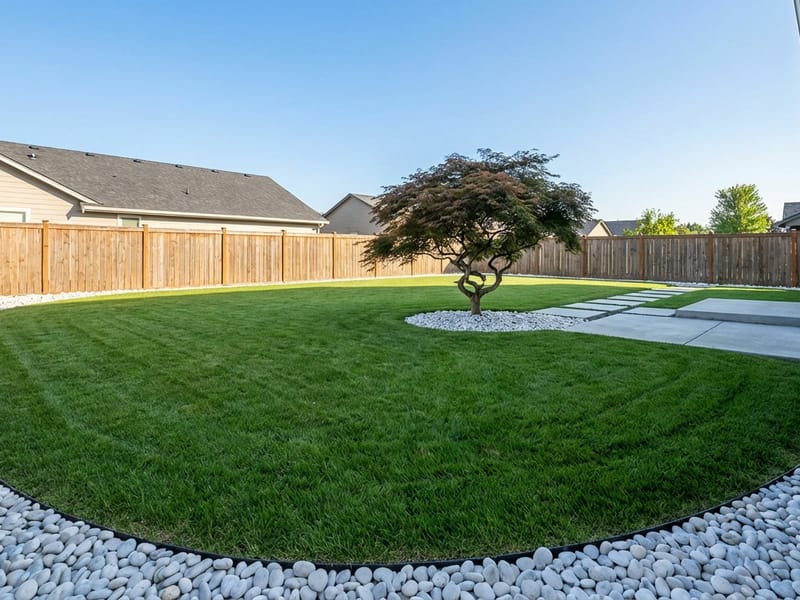
Key elements dari Minimalist Yard gaya
Single Material Paving
Continuous board-formed concrete, large-format stone, or porcelain slabs cover the entire garden with no breaks or transitions.
Monoculture Planting
One or two plant species — typically ornamental grasses or groundcover — used in mass drifts replace mixed perennial borders.
Color-Washed Walls
Single-color polished plaster or stucco walls — sometimes painted bold colors in the Luis Barragán tradition — frame the garden.
Sculptural Specimens
One or two architectural plants — a single olive, multistem birch, or Yucca rostrata — provide the sole visual focal points.
Reflective Water
A still-water rectangle or narrow water rill provides the only horizontal reflective surface, doubling sky and architecture above.
Negative Space
Large unplanted, unfurnished open areas are treated as primary design elements, giving the few remaining objects maximum visual weight.
Coba creating own desain
Unggah foto halaman Anda dan dapatkan desain lanskap profesional dalam 30 detik. 2 desain pertama gratis.
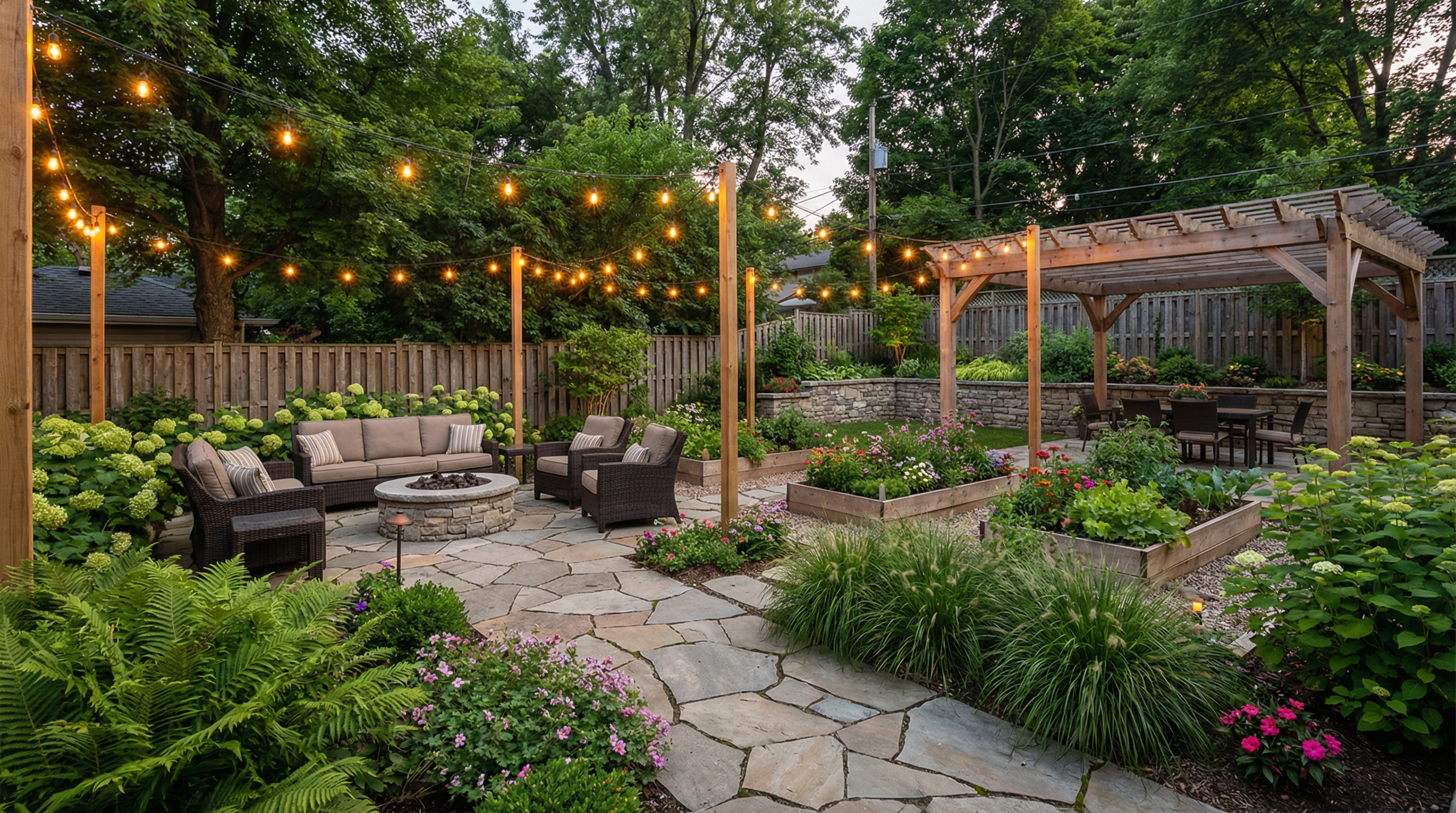
Minimalist Yard: landscape desain
Lihat lebih examples di the Minimalist Yard gaya galeri atau the full desain galeri.
FAQ: landscape desain di Minimalist Yard gaya
- A minimalist garden applies "less is more" principles to landscape — radical material restraint (2-3 materials), large unbroken paving planes, sparse planting using one or two species in mass, strong geometric form, and negative space as a design element.
- Contemporary gardens use 5-10 plant species, mixed hardscape materials, and sophisticated New Perennial planting. Minimalist gardens strip back to 1-2 species, 2-3 materials, and intentional negative space. Minimalist is the stricter, more austere subset.
- One species mass-planted — typically Stipa tenuissima grass, Mondo grass, creeping thyme, or sedum mat. One or two architectural specimens: a multistem birch, single olive, single Yucca rostrata, or Trachycarpus palm. Nothing else.
- Yes — the principles adapt by adjusting plant species. Cold climates: substitute hardy Carex grasses for Stipa, multistem birch or amelanchier for olive. Tropical climates: substitute monstera or strelitzia specimens, mass-plant lemongrass. The geometry remains constant.
- Done well, it is the opposite — the visual discipline allows light, shadow, and seasonal change to become the design. Grass drifts move dramatically in wind, paving tones shift through the day, and water reflects sky changes. The "boring" risk only exists when materials and plants are poorly chosen.
- Start by removing 70% of what is currently in your yard. Choose one mass planting (one species, one repeated form). Add one architectural specimen tree. Pour one continuous concrete or large-format paved surface. Live with it for a season before adding more.
- Less than most styles. Ornamental grass mass plantings need only annual late-winter cutting back. Single specimen trees need light annual pruning. Paving needs only cleaning. Total maintenance can be under 1 hour per week on a 50-square-meter minimalist garden.