Minimalist Interior Design
Guide to creating an interior in Minimalism style: history, features, materials, color solutions, and examples
Minimalism in interior design traces to Ludwig Mies van der Rohe's 1947 dictum "less is more" and the post-war reaction against ornamental excess. It crystallized as a recognizable style in 1960s New York gallery spaces and was codified by John Pawson's 1996 book Minimum. Today's minimalism is less austere than the 1990s version — warmer materials, better lighting, livable proportions.
What makes minimalism distinctive
Minimalism is defined by what is absent. Empty space becomes a design element. Every visible object earns its place. Storage is invisible. Materials are limited to one or two, used at architectural scale.
Materials and color palette
- Surfaces: microcement, polished plaster, white-oiled oak, white quartz
- Walls: warm white only — usually one tone throughout the entire home
- Floors: seamless microcement, large-format limestone, or wide-plank pale oak
- Accent: one — black metal frames, or warm wood, or stone
- Forbidden: patterns, multiple colors, decorative objects, visible wires
Room-by-room ideas
Living room: a single low sofa, a stone coffee table, no rug or one large solid linen rug, recessed lighting only. Bedroom: platform bed, one piece of art, floor-to-ceiling concealed wardrobes, blackout drapes on ceiling tracks. Kitchen: handleless cabinetry to ceiling, single waterfall island, every appliance integrated, zero counter clutter. Bathroom: wall-hung everything, single material on walls and floor, hidden storage behind mirror.
Common mistakes
- Mistaking empty for minimalist. Empty rooms feel unfinished; minimalist rooms feel resolved. The difference is intentional materiality.
- Going pure white. Minimalism needs warmth — use warm white (2700K bulbs, off-white walls) not clinical cool white.
- Ignoring storage. Minimalism only works if you have somewhere to hide everything. Built-ins are non-negotiable.
- Adding "just one" decorative item, then another, then another. Set a rule: one object per surface, maximum.
Minimalism on a budget
Cost-saving moves: paint everything one warm white (Farrow & Ball Wevet or Benjamin Moore Simply White), install IKEA PAX wardrobes with custom handleless fronts, and replace clutter-collecting furniture with one large modular sofa. Editing is free.
Upload a photo of your room and our AI redraws it in minimalist style in seconds — free to try.
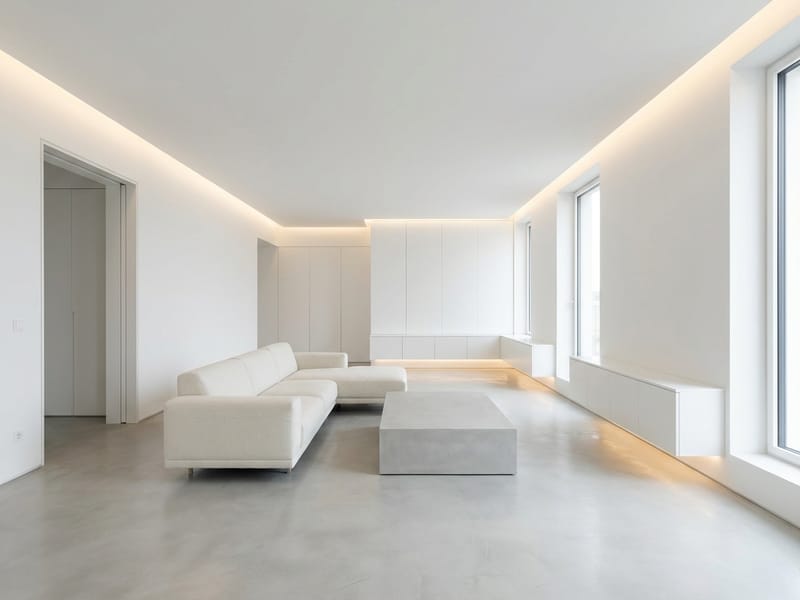
Interior foto di Minimalism gaya
Key elements dari Minimalism gaya
Empty Space as Design
Negative space is treated as carefully as filled space, giving each object visual weight and the room a sense of calm.
Single Material Palette
One or two materials carry the entire room — microcement walls plus oak floor, or limestone plus white plaster.
Hidden Storage
Floor-to-ceiling built-ins, push-to-open doors, and concealed appliances make clutter physically impossible to see.
Warm Monochrome
A single warm-white tone runs from walls to ceilings to trim, creating seamless architectural envelopes.
Architectural Lighting
Recessed cove lighting, linear LEDs, and concealed strips replace visible fixtures, letting light feel ambient and sourceless.
One Statement Piece
Each room contains a single visual anchor — a sculpture, an oversized artwork, or a Hans Wegner chair — and nothing else competing.
Coba creating own desain
Unggah foto ruangan Anda dan dapatkan desain profesional dalam 30 detik. 2 desain pertama gratis.
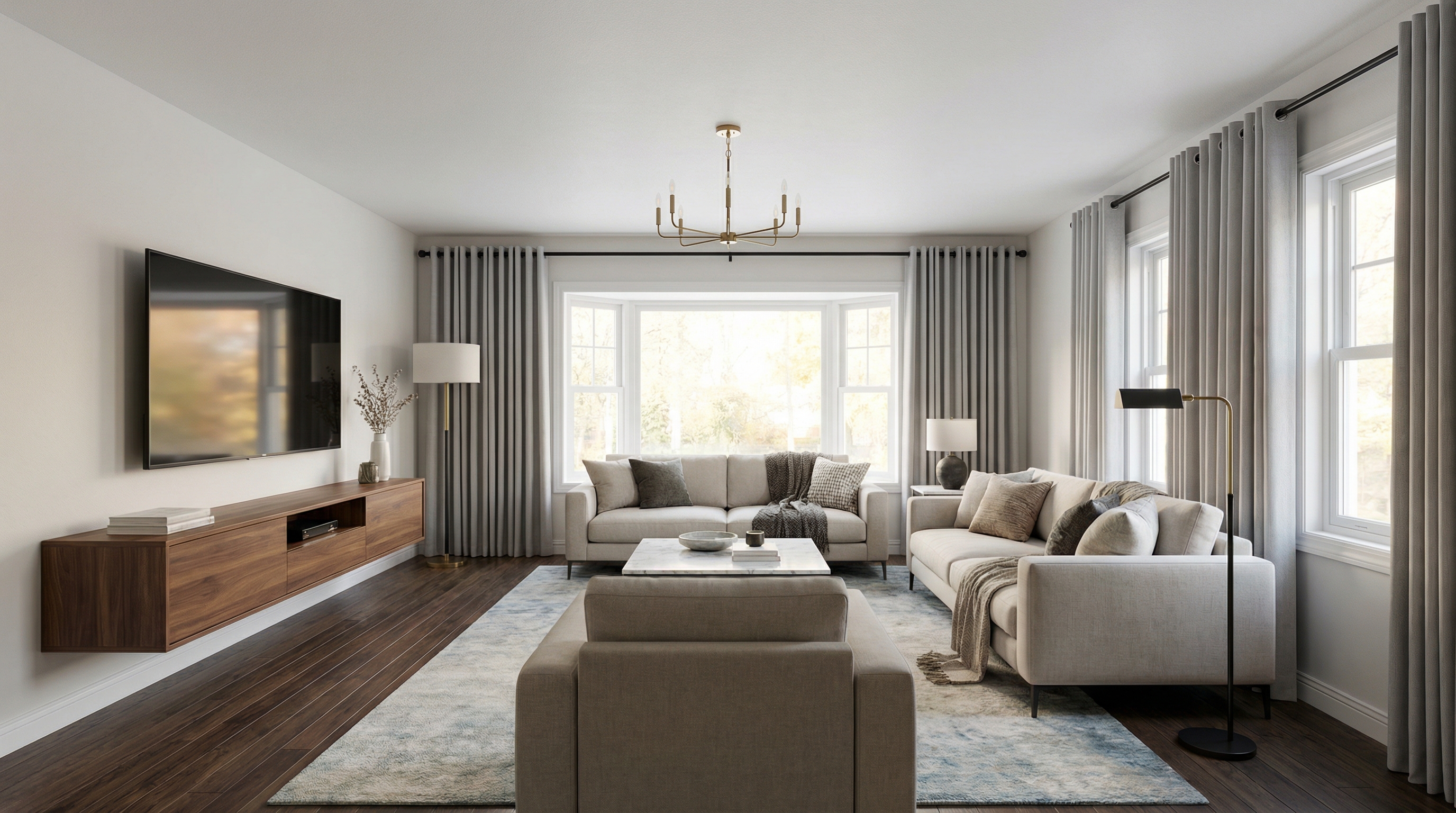
Minimalism untuk different rooms
Lihat lebih examples di the Minimalism gaya galeri atau the full desain galeri.
FAQ: Minimalism gaya interior
- Minimalism is a style based on Mies van der Rohe's 1947 principle "less is more." It uses a single material palette, warm monochrome colors, hidden storage, and treats empty space as a design element.
- Modern allows accent colors, multiple materials, and decorative objects. Minimalism strips all of that away. A modern room can be busy; a minimalist room cannot.
- Yes, but it requires more storage than you think. Plan floor-to-ceiling built-ins in every room, including the laundry. Without invisible storage, family minimalism fails within a month.
- One warm-white tone throughout, often a single off-white from a curated palette like Farrow & Ball or Bauwerk. Accents come from natural material tones — oak, stone, black metal — not paint.
- Only when done badly. Use warm white (not cool grey), warm wood floors, 2700K lighting, and textured plaster or microcement walls. Cold minimalism comes from wrong materials, not the style itself.
- Remove 70% of what is currently visible. Then choose one statement piece (sofa or chair), one large artwork, and one floor lamp. Paint everything else the same warm white. Add nothing for two weeks.
- It can be — built-in storage, microcement floors, and integrated appliances cost more than off-the-shelf alternatives. But the smaller object count means you spend on fewer, better things rather than many cheap ones.