Japandi Interior Design
Guide to creating an interior in Japandi style: history, features, materials, color solutions, and examples
Japandi is the hybrid style born from two design philosophies that share a 150-year history of cross-pollination: Japanese wabi-sabi (the beauty of imperfection and impermanence) and Scandinavian hygge (cozy functional minimalism). The term entered mainstream interior media around 2017, but Danish furniture makers had been studying Japanese joinery since the 1950s.
What makes Japandi distinctive
Japandi sits between two minimalisms. It is warmer and more textured than pure Japanese Zen interiors, and quieter and more grounded than typical Scandi rooms. Furniture sits lower to the floor, palettes are deeper and earthier, and every object has visible craftsmanship.
Materials and color palette
- Woods: walnut, dark oak, ash, and bamboo — often two tones combined
- Walls: warm off-white, mushroom, clay, soft charcoal
- Textiles: raw linen, undyed cotton, boucle, washi paper
- Accents: black ironwork, unglazed ceramics, woven rattan
- Avoid: chrome, high-gloss surfaces, primary colors, plastic
Room-by-room ideas
Living room: a low walnut platform sofa, a tatami-style rug, a paper Akari-style floor lamp, and a single ikebana arrangement. Bedroom: a platform bed at 30 cm height, raw linen bedding in oat or charcoal, shoji-inspired sliding panels. Dining: a live-edge oak table with Wegner-style chairs. Bathroom: a hinoki wood soaking tub if possible, microcement walls, river-stone floor accents.
Common mistakes
- Mixing too many wood tones — limit to two complementary species.
- Adding too many decorative objects. Japandi rooms feel curated, not collected. One vase, not five.
- Ignoring lighting layers. You need ambient + task + accent, all at 2700K or warmer.
- Using glossy finishes. Everything should be matte or hand-finished.
Japandi on a budget
IKEA's STOCKHOLM and MARKERAD (the Virgil Abloh collab) lines lean Japandi. Pair with Etsy ceramicists for handmade vessels, and a Muji floor lamp under $80. The aesthetic rewards restraint more than spending.
Upload a photo of your room and our AI redraws it in Japandi style in seconds — free to try.
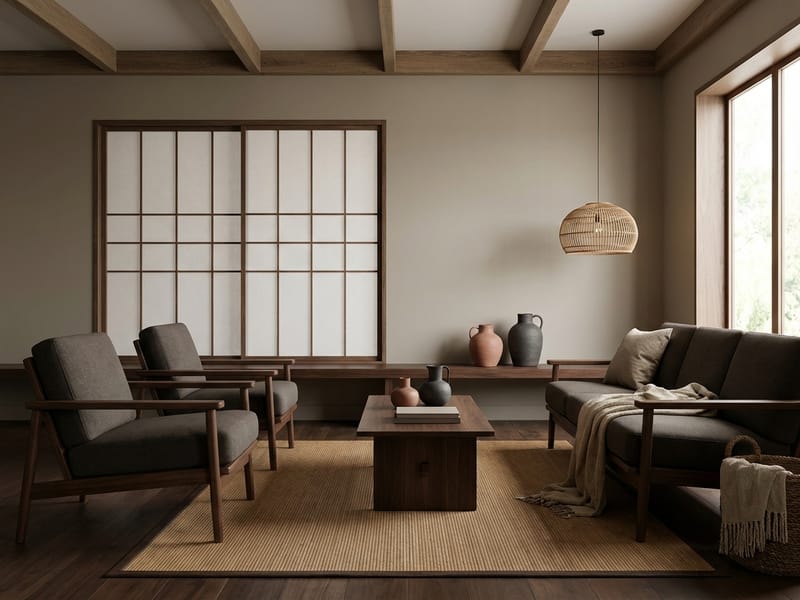
Interior foto di Japandi gaya
Key elements dari Japandi gaya
Low Profile Furniture
Beds, sofas, and tables sit closer to the floor, echoing Japanese floor culture while maintaining Scandinavian comfort.
Wabi-Sabi Imperfection
Hand-thrown ceramics, live-edge wood, and visible joinery celebrate the marks of human craft over factory perfection.
Earthy Muted Palette
Mushroom, clay, charcoal, and warm off-white replace the bright whites of pure Scandi, creating grounded calm.
Two-Tone Wood Mix
Pale ash or oak paired with walnut or smoked oak adds depth without breaking the disciplined palette.
Paper and Linen
Washi paper lanterns, raw linen drapes, and shoji-inspired screens diffuse light softly across every surface.
Intentional Negative Space
Empty floor and wall areas are treated as design elements, giving each remaining object room to breathe.
Coba creating own desain
Unggah foto ruangan Anda dan dapatkan desain profesional dalam 30 detik. 2 desain pertama gratis.
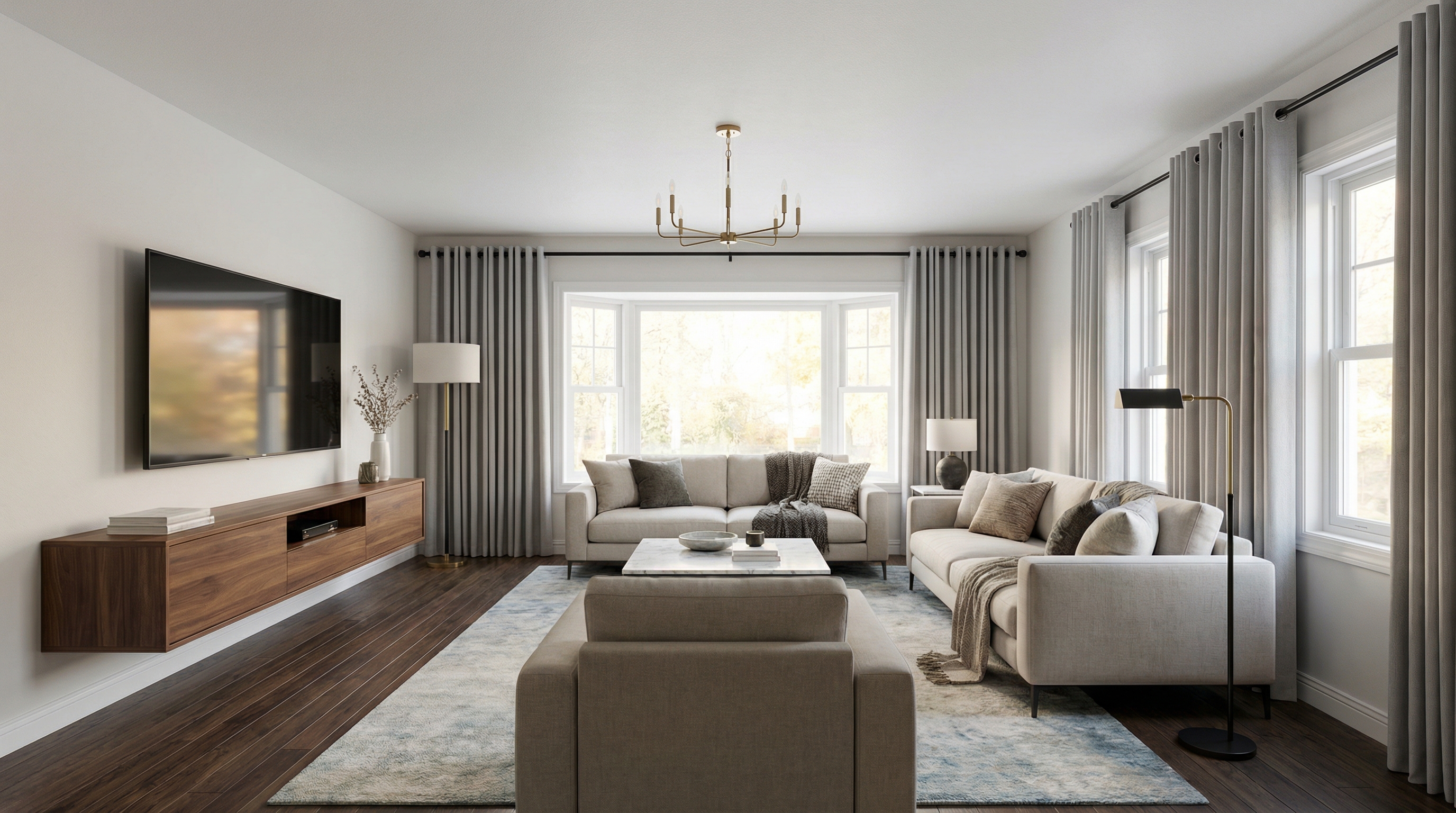
Japandi untuk different rooms
Lihat lebih examples di the Japandi gaya galeri atau the full desain galeri.
FAQ: Japandi gaya interior
- Japandi is a hybrid interior style combining Japanese wabi-sabi minimalism with Scandinavian hygge functionality. It uses low furniture, earthy muted tones, and handcrafted natural materials.
- Japandi is darker, lower, and more restrained. Scandi uses pale oak and bright whites; Japandi mixes walnut with ash, swaps white for mushroom and clay tones, and includes fewer decorative objects per room.
- A core palette of warm off-white, mushroom, clay brown, and charcoal. Accents in matte black, deep forest green, or rust. Avoid primaries, pastels, and cool grays.
- Excellent. The minimal object count, low furniture profile, and unified palette make rooms feel calm and visually larger. Japandi works especially well in studios and one-bedroom apartments.
- Walnut, smoked oak, ash, white oak, and bamboo. Combine two complementary species — one darker and one lighter. Avoid red oak, cherry, and pine.
- Lower your bed (platform style at 30 cm), switch to raw linen bedding in oat or charcoal, replace overhead lighting with a paper lantern, and limit nightstand objects to three items maximum.
- The fusion has been developing since 1950s Danish designers studied Japanese craft. The name is recent, the aesthetic is not. Both source traditions are over a century old, so the look has staying power.