Eclectic Interior Design
Guide to creating an interior in Eclectic style: history, features, materials, color solutions, and examples
Eclectic interior design is the deliberate practice of combining multiple styles, eras, and cultural origins into one cohesive room. The term comes from the Greek eklektikos ("selective") and was first applied to architecture in the 19th century, when wealthy Victorian patrons commissioned homes mixing Gothic, Classical, and Moorish elements. Today's eclectic interiors are more disciplined: the goal is curation, not chaos. Done right, eclectic rooms feel collected over a lifetime — never bought all at once.
What makes eclectic distinctive
The defining principle is intentional contrast unified by a single anchor — usually a color palette, a repeated material, or consistent furniture proportions. A modern velvet sofa, antique Persian rug, mid-century walnut table, and contemporary art photo can share a room only when one of those elements (color, scale, or texture) ties them together.
Materials and color palette
- Strategy: Choose a 3-color palette and apply it across every era and style
- Mix: One antique, one modern, one mid-century, one global — per zone
- Anchors: A consistent metal (brass, black, or chrome — pick one)
- Forbidden: Multiple decorative patterns competing without scale variation
- Required: Negative space between curated objects
Room-by-room ideas
Living room: a modern modular sofa, a Victorian wingback chair reupholstered in modern velvet, a vintage Moroccan rug, a brass-and-marble side table, contemporary abstract art over an antique credenza — all unified by a navy-rust-cream palette. Bedroom: a tufted antique headboard, modern linen bedding, a 1960s Danish nightstand, contemporary swing-arm sconces. Dining: a reclaimed-wood farmhouse table with a mix of vintage Windsor chairs and modern molded plastic — all in the same wood-and-white palette.
Common mistakes
- No unifying element. "Eclectic" without an anchor is just clutter. Pick a palette or repeated material before mixing eras.
- Buying complete sets. Five matching dining chairs is the opposite of eclectic. Source four that share scale but vary in material.
- Too many patterns. Limit to three patterns max per room, in varied scales (one large, one medium, one small).
- Ignoring scale. A delicate antique chair next to an oversized modern sofa looks accidental, not curated. Match heights and visual weights.
Eclectic on a budget
This is the budget style — every piece can be vintage, secondhand, or DIY. Sources: estate sales (Victorian and mid-century), Facebook Marketplace (modern), Etsy (global textiles), and one new piece per room to anchor (a modern sofa or rug). The goal is variety, not retail freshness.
Upload a photo of your room and our AI redraws it in eclectic style in seconds — free to try.
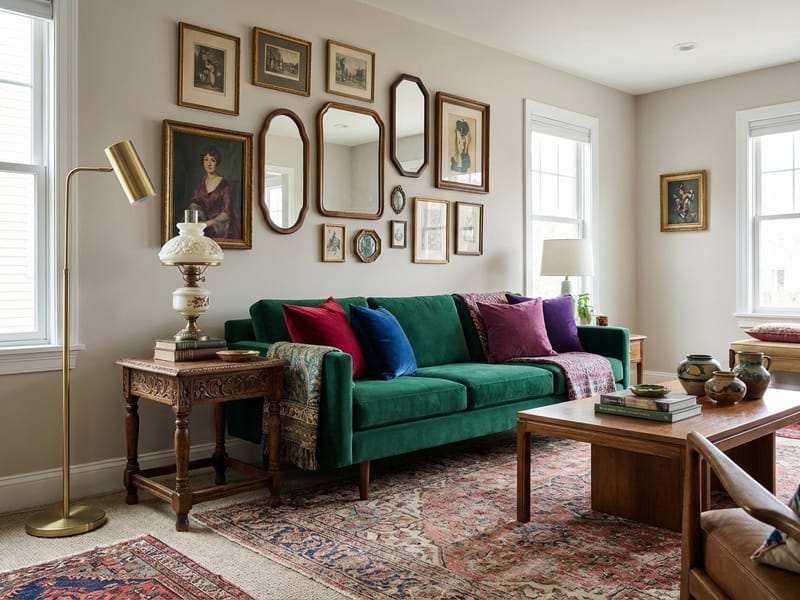
Interior foto di Eclectic gaya
Key elements dari Eclectic gaya
Mixed Era Furniture
A Victorian wingback next to a mid-century credenza next to a modern sofa — eclectic rooms span 150 years of design history.
Unifying Color Palette
A disciplined 3-color palette runs across every era and material, transforming "random" into "curated."
Layered Textiles
Vintage Persian rugs, modern linen drapes, and global throw pillows combine textures from multiple traditions in one space.
Gallery Walls
Mixed-frame, mixed-era, mixed-medium art arrangements tell personal stories that hotel-style "matched sets" cannot.
Global Accents
Moroccan rugs, Japanese ceramics, French brass, and African baskets coexist when tied together by palette and scale.
Statement Lighting
A single bold light fixture — antique chandelier, modern sculptural pendant, or vintage industrial — becomes the room's declared focal point.
Coba creating own desain
Unggah foto ruangan Anda dan dapatkan desain profesional dalam 30 detik. 2 desain pertama gratis.
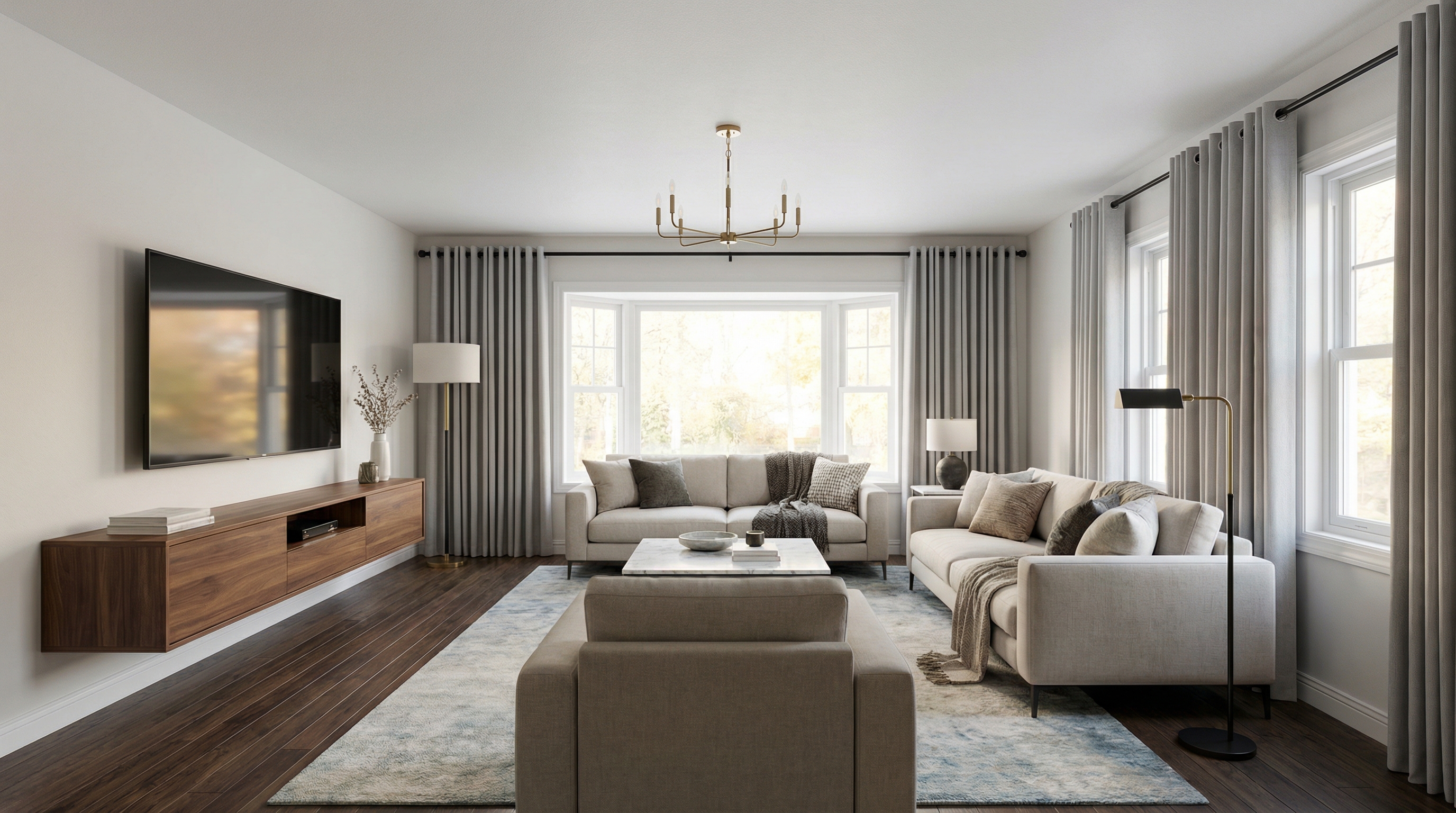
Eclectic untuk different rooms
Lihat lebih examples di the Eclectic gaya galeri atau the full desain galeri.
FAQ: Eclectic gaya interior
- Eclectic style combines multiple design eras, cultural origins, and material traditions into one cohesive room. The success depends on a unifying element — usually a consistent color palette, repeated material, or matched furniture proportions.
- Bohemian is one specific style with warm earth tones, plants, rattan, and global textiles. Eclectic is a methodology — mixing any styles together, including modern and minimalist. All bohemian is eclectic; not all eclectic is bohemian.
- Three rules: (1) Pick a 3-color palette and apply it to every piece. (2) Limit yourself to three patterns max, in varied scales. (3) Leave negative space — eclectic rooms need breathing room between curated objects.
- Yes, but start small. Begin with one room, choose a 3-color palette, and add one piece per era (one antique, one modern, one vintage, one global). Live with it for a month before adding more. Edit ruthlessly.
- Living rooms and dining rooms — they have the scale to support a mix of furniture eras. Bedrooms can work if you anchor with one large unified element (a modern bed or vintage headboard). Bathrooms tend to need more cohesion.
- Estate sales, flea markets, Facebook Marketplace, Chairish, 1stDibs (for higher-end vintage), Etsy (for global pieces), and one or two new modern anchors from West Elm or Article. Avoid all-in-one decor sets.
- Less than trend-driven styles. Because each piece has its own era and provenance, the room is not tied to a single moment in time. A well-curated eclectic room from 2010 still reads as collected and timeless in 2026.