Contemporary Interior Design
Guide to creating an interior in Contemporary style: history, features, materials, color solutions, and examples
Contemporary interior design is the language of "now" — fluid, mixed, and constantly evolving. Unlike "modern" (which refers to a specific 1920s–1950s movement), contemporary is whatever feels current. In 2026 that means soft neutrals warmed with terracotta and ochre, curved silhouettes, biophilic touches, and unfussy mixed-material palettes.
What makes a room contemporary
Three traits run through every contemporary interior:
- Restrained palette with one warm accent. A base of warm white, greige, or soft taupe, plus a single saturated note — terracotta, ochre, sage, or moss green.
- Curved over angular. Boucle sofas, arched doorways, mushroom lamps, organic side tables. Sharp 90° corners feel dated.
- Layered natural materials. Travertine + linen + oak + brushed brass — never one material across the whole room.
Color palettes that read contemporary in 2026
- Warm neutrals: mushroom, oat, putty, soft taupe — replaces 2010s cool grays
- Earth accents: terracotta, burnt sienna, ochre, rust
- Botanical greens: sage, moss, olive — never bright primary green
- Inky punctuation: charcoal or matte black on lamp bases, frames, hardware
Room-by-room ideas
Living room
Boucle three-seater in cream, curved arm chair in burnt orange, round travertine coffee table, low oak media unit, large abstract art on a warm-white wall. One trailing plant. Layered rug (jute + flatweave runner).
Kitchen
Handleless flat-front cabinets in warm white or mushroom, fluted oak island, matte black tapware, dual pendants in ribbed glass. No upper cabinets — open shelves in oak with three styled objects.
Bedroom
Upholstered headboard in linen, two arched mirrors flanking it, warm-white walls, oak floor, single jute pendant. Bedding in oat with one terracotta throw. Skip the matching bedside lamps — mix metal and ceramic.
Common contemporary mistakes
- Going all-gray. Cool grays were 2015. Swap for warm neutrals.
- Chrome instead of brushed brass. Chrome reads outdated; brushed brass or matte black is the current standard.
- Too many materials. Three or four maximum: one wood, one stone, one textile, one metal.
- Pure-white walls. Pure white feels harsh; choose a warm white with a yellow or pink undertone.
Contemporary vs modern vs transitional
Modern is a specific historical movement (Bauhaus, mid-century). Contemporary is whatever is current — it borrows from many styles. Transitional blends traditional and contemporary with formal symmetry. The same room can be modern (vintage Eames chair) but feel contemporary because of how it's styled.
Contemporary on a budget
IKEA HAVSTA / KOLBJÖRN bookcases, a Nordal or HKliving curved boucle chair from Westwing/HAY outlets, travertine accents from Etsy, a single high-quality jute or wool rug. A complete contemporary living room is achievable for $2,000–$3,500 if you prioritize one statement seat over multiple "okay" pieces.
Upload a photo of your room and our AI redraws it in contemporary style in seconds — free to try.
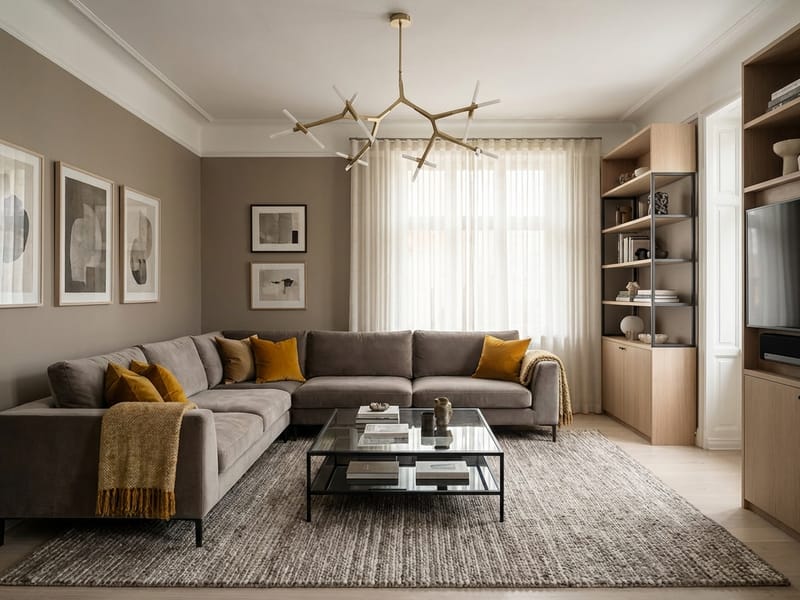
Interior foto di Contemporary gaya
Key elements dari Contemporary gaya
Warm Neutral Base
Mushroom, oat, putty and soft taupe replace the cool grays of the last decade.
One Earth Accent
A single saturated note — terracotta, ochre or sage — keeps the room from feeling beige.
Curved Silhouettes
Boucle sofas, arched mirrors, mushroom lamps. Sharp 90° lines feel dated in 2026.
Layered Naturals
Travertine, linen, oak, brushed brass — three or four materials maximum, mixed thoughtfully.
Biophilic Touches
One sculptural plant (fiddle leaf, olive, ficus) is non-negotiable for contemporary in 2026.
Brushed Brass over Chrome
Brushed brass and matte black are current. Chrome reads early-2000s.
Coba creating own desain
Unggah foto ruangan Anda dan dapatkan desain profesional dalam 30 detik. 2 desain pertama gratis.
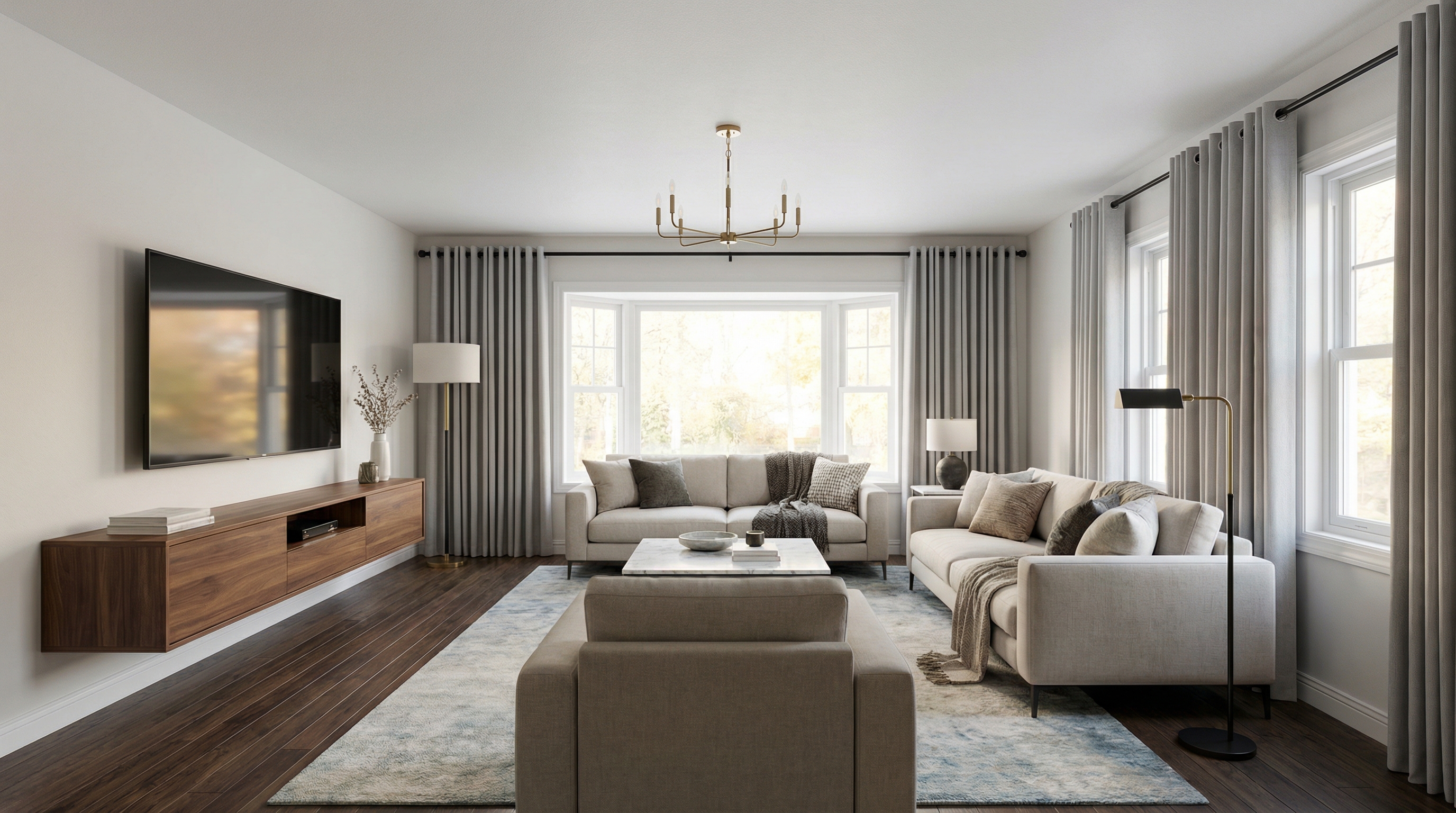
Contemporary untuk different rooms
Lihat lebih examples di the Contemporary gaya galeri atau the full desain galeri.
FAQ: Contemporary gaya interior
- Modern is a specific historical movement (1920s–1950s — Bauhaus, mid-century). Contemporary is fluid and means "current" — in 2026, that's warm neutrals, curved shapes, mixed naturals and biophilic touches. The same chair can be modern (vintage Eames) but the overall styling can feel contemporary.
- Warm neutrals (mushroom, oat, putty, soft taupe) as the base; one earth accent (terracotta, ochre, sage); botanical greens for plants; charcoal or matte black as punctuation. Cool grays and bright primaries feel dated.
- IKEA HAVSTA shelving, a boucle accent chair from Westwing/HKliving outlets, travertine coasters from Etsy, one statement jute rug, and one large plant. A complete contemporary living room is achievable for $2,000–$3,500 with smart sourcing.
- No. Minimalism strips everything down to essentials. Contemporary is layered — three or four materials, textured textiles, one sculptural piece, plants. It feels lived-in, not stripped.
- Layered: one statement pendant (ribbed glass, mushroom shape, or large rice paper), wall sconces in brushed brass or matte black, and a sculptural floor lamp. All bulbs warm 2700K. Skip recessed-only setups.
- It is one of the best styles for small spaces. The warm neutral palette visually expands the room, curved furniture takes corners better than angular pieces, and the "one statement, edit the rest" philosophy keeps it from feeling cluttered.
- Scandinavian leans pale wood + hygge textiles. Japandi adds Japanese wabi-sabi and lower furniture. Contemporary is warmer, curvier, and freer to mix — it can borrow from both but allows bolder accents (burnt orange, deep sage) than either.