Yard in Italian Courtyard style
Complete guide to Italian Courtyard style landscape design: features, materials, color solutions, and examples
Italian Courtyard style is an excellent choice for landscape design. This style creates a harmonious and expressive space, combining aesthetics and functionality.
Features of a Italian Courtyard style yard
Italian Courtyard style yard design features thoughtful details and characteristic elements that create a unique atmosphere. The right combination of plants, materials, and layout unlocks the full potential of the territory.
Color palette
A Italian Courtyard style yard is characterized by harmonious color combinations that emphasize stylistic features and create the right mood.
With GenRoom you can visualize your yard in Italian Courtyard style in seconds. Simply upload a photo of your yard, choose the "Italian Courtyard" style, and our AI will create a professional visualization!
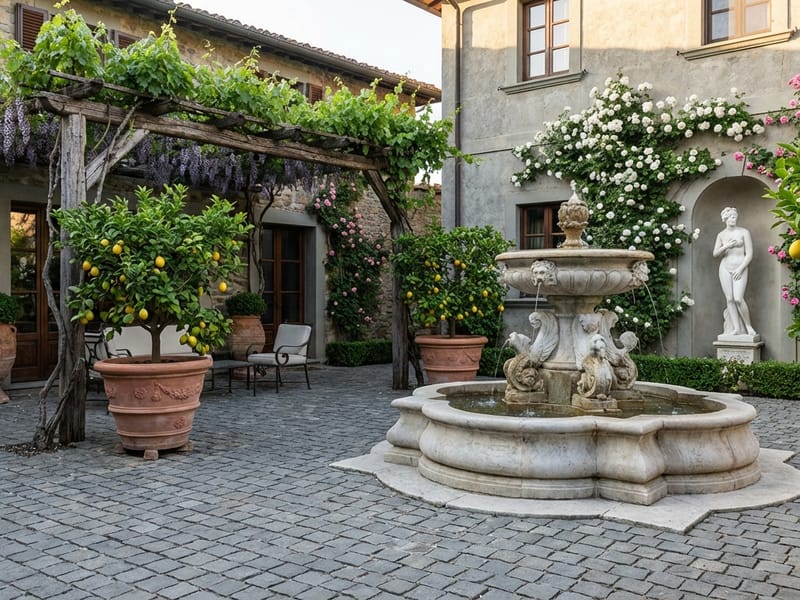
Yard examples in Italian Courtyard style
Try creating your own design
Upload a photo of your yard and get a professional landscape design in 30 seconds. First 2 designs are free.
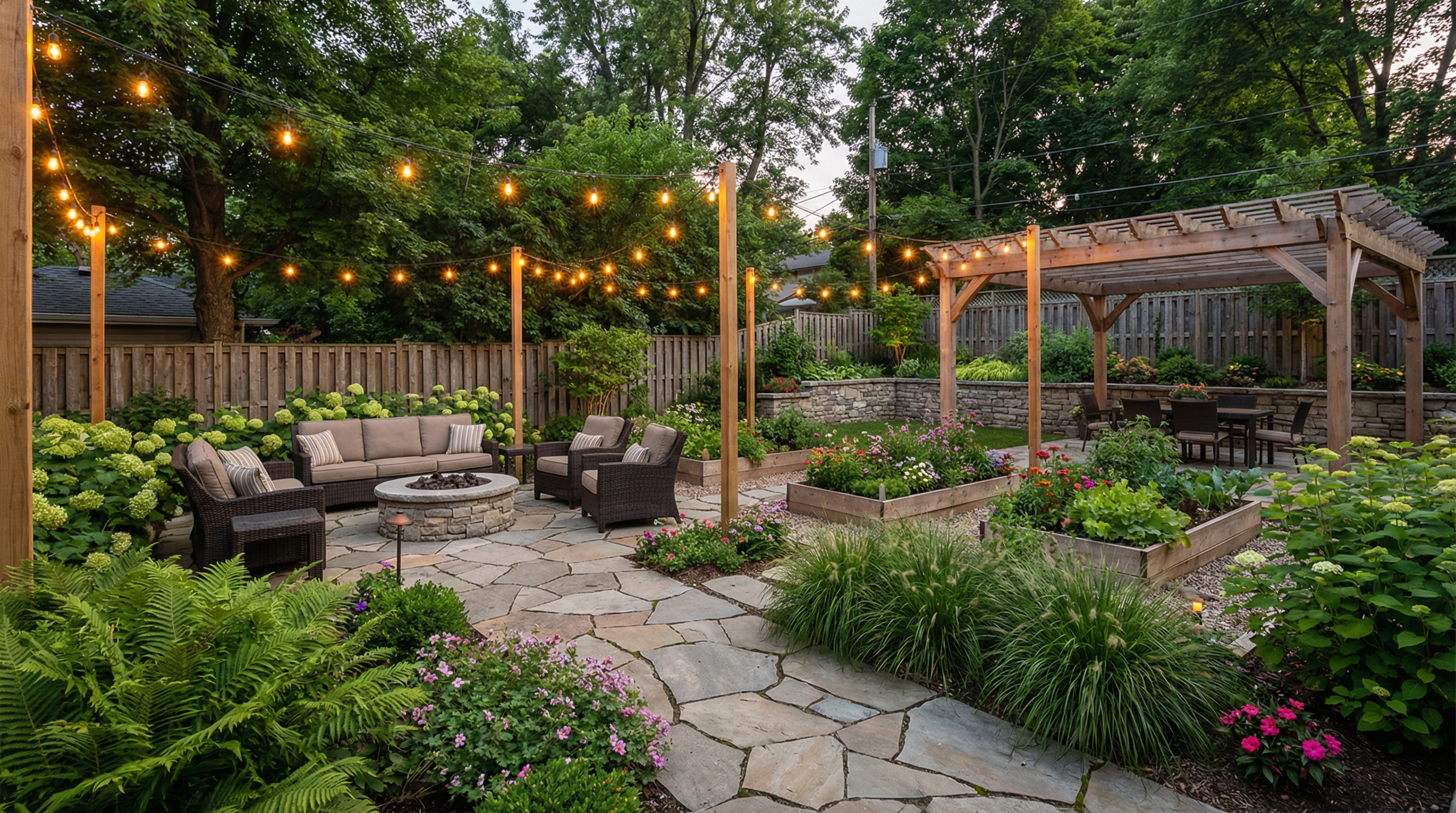
Key elements of Italian Courtyard style
Strict Symmetry
Bilateral symmetry along a central axis from villa to focal point, with mirrored boxwood beds and equal placement of cypress and statuary.
Boxwood Parterre
Clipped boxwood hedges defining geometric beds, with gravel or low planting within — the foundation of Italian Renaissance garden composition.
Italian Cypress Accents
Tall narrow Italian cypress (Cupressus sempervirens) flanking entrances and marking axis terminations — the signature vertical element.
Potted Lemon Trees
Mature lemon trees (Limone in vaso) in large terracotta pots arranged formally along paths and walls, a Renaissance tradition continuing today.
Classical Statuary
White marble or cast-stone classical sculptures, urns and sundials at axis terminations and along paths, providing focal points.
Central Fountain
A stone fountain or classical wellhead at the center of the courtyard, providing visual focus and gentle water sound.
Frequently asked questions
- Strict bilateral symmetry, clipped boxwood parterre, Italian cypress accents, potted lemon trees, classical statuary and a central fountain — drawn from Renaissance villa garden tradition.
- A "secret garden" — a small enclosed garden adjacent to or within an Italian villa, used for private contemplation. Smaller and more intimate than the main villa garden.
- Italian gardens are typically smaller and more architectural, with strong vertical cypress accents and integration with the villa. French parterres (Versailles, Vaux-le-Vicomte) are larger, flatter and more horizontally expansive.
- In USDA zones 9 and warmer, yes. In colder zones, plant lemons in pots and overwinter indoors — a tradition since the Italian Renaissance (when limonaie, lemon houses, were built for winter storage).
- Buxus sempervirens is the historical choice, but boxwood blight has spread widely since 2011. Use disease-resistant varieties (NewGen, Better Boxwoods) or substitute Ilex crenata.
- Cast-stone reproductions cost $200-800 per piece and weather convincingly. Real Carrara marble is $2,000-15,000+. Both work — cast stone is fine for most uses.
- Yes — even a 30-50 sq m courtyard accommodates the principles. A small parterre with four boxwood-edged beds, two cypress, two potted lemons and a central wellhead works at any scale.
Try creating your own design
Upload a photo of your yard and get a professional landscape design in 30 seconds. First 2 designs are free.