Country Rustic Yard Design
Guide to landscape design in Country Rustic Garden style: features, plants, materials, and examples
Country rustic yard design draws from the small-farm and homestead tradition that stretches across rural Europe and North America. The look is informal, productive and unfussy: native or naturalized plants, weathered wooden fences, hand-built rustic gates, a working kitchen garden, fruit trees and a few well-loved heirloom flowers like hollyhocks and sunflowers. The reference points are 19th-century New England farmsteads, Wisconsin homesteads and English cottage farms — places where the yard was as much workspace as ornamental garden.
Materials and plants
Hardscape is humble: weathered cedar or oak split-rail fencing, rustic stone or brick paths, gravel driveways, hand-built wooden gates with iron hinges. Plant choices prioritize hardiness and utility: native perennials (echinacea, black-eyed Susan, native asters), herbs (lavender, rosemary, sage, thyme) in large patches, vegetables in raised beds, fruit trees (apple, pear, plum), and heirloom flowers (hollyhocks, sunflowers, zinnias, cosmos). Lawn areas, where present, are casually maintained meadow rather than manicured turf.
Design elements
The layout is loose but logical. A typical country yard has a kitchen garden in raised wooden beds near the back door, a small orchard of fruit trees, a flower border along a fence, and a gathering area with rustic seating — typically Adirondack chairs or weathered wooden benches around a fire pit. Storage is honest: a small wooden shed or barn, a wheelbarrow, a clothesline. A productive chicken coop is sometimes included.
Climate notes
The style is climate-adaptable because it relies on native and hardy plantings. In cold climates (zones 3-5), use winter-hardy perennials and dwarf fruit trees. In warm climates (zones 8-9), substitute heat-tolerant herbs and heirloom vegetables. The wooden fences and rustic structures work everywhere.
Common mistakes
Don't over-design — the country yard's charm is its informality and apparent randomness. Avoid plastic raised beds; use cedar, oak or weathered chestnut. Don't use mass-market garden ornaments; the look comes from real working tools, not faux farmhouse decor.
Budget tips
Split-rail fencing runs $15-25 per linear foot installed. Cedar raised beds cost $80-200 each in standard sizes. Native plants from local nurseries are typically cheaper and hardier than imports. A full country rustic yard refresh on a quarter-acre lot is typically $5,000-15,000 in materials and plants. Upload a photo of your yard and our AI redraws it in country rustic style in seconds — free to try.
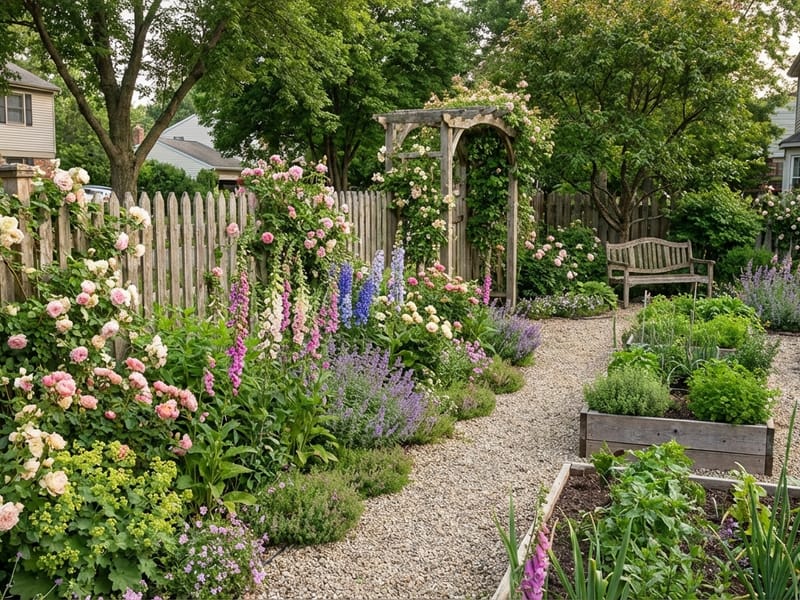
Country Rustic Garden uslubining asosiy elementlari
Split-Rail Fencing
Weathered cedar or oak split-rail fencing defining property edges and garden areas, with rustic wooden gates on iron hinges.
Kitchen Garden Beds
Raised cedar or oak vegetable beds near the back door, with rotating seasonal crops and herbs grown for daily kitchen use.
Native Perennials
Echinacea, black-eyed Susan, native asters, milkweed and goldenrod in casual mixed borders — hardy, pollinator-friendly and locally adapted.
Heirloom Flowers
Hollyhocks, sunflowers, zinnias, cosmos and dahlias planted in informal drifts along fences and at house corners.
Fruit Trees
A small orchard of apple, pear or plum trees, often arranged informally near the kitchen garden for easy harvesting.
Rustic Gathering Area
A casual seating area with Adirondack chairs or weathered wooden benches around a stone fire pit or chiminea.
Oʻz dizayningizni yaratib koʻring
Hovlingiz fotosuratini yuklang va 30 soniyada professional landshaft dizaynga ega boʻling. Dastlabki 2 ta dizayn bepul.
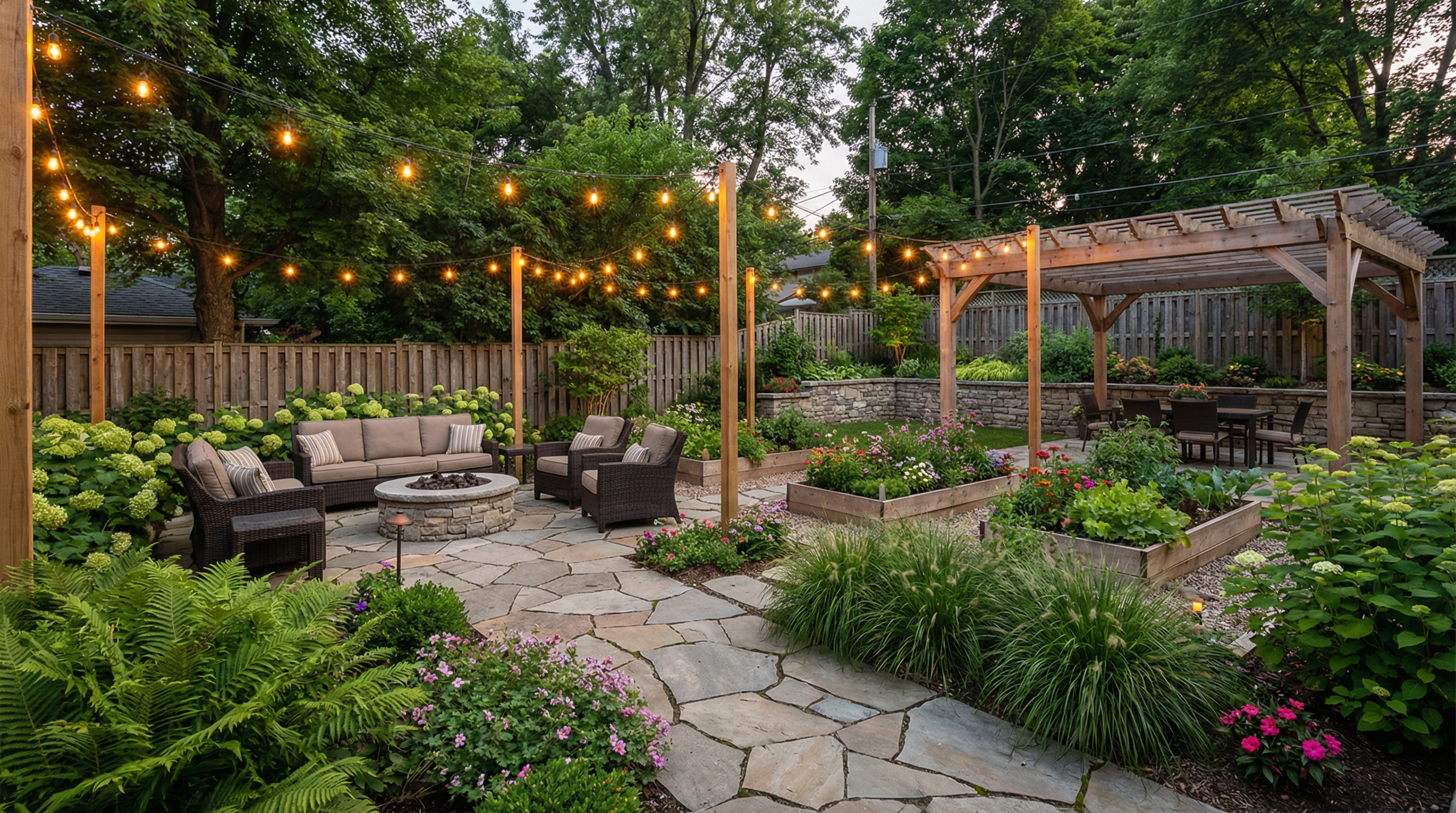
Country Rustic Garden: landshaft dizayni
Galereyada koʻproq misollarni koʻring Country Rustic Garden uslubi galereyasi yoki toʻliq dizayn galereyasi.
FAQ: Country Rustic Garden uslubidagi landshaft dizayni
- Informal layout, native and heirloom plants, weathered wooden fences, raised vegetable beds, fruit trees and humble hardscape — all chosen for utility and honest character.
- Cottage gardens are denser and more ornamental, focused on dense flower borders. Country rustic includes more utility (vegetable beds, fruit trees, sheds) and feels more like a working homestead.
- Native perennials (echinacea, black-eyed Susan), herbs (lavender, rosemary, sage), heirloom flowers (hollyhocks, sunflowers) and fruit trees (apple, pear).
- Yes — but casually maintained meadow lawn rather than manicured turf. Many country yards skip lawn entirely in favor of gravel paths and planted beds.
- Use real working tools and structures — a wheelbarrow, weathered watering can, hand-built bird house — not mass-market decor. Less is more.
- Yes — even a quarter-acre lot accommodates a kitchen garden, a few fruit trees, a flower border and a rustic seating area. The style scales down well.
- Plant choices help — native perennials and hardy fruit trees establish in 2-3 years and look better with age. Avoid annual color schemes; build with perennials.