Alpine Yard Design
Guide to landscape design in Alpine Garden style: features, plants, materials, and examples
Alpine yard design draws from the mountain landscape of the Alps, Carpathians, Caucasus and similar high-elevation regions, where harsh winters, short growing seasons and rocky soils have shaped a distinctive plant community and garden tradition. The look pairs the hardy plants of mountain meadows and screes with the vernacular architecture of the alpine chalet — stone walls, weathered wood, deep eaves, window boxes overflowing with red geraniums. The tradition was popularized globally by Swiss garden writer Beverley Nichols in the 1930s and continues through contemporary plantsmen like Roy Lancaster.
Materials and plants
The hardscape is rugged: local stone walls (often dry-laid), weathered wood (cedar, oak, larch) for fences, gates and outbuildings, gravel paths in gray or warm sand tones, granite boulders incorporated into beds. The plant palette is hardy and seasonal: alpine perennials like edelweiss (Leontopodium alpinum), gentian, alpine pinks (Dianthus alpinus), saxifrage and sedum cover rock gardens. Conifers — Norway spruce, mountain pine, Swiss stone pine — provide year-round structure. Window boxes hold the iconic red geraniums of alpine chalets.
Design elements
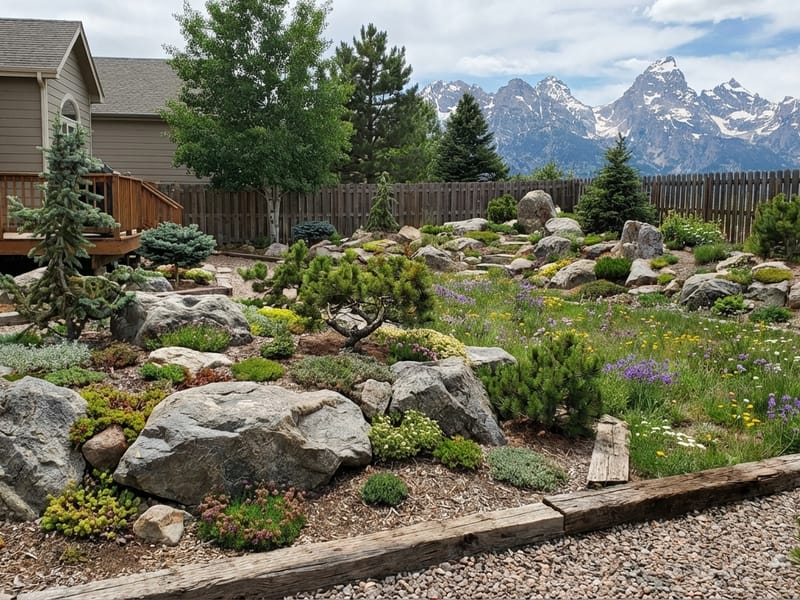
Look for a rock garden as the central feature, often built on a stone berm or natural slope, with alpine plants tucked between rocks. Stone walls retain terraced beds. A small wooden chalet-style shed or playhouse provides architectural reference. Window boxes on every window with geraniums (red and pink) cascade dramatically. A kitchen garden of hardy herbs and vegetables sits near the house. Conifers anchor corners and provide windbreaks.
Climate notes
Alpine plants thrive in USDA zones 3-7 with cold winters, well-drained gravelly soils and bright sun. Hot humid summers stress alpine plants severely — most alpines are not suitable below zone 7 or in humid Southeast US conditions. In warmer climates, substitute drought-tolerant mediterraneans for true alpines.
Common mistakes
Don't plant alpines in rich garden soil — they need lean, gravelly, fast-draining substrate. Don't over-water. Don't expect alpines to survive humid summer heat; they need cool nights. Don't pair alpine yards with tropical accents; the language is hardy, mountain and seasonal.
Budget tips
Alpine perennials from specialist nurseries cost $8-20 per plant; large rock gardens need 30-100+ plants. Local stone for walls runs $20-40 per sq ft installed. A complete alpine yard on a quarter-acre lot is typically $8,000-25,000 in materials and plants. Upload a photo of your yard and our AI redraws it in alpine style in seconds — free to try.
Alpine Garden uslubining asosiy elementlari
Stone Walls
Dry-laid local stone walls retaining terraced beds and defining garden rooms — the architectural signature of alpine landscape.
Rock Garden
A central rock garden built on a stone berm or natural slope, with alpine plants tucked between large boulders and gravel pockets.
Alpine Perennials
Edelweiss, gentian, alpine pinks, saxifrage and sedum planted in gravelly fast-draining soil — the hardy plant palette of high-elevation meadows.
Conifer Structure
Norway spruce, mountain pine and Swiss stone pine providing year-round structure, windbreaks and the dark green of alpine forest.
Window Box Geraniums
Cascading red and pink geraniums in every window box — the iconic image of alpine chalets, planted late spring through autumn.
Wooden Chalet Detail
Weathered wood fences, gates and outbuildings in cedar, oak or larch, with deep eaves and exposed-beam construction.
Oʻz dizayningizni yaratib koʻring
Hovlingiz fotosuratini yuklang va 30 soniyada professional landshaft dizaynga ega boʻling. Dastlabki 2 ta dizayn bepul.
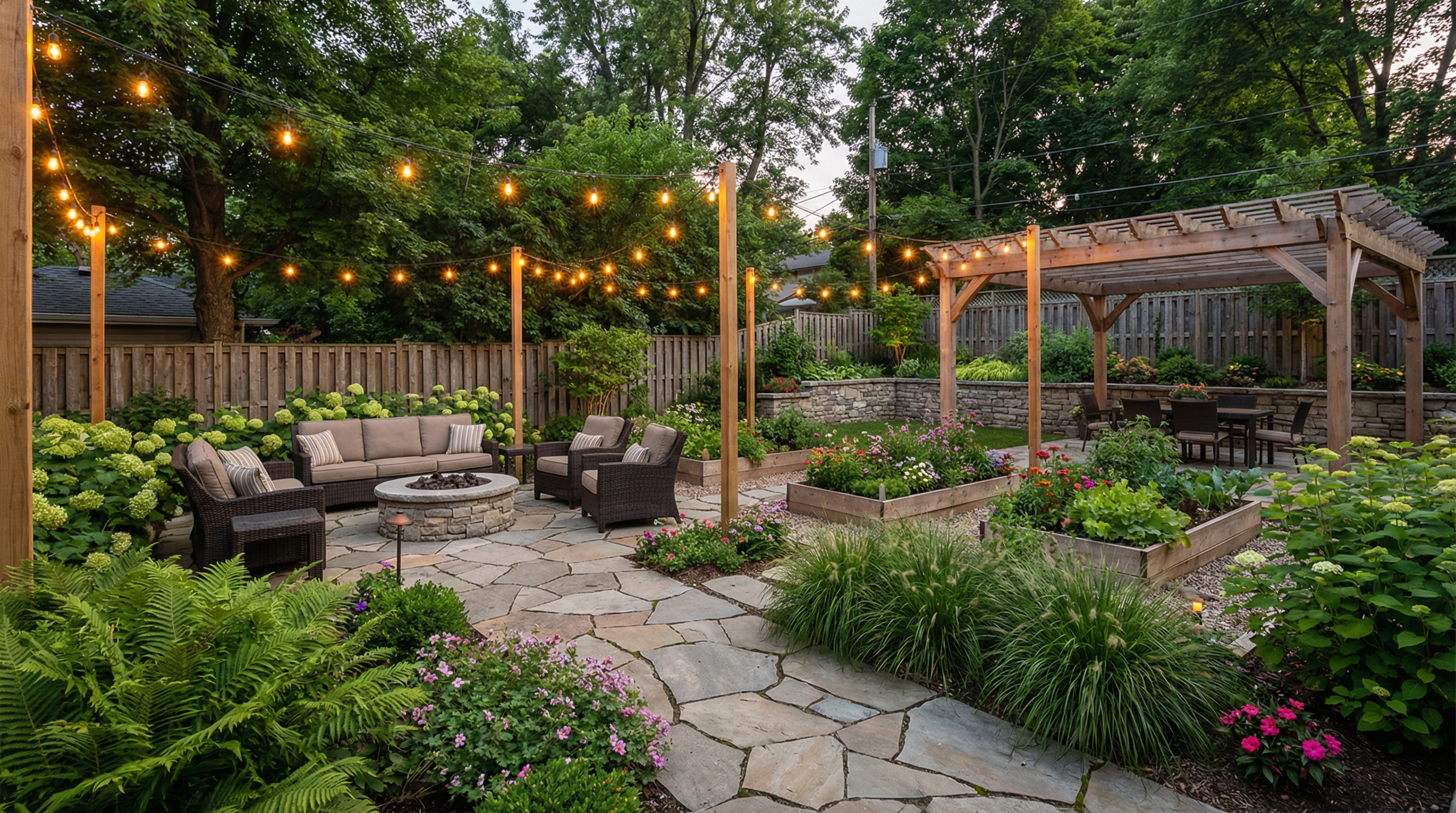
Alpine Garden: landshaft dizayni
Galereyada koʻproq misollarni koʻring Alpine Garden uslubi galereyasi yoki toʻliq dizayn galereyasi.
FAQ: Alpine Garden uslubidagi landshaft dizayni
- Hardy mountain plants (edelweiss, gentian, alpine pinks, sedums), rock gardens, stone walls, conifer structure and chalet-style wooden detailing.
- Plants native to high-elevation mountain regions, adapted to cold winters, short growing seasons, intense sun, well-drained gravelly soils and cool summer nights.
- Most true alpines fail below USDA zone 7 or in humid Southeast US summers. They need cool nights and dry conditions. Substitute drought-tolerant Mediterraneans for similar texture.
- Lean, gravelly, fast-draining substrate — typically half coarse sand or gravel and half low-fertility soil. Rich garden soil rots alpine plants.
- Build a berm of well-drained substrate, place large boulders to look natural (not symmetrical), create planting pockets between rocks, plant alpines, and topdress with gravel mulch.
- Norway spruce, Swiss stone pine and dwarf mountain pine are traditionally alpine. For smaller yards, consider dwarf cultivars of these species.
- No — a small wooden shed, garden fence or pergola with vernacular detailing (deep eaves, decorative bargeboards, exposed beams) suggests the chalet aesthetic without needing a full building.