Yard in Japanese Garden style
Complete guide to Japanese Garden style landscape design: features, materials, color solutions, and examples
Japanese Garden style is an excellent choice for landscape design. This style creates a harmonious and expressive space, combining aesthetics and functionality.
Features of a Japanese Garden style yard
Japanese Garden style yard design features thoughtful details and characteristic elements that create a unique atmosphere. The right combination of plants, materials, and layout unlocks the full potential of the territory.
Color palette
A Japanese Garden style yard is characterized by harmonious color combinations that emphasize stylistic features and create the right mood.
With GenRoom you can visualize your yard in Japanese Garden style in seconds. Simply upload a photo of your yard, choose the "Japanese Garden" style, and our AI will create a professional visualization!

Yard examples in Japanese Garden style
Try creating your own design
Upload a photo of your yard and get a professional landscape design in 30 seconds. First 2 designs are free.
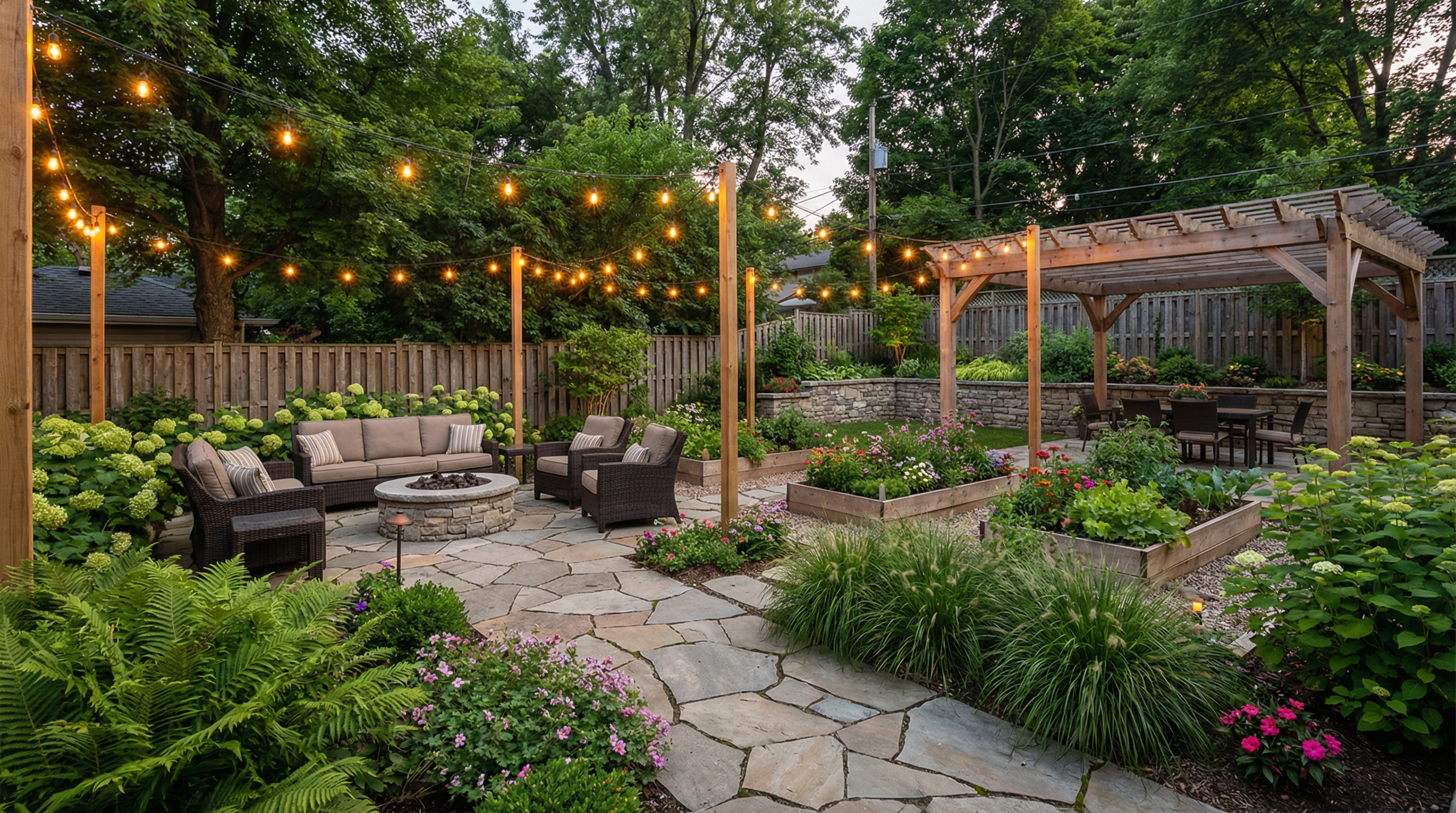
Key elements of Japanese Garden style
Asymmetric Stone Placement
Stones grouped in odd numbers (3, 5, 7) with 1/3 buried for stability — never symmetrical, always carefully composed.
Moss and Groundcover
Living moss carpets (Hypnum, Polytrichum) or Mondo grass replace lawn turf, creating soft green textures that thrive in shade.
Japanese Maples
Acer palmatum varieties — laceleaf, upright, weeping — provide spring greens, summer shade, and brilliant autumn red.
Stone Basins and Lanterns
Stone tsukubai water basins refilled by bamboo spouts, paired with yukimi-doro snow-viewing lanterns, mark contemplative pauses.
Raked Gravel
White gravel raked into wave patterns (samon) represents flowing water in dry kare-sansui gardens at Buddhist temples.
Bamboo Screening
Yotsume-gaki bamboo fences, black-bamboo accents, and contained running bamboo provide vertical structure and acoustic softness.
Frequently asked questions
- A Japanese garden is a centuries-old landscape tradition originating in 7th-century imperial Heian-era Japan. It uses carefully placed stones, moss, water, and selected plants to create asymmetric, symbolic compositions that embody natural landscape in miniature.
- Three formal traditions: kare-sansui (dry/Zen rock gardens using raked gravel and stones), tsukiyama (hill-and-pond strolling gardens for estates), and chaniwa (tea gardens leading to tea ceremony houses). Each follows different design rules.
- Japanese maples (Acer palmatum), Japanese black pine, cherry blossom, azaleas (often cloud-pruned), camellia, moss, Mondo grass, and bamboo. The palette is restrained — typically under 15 species in even large gardens.
- Yes — kare-sansui (dry garden) style is ideal for small spaces. A 20-square-meter area can contain a complete authentic Zen garden: white gravel base, 3-5 stones, one maple, one stone lantern, and a bamboo screen background.
- "Zen garden" specifically refers to kare-sansui (dry rock and gravel) gardens originally created at Buddhist temples for meditation. All Zen gardens are Japanese gardens; not all Japanese gardens are Zen — strolling and tea gardens are equally traditional.
- Significant — pruning (niwaki) is constant, moss requires consistent moisture and partial shade, and raked gravel must be re-raked weekly. Plan for 2-4 hours per week on a small garden. Neglected, the garden reverts to ordinary landscape within months.
- Shakkei is the Japanese principle of incorporating distant views — a neighboring mountain, a distant tree, a borrowed building — into your garden's composition. The garden frames and includes scenes beyond its boundaries, expanding its perceived scale and depth.
Try creating your own design
Upload a photo of your yard and get a professional landscape design in 30 seconds. First 2 designs are free.