Yard in Classic Garden style
Complete guide to Classic Garden style landscape design: features, materials, color solutions, and examples
Classic Garden style is an excellent choice for landscape design. This style creates a harmonious and expressive space, combining aesthetics and functionality.
Features of a Classic Garden style yard
Classic Garden style yard design features thoughtful details and characteristic elements that create a unique atmosphere. The right combination of plants, materials, and layout unlocks the full potential of the territory.
Color palette
A Classic Garden style yard is characterized by harmonious color combinations that emphasize stylistic features and create the right mood.
With GenRoom you can visualize your yard in Classic Garden style in seconds. Simply upload a photo of your yard, choose the "Classic Garden" style, and our AI will create a professional visualization!
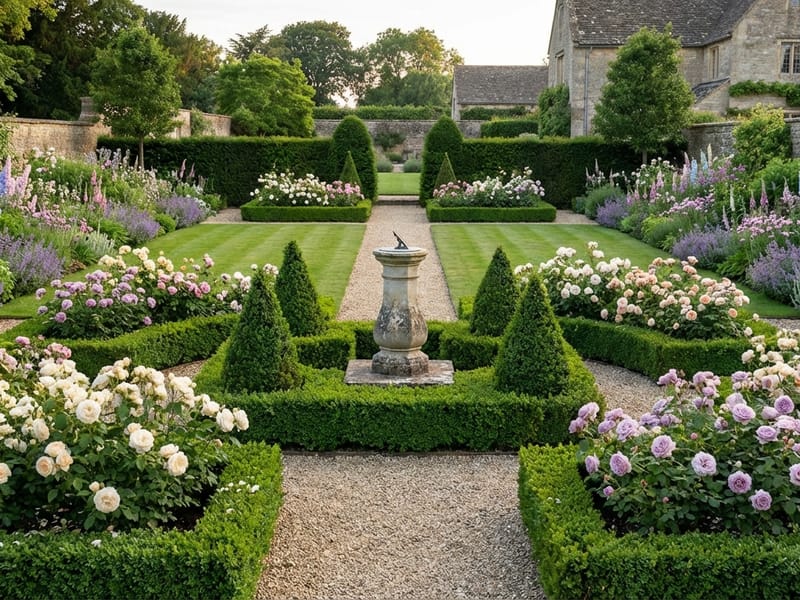
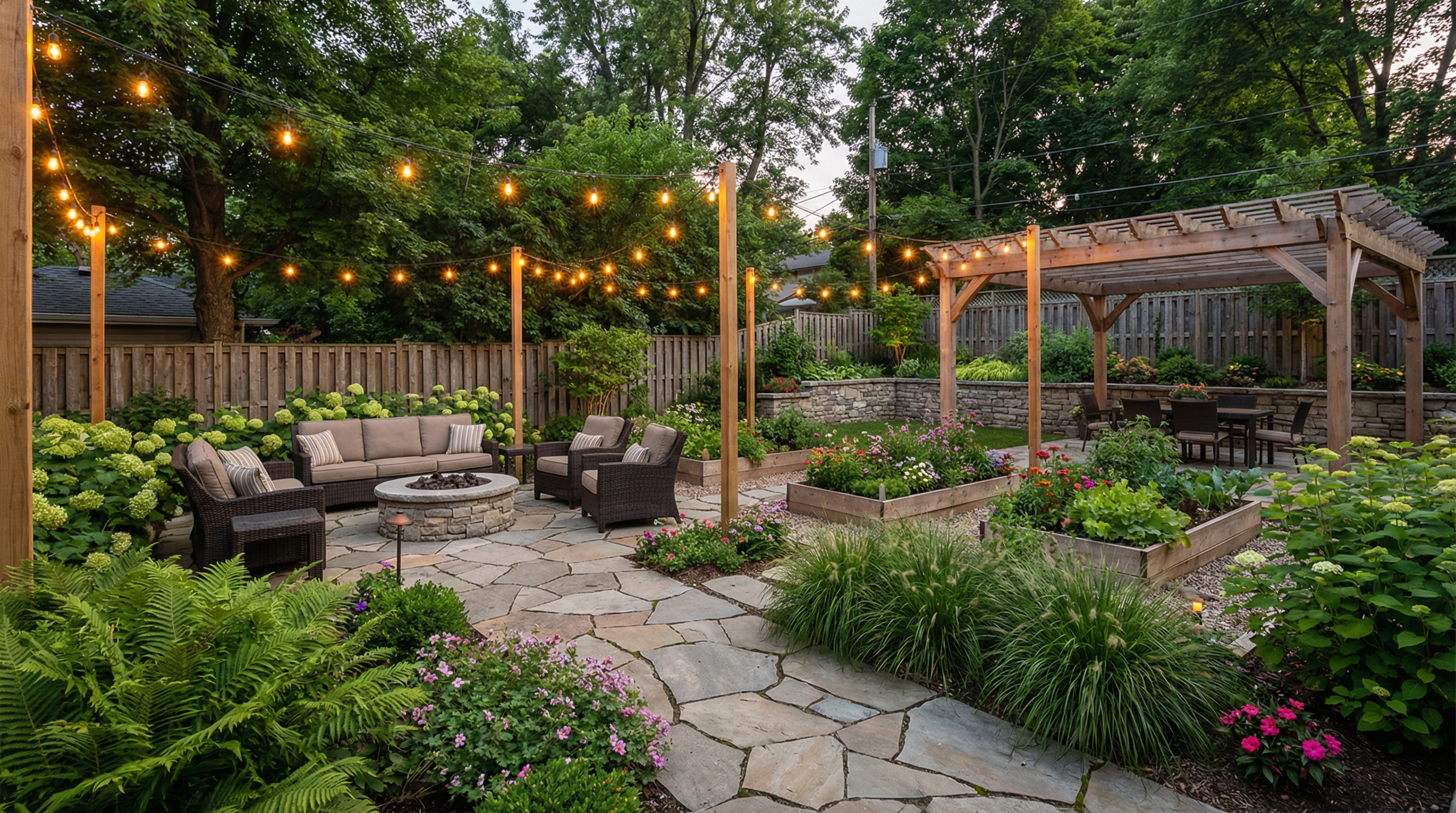
Yard examples in Classic Garden style
Coba creating own desain
Unggah foto halaman Anda dan dapatkan desain lanskap profesional dalam 30 detik. 2 desain pertama gratis.
Key elements dari Classic Garden gaya
Strict Symmetry
A central axis from house to garden focal point, with side axes at right angles and bilateral symmetry across the entire composition.
Boxwood Parterre
Geometric beds defined by clipped boxwood or yew hedges, with formal patterns of planted beds, gravel and lawn panels.
Gravel Paths
Classic French gray-gold gravel paths with cut stone or brick edging, intersecting at right angles to form a structured grid.
Classical Focal Points
Cast-stone urns, classical statuary, sundials or fountains at the terminations of axes, providing visual punctuation.
Specimen Evergreens
Italian cypress (warmer climates) or columnar juniper (cooler climates) used as vertical accents flanking entrances and along axes.
Restrained Plant Palette
A limited palette of formal perennials (roses, lavender, peonies, salvia) in muted colors, used repetitively rather than mixed for abundance.
Pertanyaan yang sering diajukan
- Strict symmetry, clipped evergreen hedges defining geometric beds, gravel paths intersecting at right angles, and classical focal points along clear axes.
- A formal geometric pattern of clipped low hedges enclosing planted beds, gravel or lawn — codified by 17th-century French designer André Le Nôtre at Versailles and Vaux-le-Vicomte.
- Classic (continental European) gardens are formal, geometric and symmetrical. English gardens (especially after Capability Brown, mid-18th century) are intentionally naturalistic, with curves, rolling lawns and informal massing.
- Boxwood (Buxus sempervirens) is the classic choice; yew (Taxus) works in cooler climates; holly (Ilex crenata) is a boxwood-blight-resistant alternative.
- It can — boxwood blight has spread widely since 2011. Use disease-resistant varieties (NewGen Independence, Better Boxwoods series) or substitute Ilex crenata for similar effect.
- No — small classic gardens of 30-50 sq m can use the same principles. A miniature parterre with four boxwood-edged beds around a central urn works at any scale.
- Boxwood hedges need clipping 1-2 times per year; gravel paths require occasional weeding and topping; lawn panels need standard mowing and edging. Total maintenance is moderate but consistent.
Coba creating own desain
Unggah foto halaman Anda dan dapatkan desain lanskap profesional dalam 30 detik. 2 desain pertama gratis.